Best-selling jewelry gift sets to stock by season
Jewelry gift sets are one of the most versatile categories a retailer can stock, and one of the most seasonal. This guide covers how to build sets for spring, summer, fall and winter, what packaging does to perceived value, and how to test a season’s assortment without committing to volume.
Key takeaways
- Jewelry ranks as the top gift category by dollars for both Valentine’s Day and Mother’s Day, so the gifting calendar runs well beyond December.
- Every set follows the same build: one anchor piece, one or two supporting pieces in a shared metal, and packaging chosen for the occasion.
- Palette and materials shift by season. Pastel and pearl in spring, lightweight and water-safe in summer, warm metals in fall, high shine and weight in winter.
- Premium packaging raised expected retail price by 45 percent in University of Wisconsin research, for 8.7 percent more cost.
- Ordering with no minimums lets you test six configurations a season and reorder only what sells.
Sell someone a pendant and they have bought a necklace. Sell them a pendant, a pair of studs and a box they do not have to wrap, and they have bought a gift. The second one costs you very little extra and retails for a good deal more.
Plenty of retailers stock jewelry. Fewer stock it in sets. Almost nobody rebuilds those sets four times a year, which is a shame, because the shopper changes four times a year whether you follow along or not.
Why jewelry gift sets work year-round
Jewelry keeps turning up near the top of gifting surveys. The National Retail Federation projected $7 billion in jewelry spending for Valentine’s Day 2026, the biggest single gift category by dollars for ten years running. Mother’s Day 2026 came in higher at $7.5 billion out of a record $38 billion. Graduation hit a record $7.2 billion, with 39 percent of consumers planning to celebrate a graduate.
Look at where those months fall. February, May, May again. December still owns the volume, but it does not own the category.
A gift set is a curated bundle of two or more pieces packaged together for gifting, and it earns its shelf space three ways.
Order value goes up without the customer feeling it. Someone weighing a $28 necklace against a $45 necklace-and-earring set reads the second as the better deal, even while spending more.
The set also makes the hard decision for them. Gift shoppers are nervous shoppers. They do not know the recipient’s size, their metal, or whether they already own something close to it. A set that coordinates itself takes that anxiety off the table, and it moves faster than the same pieces sitting loose in a case.
Then there is the ready-to-gift part, meaning nothing else has to happen to the product before it changes hands. For a customer buying on the way to a party, that is the entire sale.
How to create seasonal jewelry gift sets
The build is the same every season. Only the inputs change.
Start with an anchor. One piece carries the set, and it should be something a customer would happily buy on its own. A pendant, a signet, a cuff.
Add one or two supporting pieces in the same metal and finish. Aim for pieces that look chosen together, which is a lower bar than matching and a better result. Studs that pick up the pendant’s stone. A thin bracelet in the plating of the chain.
Then packaging, chosen for the occasion and not for the cost of what is inside it. A $30 set in a decent box outsells a $30 set in a poly bag, and the box costs less than most buyers assume.
Give yourself three price bands per season: an impulse tier around $25 to $35 retail, a core gifting tier at $45 to $65, and a premium tier from $85 up. The same anchor can live in all three depending on what you put beside it.
Seasonal jewelry gift sets convert because they match the colors, materials, and occasions shoppers care about at that time of year.
Seasonal color palettes and materials
Palette is the first thing a customer reads, usually from across the room. Spring runs pastel, pearl, enamel and silver. Summer moves to lightweight gold, shell, beads and anything that survives a pool. Fall warms up into yellow gold, bronze, amber and textured finishes. Winter goes high shine, deep stones and heavier weight.
You can check most of this yourself by looking at what people in your store already have on that month.
| Season | Palette and materials | Set format | Packaging |
|---|---|---|---|
| Spring | Pastel, pearl, enamel, sterling silver | Necklace and earring pairs | Printed rigid box, ribbon |
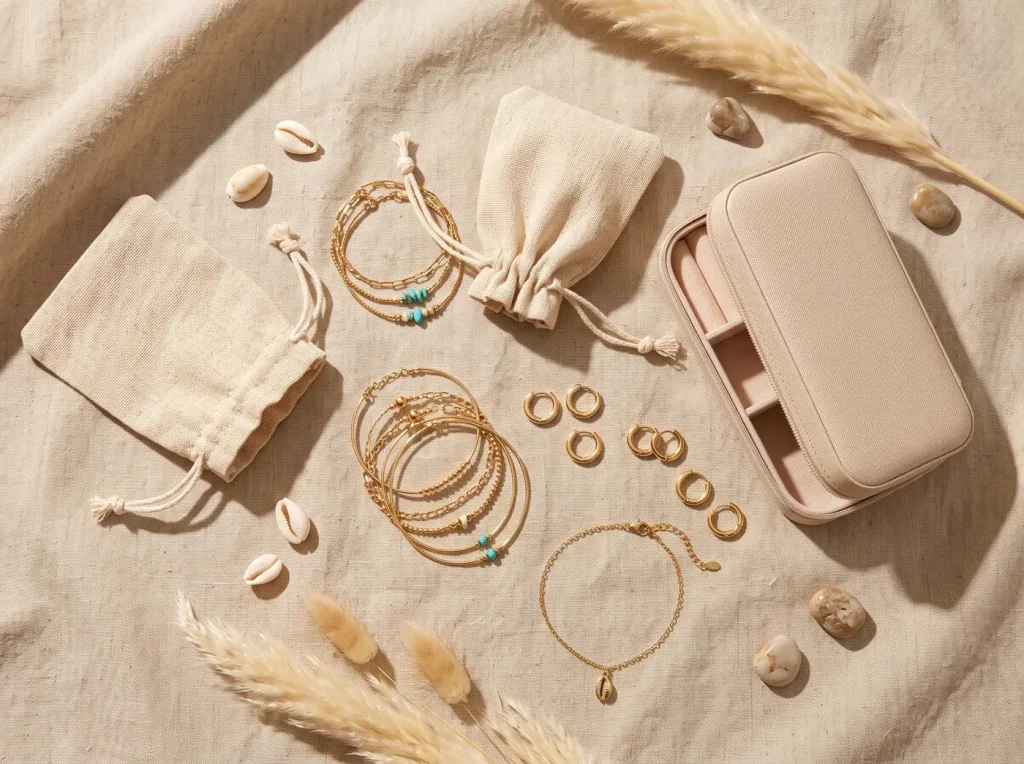
| Summer | Lightweight gold, shell, beads, water-safe plating | Bracelet stacks, anklets, huggies | Fabric pouch, slim travel case |
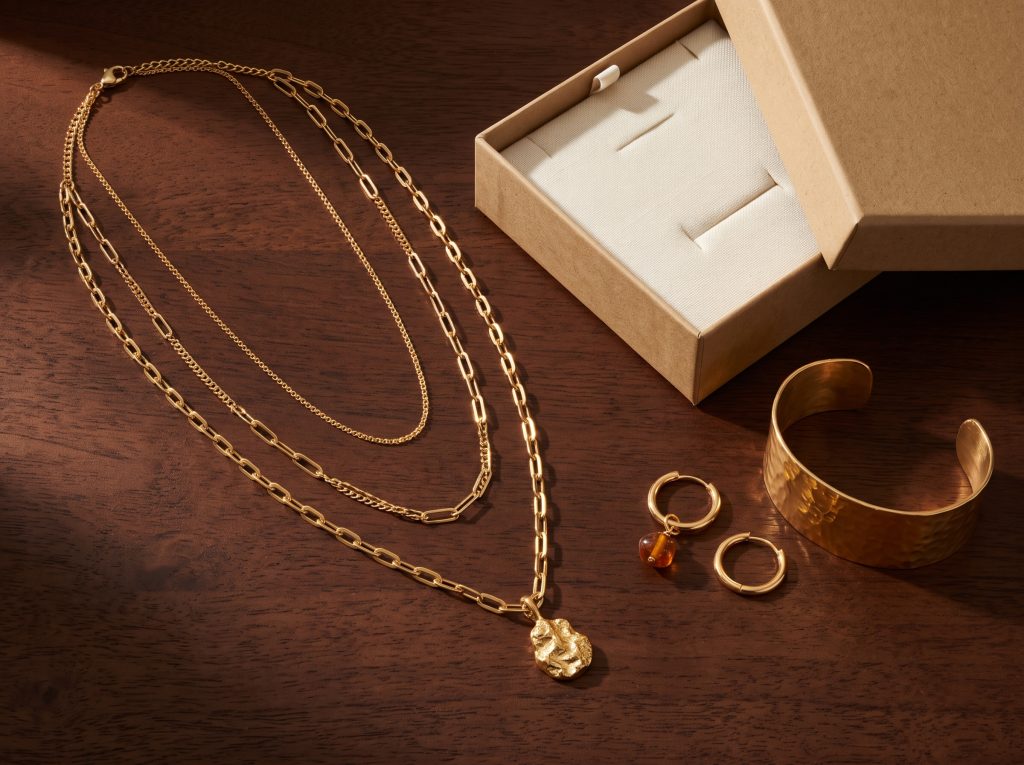
| Fall | Warm gold, bronze, amber, textured finishes | Layering bundles, graduated lengths | Kraft or stone rigid box |
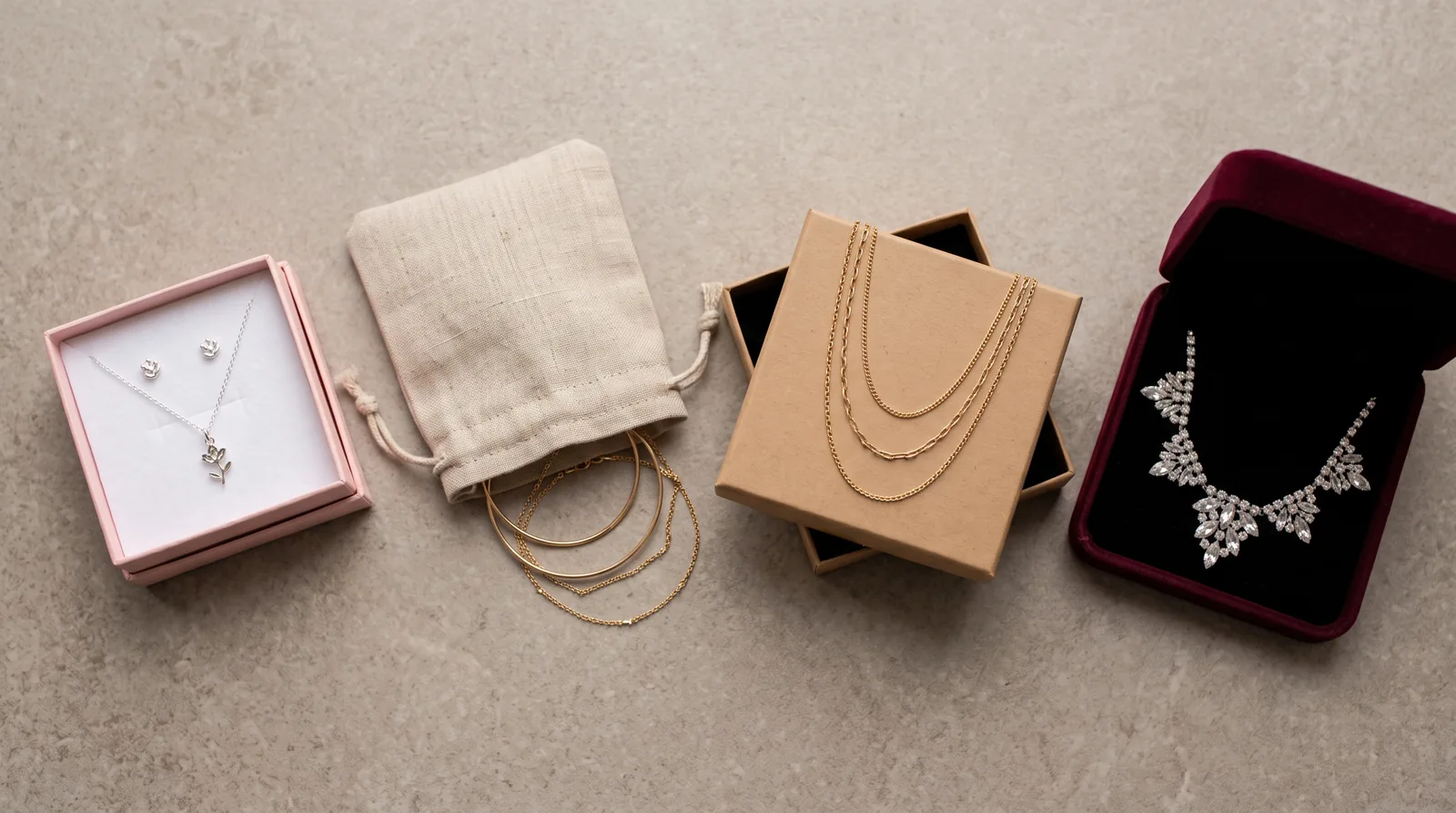
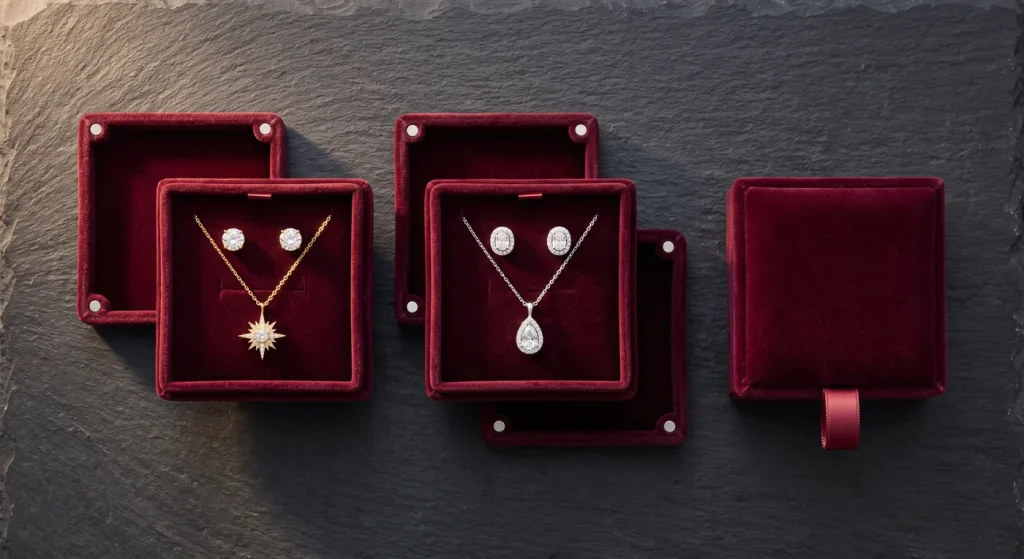
| Winter | High shine, crystal, deep stones, heavier chains | Three-piece premium sets | Velvet box, magnetic closure |
Spring jewelry gift sets: light, bright, and gift-ready
Spring is the most underbuilt gifting season in most jewelry assortments, which is odd given that graduations, Mother’s Day, weddings, bridal parties, teacher gifts and confirmations all land inside about ten weeks.
The spring buyer also behaves differently from the December buyer. NRF found 46 percent of Mother’s Day shoppers named finding a unique or different gift as their top priority, ahead of price. They are shopping for something considered. Stock accordingly.
Necklace-and-earring sets for spring
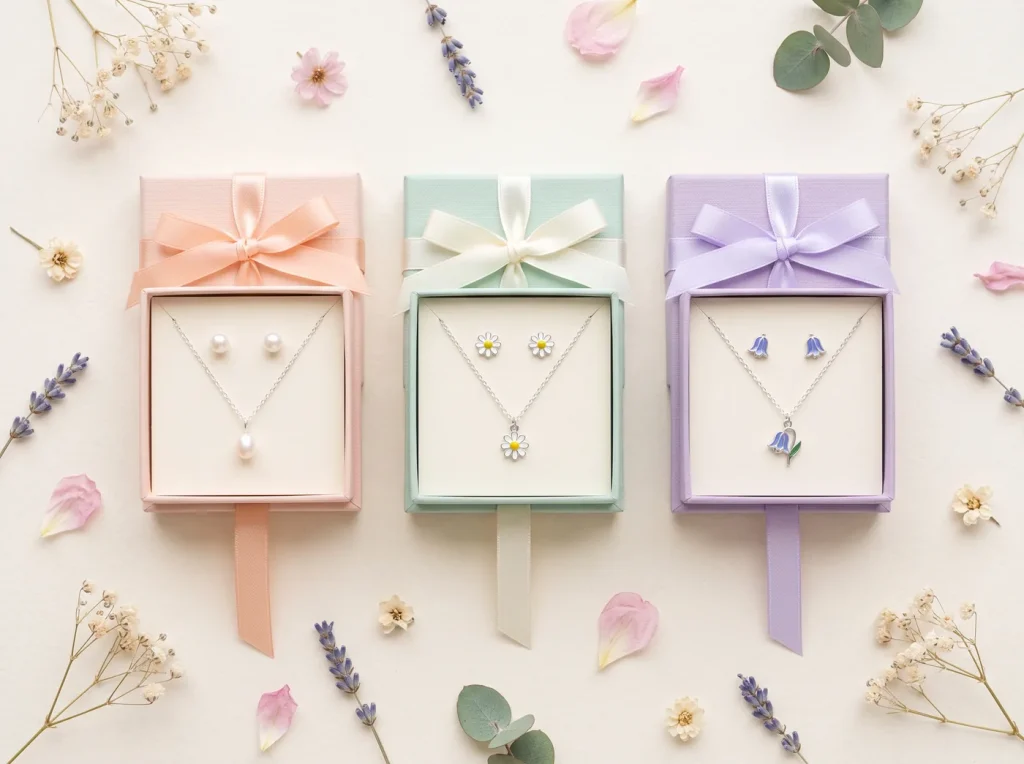
Your workhorse configuration is a delicate chain with a small pendant plus coordinating studs. Pearl reads as spring and as gift in about half a second. Enamel florals and pastel stones do the same job further down the price list.
925 sterling silver jewelry carries the season well. It photographs cleanly against pastel packaging, it suits the bridal buyer and the graduate equally, and it stays giftable at an accessible retail price.
Summer jewelry gift sets: travel-friendly and minimal
Summer gifting is smaller, more spontaneous and a lot more self-directed. Destination weddings, bridesmaid gifts, festivals, hostess gifts, and a large share of customers simply buying for themselves in July.
Design for the suitcase. Compact, low-maintenance, able to survive sun, salt water and chlorine. Swap the rigid box for a fabric pouch or a slim travel case, which ships lighter, costs less and suits the season anyway.
Minimalist summer bracelet stacks
Three or four thin bracelets in mixed textures, one metal, one colour accent. Sold as a stack, they answer a styling question that a single bracelet leaves open.
Anklets, huggie hoops and shell or beaded accents run on the same logic. Use durable plating and say so plainly in the product copy. Almost every summer return is a tarnish complaint.
Fall jewelry gift sets: warm metals and layered looks
Fall is layering season and birthday season, and it is when customers start rebuilding an everyday rotation after a summer of wearing almost nothing.
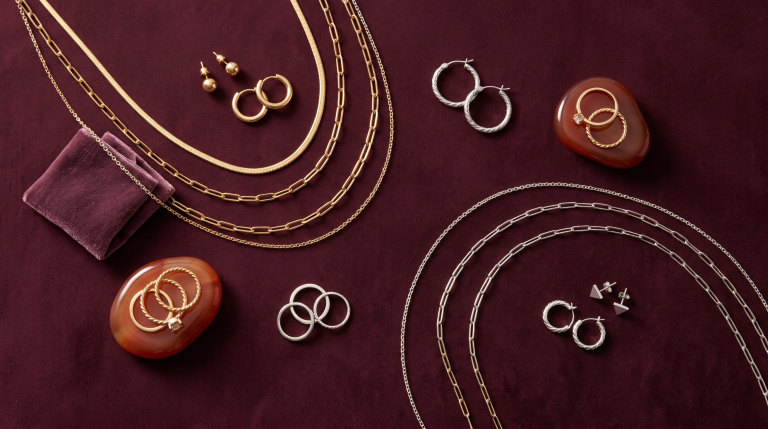
Warm metals do the work here. 14k gold plated jewelry anchors the season, particularly in heavier chain weights and textured finishes that hold their own against fall clothing.
Fall layering bundles
Sell three necklaces at graduated lengths, mixed chain weights, one of them carrying a pendant. The bundle shows the customer how to wear it, which is most of what they are actually paying for.
Fall is also your dress rehearsal for winter. Whatever moves in September and October is what you scale in November, so treat the fall floor as live testing.
Winter jewelry gift sets: premium presentation and giftable weight
Winter is the highest-volume gifting season, and the one where the packaging does as much selling as the product.
Your customer is buying an object to hand to someone in front of other people. Weight, shine and the box all count for more than they do in July. Reach for crystal accents, deeper stones, heavier chains, anything that catches retail lighting.
Velvet boxes and magnetic closures
The packaging research is unusually blunt on this. A University of Wisconsin study run with Pregis put the same product in premium and economy packaging. Shoppers valued the premium version 45 percent higher on expected retail price and were willing to pay around 30 percent more for it. The premium packaging cost 8.7 percent more to produce, roughly 19 cents a unit.
Dotcom Distribution found something similar, with 40 percent of shoppers saying premium packaging makes them more likely to buy from a brand again and 51 percent saying it makes the brand feel more upscale.
Velvet, a rigid magnetic closure and a ribbon pull are the three upgrades worth paying for. Buy jewelry boxes alongside your sets so packaging is on the sourcing list in September.
Merchandising and presenting seasonal gift sets
A seasonal assortment is a group of products curated for a specific season’s demand, and it only earns its keep if customers can see it.
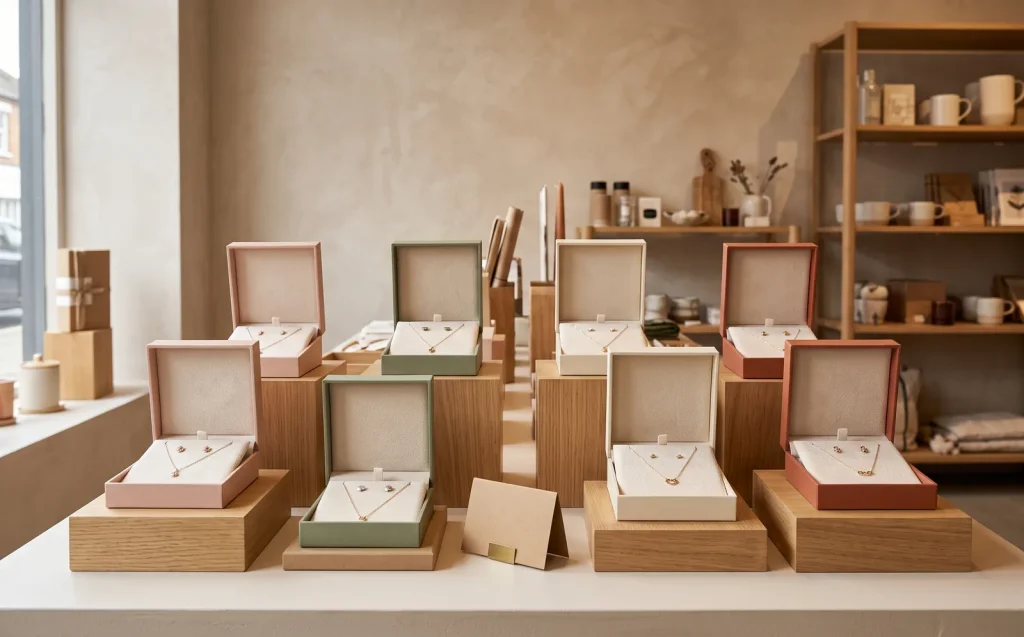
Put a gift table near the register and rebuild it every six to eight weeks. Give each season its own wall or landing block with its own palette, so the change registers from the door or above the fold.
Put the price on the sign. Gift shoppers scan for a number, and an unpriced set gets walked past.
Photograph sets as sets. A flat lay of three coordinated pieces in their box beats three separate product shots, and for most online sellers it is the cheapest available fix to the gifting category.
Rotate six weeks early. By the time your customer is thinking about spring, spring should already be out.
How Everful supports seasonal gift-set sourcing with no minimums
The reason most retailers never test seasonal sets is volume risk. Committing to hundreds of units of an untested configuration four times a year is a real constraint, and it is why so many shops end up selling the same three sets all year.
No minimums means you can order one unit or a thousand. Build six configurations for a season, take a handful of each, put them on the floor, and reorder the two that move. You find out what sells before you buy any depth.
Everful’s jewelry gift sets category is built for that rhythm, with packaging, plating and price bands you can mix without committing to volume you have not earned yet.
Frequently asked questions
How many pieces should a jewelry gift set include?
Two to four. Two reads as a matched pair and is the most dependable configuration at entry price points. Three gives you a hero piece with two supporting pieces and works well in the middle tier. Past four, customers start reading it as a bundle, and the perceived value of each piece drops.
Should retailers build their own gift sets or source pre-made ones?
Pre-made sets are faster, more consistent and arrive ready-to-gift, which is what you want in a high-volume season. Building your own gives you something nobody else on the street has and lets you move existing inventory, though you absorb the labour and the packaging cost. Most retailers run both, using pre-made sets as the base and building their own where they want local or seasonal specificity.
How can retailers design seasonal gift sets across price points?
Keep the anchor constant and change what surrounds it. The same pendant becomes a $30 set with studs in a printed box, a $55 set with studs and a bracelet in a rigid box, and a $90 set with an upgraded chain in velvet. You buy one piece with confidence and get three sets out of it.
How far in advance should retailers order seasonal gift sets?
Six to eight weeks before the season starts, with a smaller reorder window built in. That gives you time to merchandise before demand shows up, and room to restock what sells without carrying a heavy opening position.
What happens to seasonal gift sets that do not sell through?
Break them apart. The individual pieces go back into your core assortment at full price, and neutral packaging carries into the next season. It is the practical argument for buying packaging separately from product, instead of only sourcing sealed pre-packed units.