What to stock in a gift shop by season and price point
Gift shop customers often walk in with a recipient in mind and no idea what to buy. Here’s how to plan your inventory around everyday core items, the seasonal gifting dates that drive each quarter and three price tiers that let every shopper find something.
- Put most of your budget into core items that sell every month, and set the seasonal share before each buying cycle.
- Give every category an entry, midrange and premium option so shoppers can trade up without leaving it.
- Plan each season around its gifting dates, starting with Valentine’s Day, which lands only weeks after the holidays.
- Order holiday inventory in late Summer or early Fall, and keep Halloween orders tight since leftovers wait a full year.
- Keep core items on fixed shelves and rotate one or two front tables each season, mapped on a merchandising calendar.
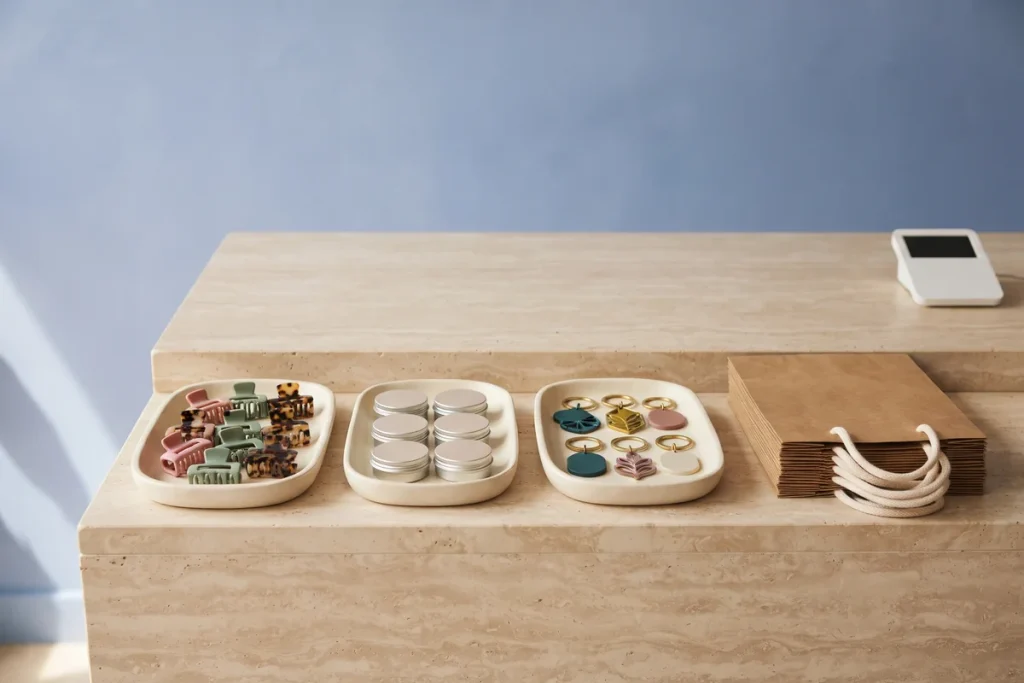
- Refresh the checkout counter monthly with small, colorful items priced for a quick decision.
A gift shop buys for customers who often walk in without knowing what they want. That makes inventory planning a balance between wholesale gifts that sell every month and seasonal items with a short selling window.
How to plan gift shop inventory
Split your budget between everyday and seasonal items
Most of your buying budget should go to everyday core items that sell in any month, such as jewelry and candles. Set the seasonal share from last year’s results. If most of your holiday stock sold at full price, you have room to raise it. If a large part needed a markdown, hold it steady or trim it. Decide the split before each buying cycle and hold to it.
Build entry, midrange and premium price tiers
Every category in your shop should have options at more than one price. Entry items catch impulse buyers, midrange items cover birthdays and thank-you gifts, and premium items serve shoppers buying for a milestone. Tiers also let a shopper trade up without leaving the category they came for.
Use sales data to guide each buying cycle
Your sales history is the most reliable buying guide you have. Review which categories, price tiers and seasonal items sold through, and note which items needed a markdown to move. Map those results onto a retail merchandising calendar so you know when each order needs to go out.
| Budget share | Entry | Midrange | Premium |
|---|---|---|---|
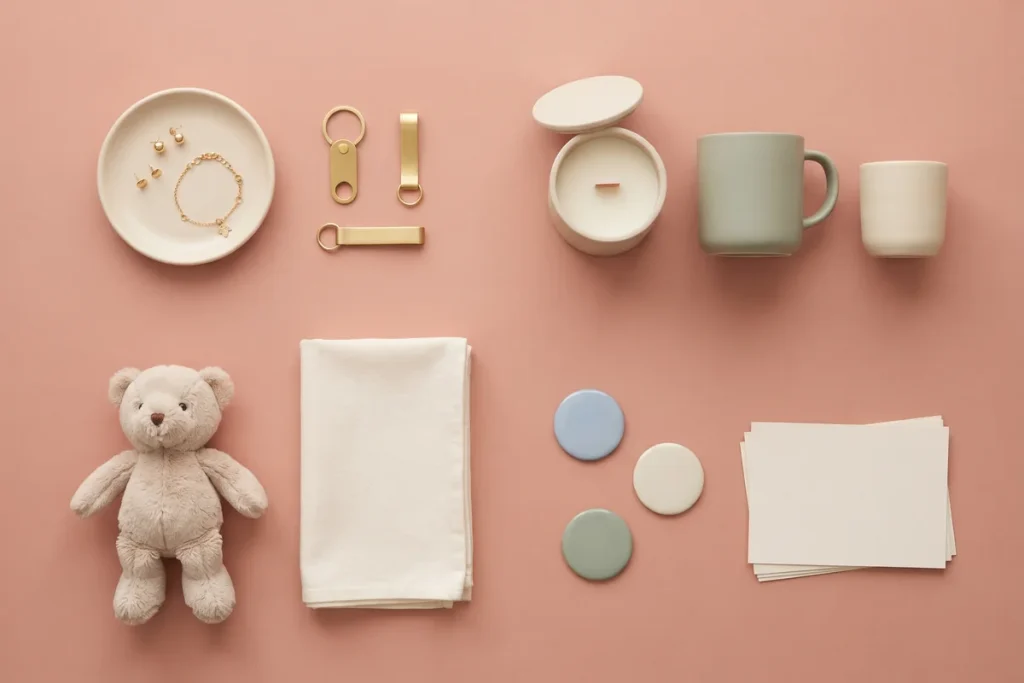
| Everyday core | Keychains, hair clips, magnets | Jewelry, candles, mugs | Boxed jewelry, home sets |
| Seasonal | Stocking stuffers, heart keychains | Winter accessories, Easter fillers | Holiday and Valentine’s gift sets |
Illustrative percentages. Set your own split from last year’s sell-through.
Gift shop items that sell year-round
Jewelry, keychains and small accessories
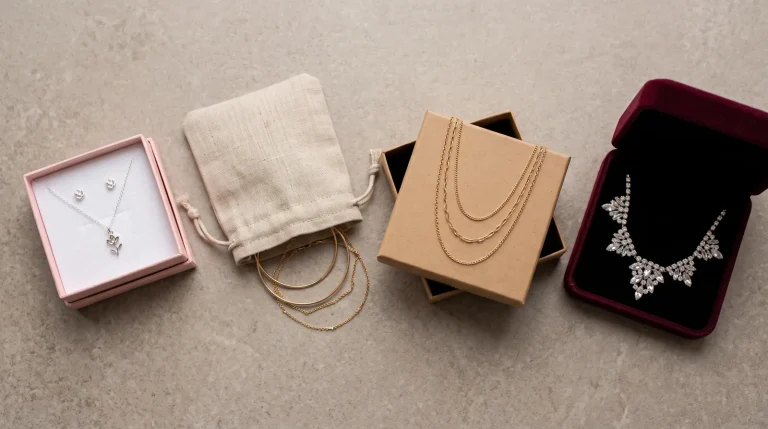
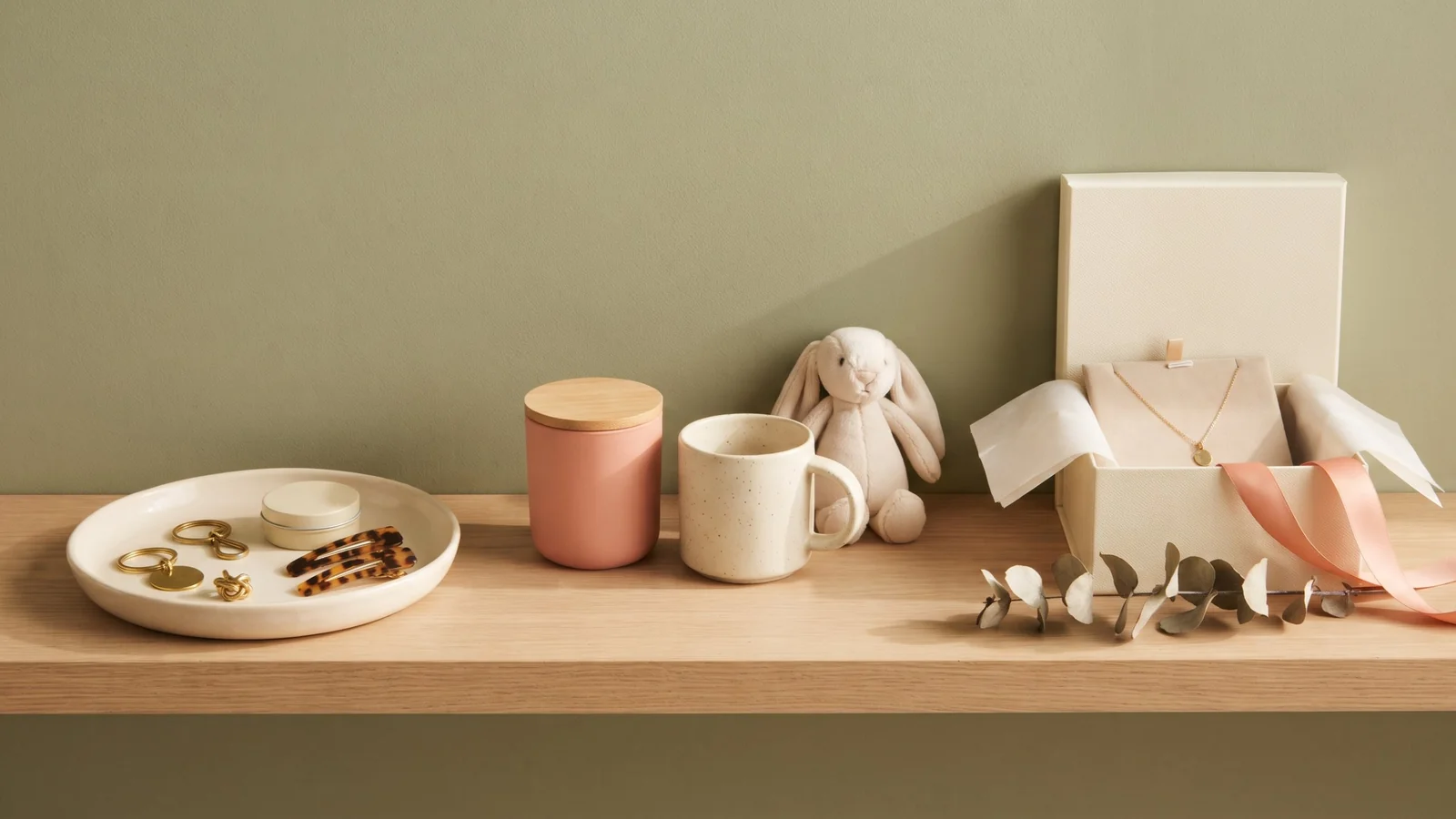
Small accessories make a strong base for a gift shop assortment because they fit any budget and any recipient. Jewelry and accessories such as stud earrings, charm bracelets and keychains take little shelf space and restock easily.
Candles, drinkware and home gifts
Home gifts suit shoppers buying for a host, a coworker or someone they don’t know well. Candles, mugs, tumblers and decorative accents work at midrange price points and look good on a shelf.
Plush toys, novelty gifts and souvenirs
Plush toys appeal to shoppers buying for children and to adults buying a lighthearted gift. Novelty gifts add humor to the assortment, and souvenirs such as magnets, keychains and postcards serve shops in tourist areas. Choose souvenir designs that reference your town or region, since local relevance is why visitors buy them.
What to stock in a gift shop for Spring and Summer
Easter, Mother’s Day and Spring gift ideas
Spring opens with Easter baskets and fillers, then shifts to Mother’s Day, a major gifting date for jewelry and boxed sets. Pastel packaging and floral themes signal the change of season.
Graduation, Father’s Day and Summer gift ideas
Graduation brings demand for keepsakes, jewelry and practical gifts like drinkware and bags. Father’s Day follows with wallets, keychains and novelty items. Put both on the floor in May so shoppers find them early.
Travel, beach and souvenir items for Summer visitors
Shops in vacation areas see more visitors in Summer, so this is the time to lean into souvenirs, sunglasses, tote bags and travel accessories. Lightweight items sell more easily to travelers watching their luggage space.
What to stock in a gift shop for Fall and Winter
Back-to-school and Halloween items
Back-to-school shoppers look for stationery, backpack keychains and small accessories for students and teachers. Halloween follows with costume accessories, themed decor and party favors. Keep Halloween orders tight, since unsold items wait a full year.
Holiday gift sets and stocking stuffers
Put your largest seasonal order behind the Winter holidays, since the gifting window runs from Thanksgiving through New Year’s. Boxed gift sets give shoppers a finished present. Keep small stocking stuffers near the register in December, where a shopper paying for a larger gift can add one without another lap of the store.
Winter accessories and cozy home gifts
Scarves, beanies, gloves, cozy socks and candles carry Winter sales after the holidays, when shoppers buy for themselves. Stock enough to run into January, then transition to Valentine’s Day.
Valentine’s Day gift ideas
Valentine’s Day is the first gifting date of the new year, and it lands only weeks after the holidays, so plan it with the holiday order rather than after it. Jewelry and plush carry the date, and Valentine’s gift sets give a shopper a finished present in red or pink packaging. Small items like heart keychains and lip balm work at the counter for friends and coworkers.
Example timings. Adjust them to your supplier’s lead times.
Gift shop items by price point
Impulse gifts at entry price points
Entry price point items, such as keychains, lip balms, hair clips and magnets, are easy yeses. They fill gaps in a shopper’s basket and work as add-ons to a larger purchase, which is why gifts under $10 belong within reach of the register.
Midrange gifts for birthdays and thank-yous
Midrange gifts, roughly the gifts under $25 range, cover most everyday occasions. Jewelry, candles, mugs and small plush toys fit here, and gift-ready packaging adds perceived value without adding much cost.
Premium gifts and boxed sets
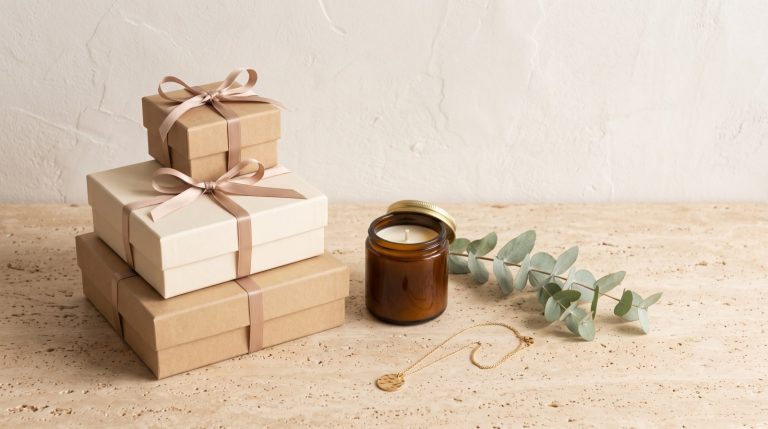
Premium gifts serve shoppers buying for milestones, close family or corporate clients. Boxed sets from your gifting assortment, such as jewelry in a presentation box or a curated home set, earn their higher price through presentation.
Illustrative price ranges.
Checkout counter and impulse gift ideas
Items within reach of the register should be small, colorful and priced for a quick decision. Mini claw clips, keychains, lip balms and novelty magnets fit this role.
Regular customers stop noticing a display that never changes. Swap part of the counter assortment each month, even if you only rotate colors or move a seasonal item forward.
Train staff to suggest one small add-on with each larger purchase, such as a card, a keychain or a matching accessory. Placing gift bags beside boxed sets does the same work without a word from staff.
How to rotate gift shop displays by season
Customers who come back regularly should find their favorites in the same spot. Keep core items on fixed shelves and use one or two front tables for seasonal rotations.
A themed display, such as a spa-day table or a beach table, tells a story and shows shoppers how products work together. Change the theme with each season so regulars notice new arrivals.
After each holiday, review sell-through by item. Note seasonal items that sold out early so you can order more next year, and move leftover undated items into an everyday display.
Stock your gift shop with Everful
Source everyday and seasonal gifts factory-direct
A gift shop supplier should cover core and seasonal stock from one account, so a new theme doesn’t mean a new vendor. Everful connects gift shops directly with vetted factories for jewelry, home gifts, plush, souvenirs and seasonal items, and adds 10K+ new products every day.
Test new products before placing larger orders
Small test orders let you try a category or seasonal theme before committing to depth. Everful has no minimums, so you can start with a single piece on most products, and every order is hand-inspected before it ships.
Plan restocks around new arrivals
Review new arrivals before each buying cycle, then reorder the core items that sold through. Live chat, WhatsApp and email support are available 24/7 to help confirm timing for a seasonal order. Start with the next season on your calendar and build your assortment one tier at a time.
Common questions about what to stock in a gift shop
What sells fastest in a gift shop?
Small, giftable items at entry price points tend to move fastest because they suit impulse purchases. Jewelry, keychains, candles, plush toys and novelty gifts sell across seasons. Track sell-through by category in your own shop, since location and customer base change what moves.
What should a gift shop do with leftover holiday stock?
Separate dated items from undated ones. Undated pieces like candles, scarves and plush move into an everyday display at full price. Mark down only the items tied to the holiday itself, and order fewer of them next year.
How much of a gift shop’s budget should go to seasonal items?
Start from your own sell-through. If last year’s seasonal stock sold at full price, you have room to raise the share. If a large part needed a markdown, keep the seasonal share steady and put the difference into core items that sell every month.
How often should a gift shop change its displays?
Refresh checkout displays monthly and change seasonal tables ahead of each major holiday. Keep core products in fixed locations so regulars can find them.
When should a gift shop order holiday inventory?
Plan Winter holiday orders in late Summer or early Fall so products arrive with time to price and display them. Confirm delivery timing with your supplier before you set a final order date.