How to make artificial flower arrangements florists can sell year-round
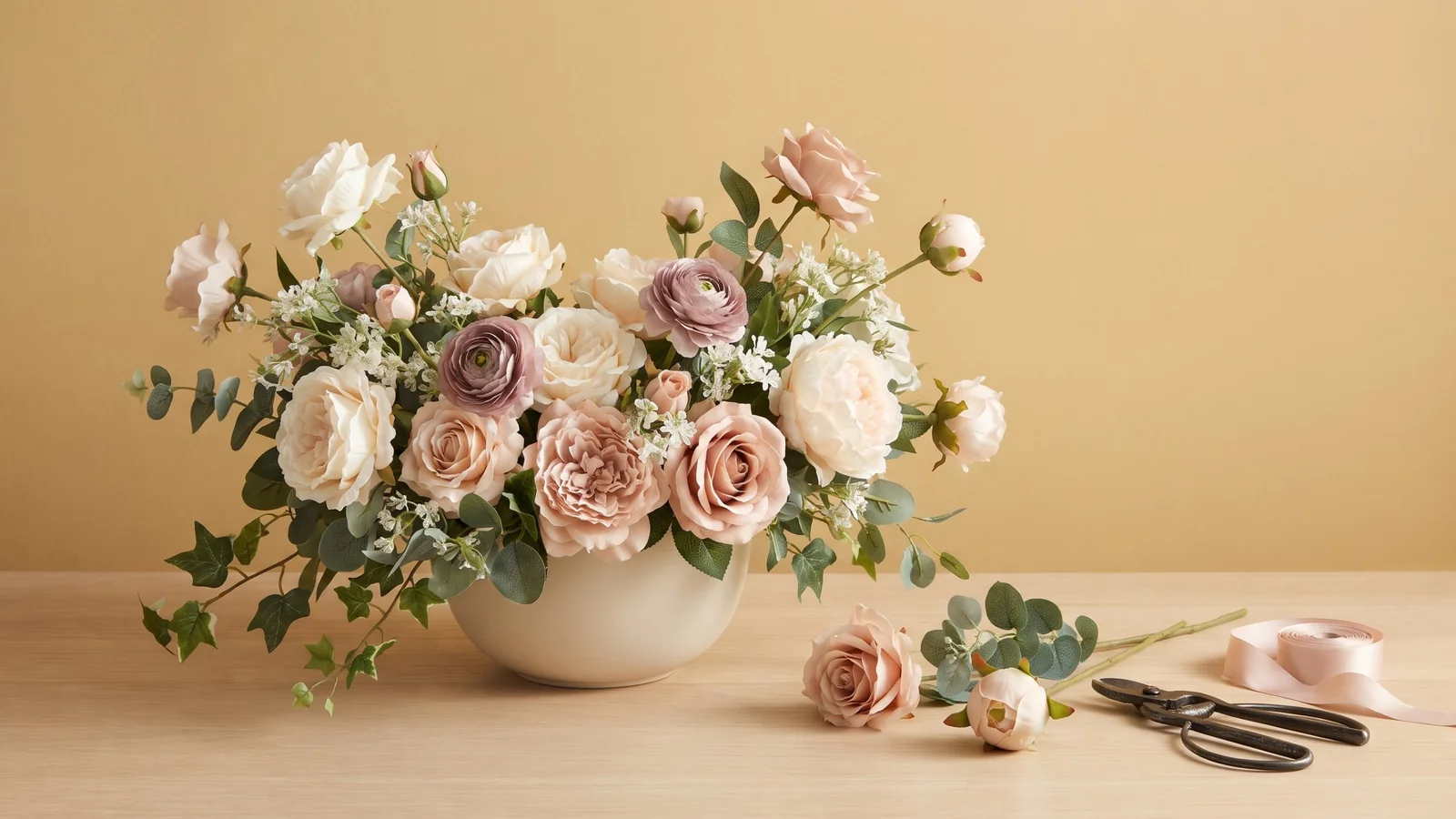
Faux flowers give florists something to sell in every season, from centerpieces and keepsake bouquets to small counter gifts. Here’s how to choose stems that look real, build an arrangement step by step and price and package finished pieces for resale.
- Faux arrangements fill slower months because demand for permanent decor doesn’t follow the wedding calendar.
- Real-touch stems suit close-up pieces like bridal bouquets, while plastic stems hold up outdoors and in high-traffic spaces.
- Mix focal flowers, fillers, greenery and buds in several sizes so an arrangement reads as real up close.
- Set the shape with focal flowers first, then fill with secondary flowers and greenery, turning the container as you work.
- Price by small, medium and large tiers, and track actual labor time, since shaping each stem can take longer than fresh work.
- Quote event and rental work separately to cover consultations, delivery, setup and replacement stems.
Faux arrangements give florists a product that sells in every season, survives shipping and never wilts in the cooler. With realistic silk flowers and supplies, a florist can build centerpieces, event pieces and counter gifts ahead of demand instead of racing a fresh-flower deadline.
This guide covers the supplies you need, how to choose stems that look real, a step-by-step build, arrangement ideas that sell year-round, and how to price and package finished pieces for resale.
Why florists sell artificial flower arrangements
Year-round demand for permanent floral decor
Customers buy permanent arrangements for homes, offices, restaurants and lobbies where fresh flowers would need weekly replacement. That demand doesn’t follow the wedding calendar, so faux work fills slower months in a florist’s schedule.
Silk and faux flowers for weddings and events
Couples choose silk bouquets as keepsakes, and event planners use faux centerpieces they can reuse or rent. Silk designs can be built weeks ahead, which takes pressure off the days before an event. Our guide to wedding favors covers more products florists can offer alongside wedding work.
How faux arrangements fit alongside fresh flower sales
Faux arrangements complement fresh work rather than replacing it. Fresh flowers suit occasions where scent and seasonality matter, while faux pieces suit decor, keepsakes and customers who want something lasting. Offering both lets you say yes to more requests.
Supplies you need to make faux flower arrangements
Artificial flower stems, bouquets and greenery
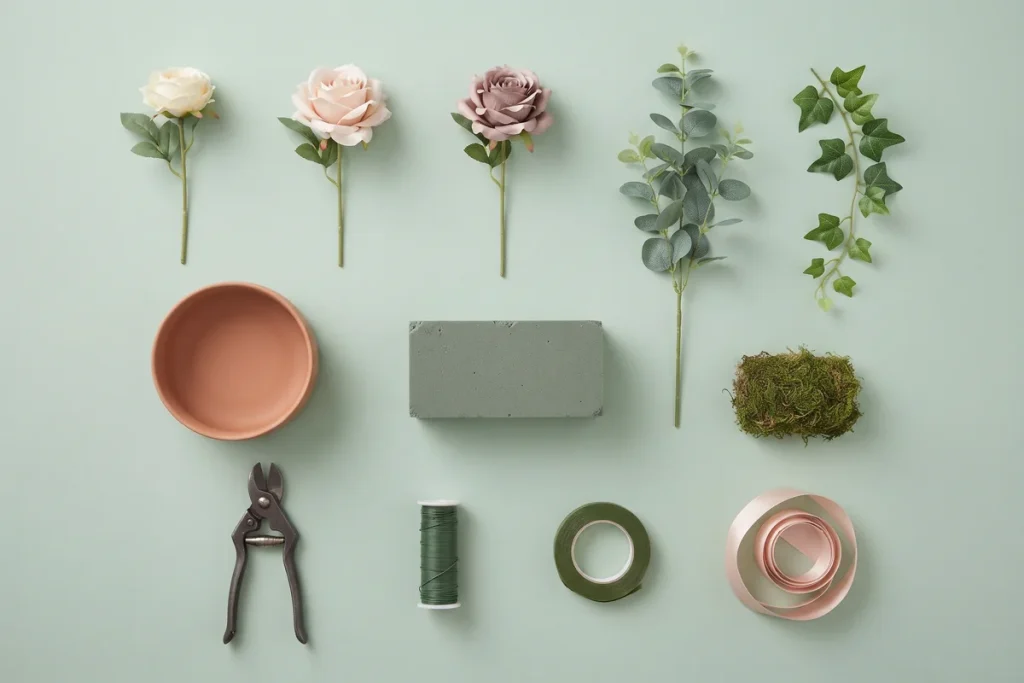
Most arrangements combine focal flowers, secondary flowers and greenery. Individual artificial flower stems give you the most design control, while pre-made bushes and bouquets speed up production for smaller pieces. Stock greenery such as eucalyptus, ferns and trailing ivy in more than one shade so arrangements don’t look flat.
Containers, vases and bases
Choose containers that match how the piece will be used. Ceramic and opaque vases hide the mechanics, clear glass suits minimalist designs, and low bowls work for centerpieces where guests need to see across the table. Keep a few neutral containers on hand that fit most color palettes.
Wire cutters, floral tape and ribbon for finishing
Silk stems contain wire, so heavy-duty wire cutters work far better than scissors. Floral tape, floral wire and dry floral foam hold stems in place, and moss or decorative stones hide the foam. Ribbons and bows finish hand-tied bouquets and gift pieces.
How to choose realistic artificial flower stems
Compare silk, real-touch and plastic stems
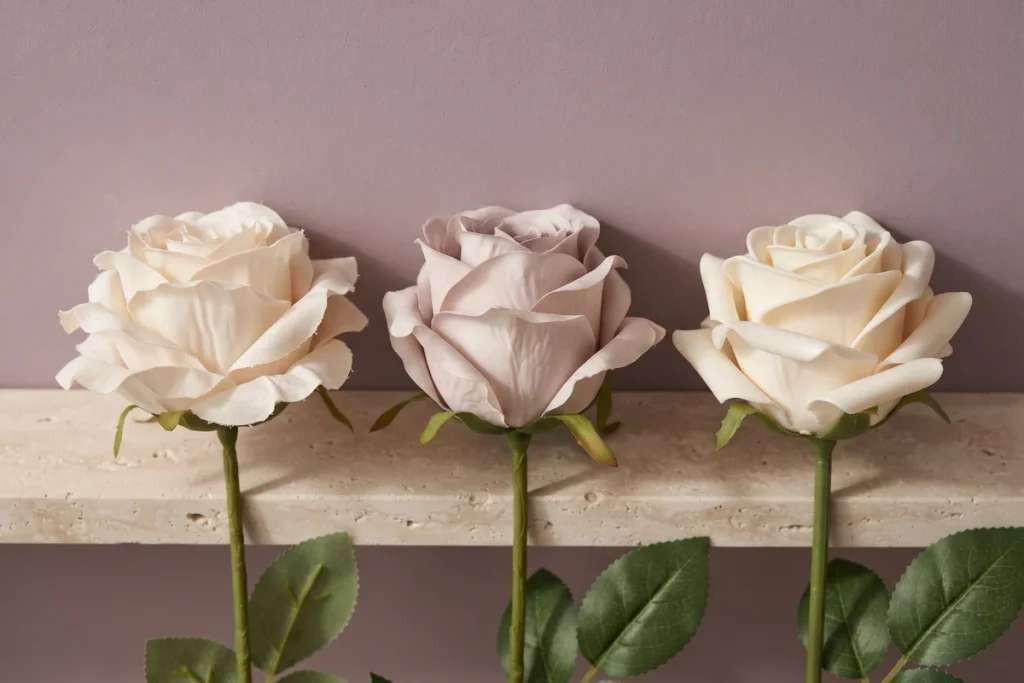
Silk stems, usually made from polyester fabric, offer detailed petals at a moderate cost. Real-touch stems have a coated finish that feels closer to a live petal and suit close-up pieces like bridal bouquets. Plastic stems hold up outdoors and in high-traffic spaces but can look less natural up close.
Check color, petal detail and stem flexibility
Look for natural color variation, visible veining and petals without frayed edges or glue marks. Bendable stems let you angle flowers the way real blooms fall. A stem that only points straight up makes the whole arrangement look stiff.
Mix focal flowers with fillers and greenery
Realism comes from variety. Combine large focal flowers, such as roses or peonies, with smaller fillers and greenery in a few sizes. Include buds alongside open flowers so the arrangement shows more than one bloom stage.
How to make an artificial flower arrangement step by step
1. Plan the shape and color palette
Decide whether the piece is round, oval, cascading or one-sided, since the shape sets where every stem goes. Choose two or three main colors plus greenery. Keep the arrangement noticeably taller or wider than its container so it doesn’t look cramped.
2. Prepare the container and base
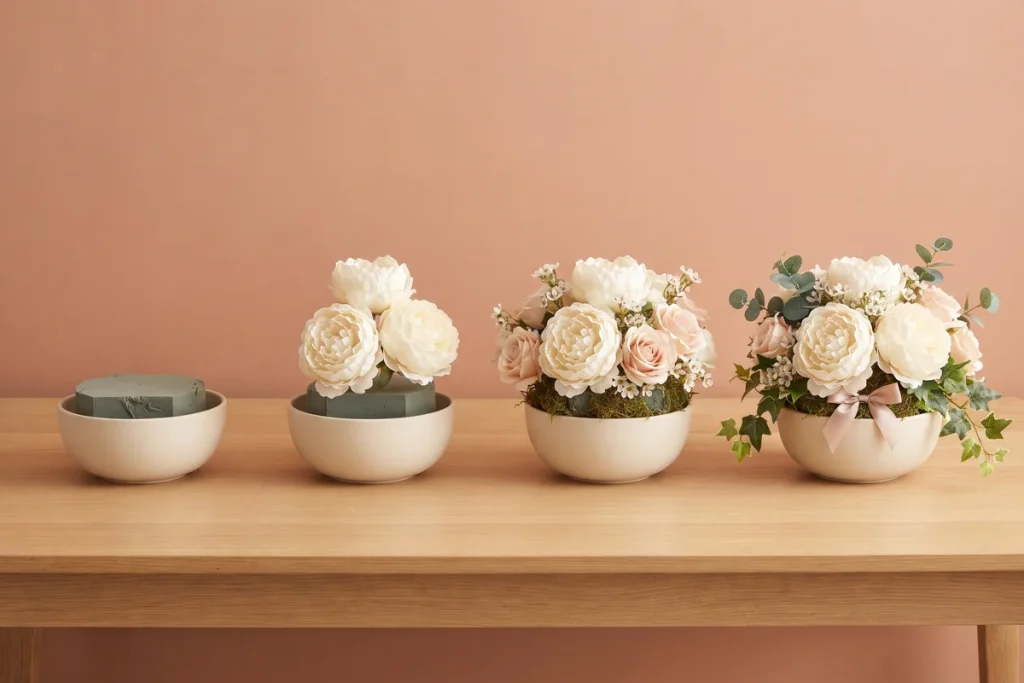
Cut dry floral foam to fit snugly inside the container and secure it with floral adhesive or tape. For clear vases, skip the foam and either arrange the stems so they look intentional through the glass or use a clear setting product made for faux arrangements.
3. Place focal flowers first
Insert focal flowers to set the outline and height. Trim each stem with wire cutters, leaving extra length you can cut later. Fluff and bend the petals by hand so each bloom faces a slightly different direction.
4. Add secondary flowers and greenery
Fill gaps with secondary flowers, then add greenery to soften edges and cover the foam. Turn the container as you work so the arrangement looks full from every side customers will see.
5. Finish with ribbon, accents and a final check
Add ribbon, berries or seasonal accents last. Check the piece from eye level and from above, cover any visible foam with moss, and gently pull on each stem to make sure nothing is loose.
Artificial flower arrangement ideas that sell year-round
Centerpieces for tables and events
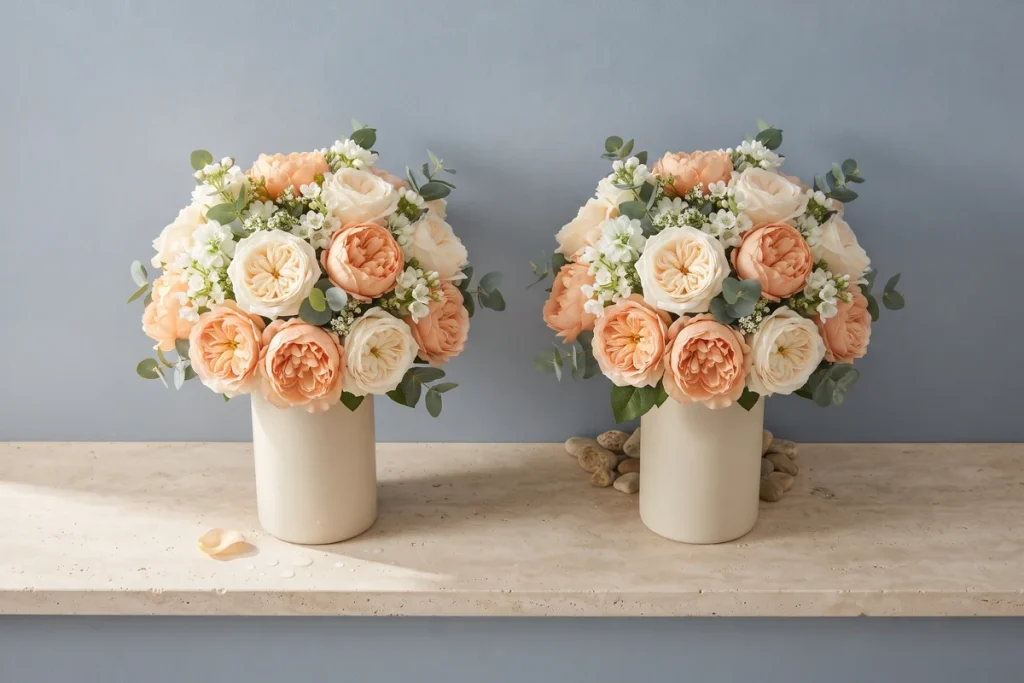
Low centerpieces sell to restaurants, venues and hosts who want reusable table decor. Offer them in a few neutral palettes so they suit many settings, and build matching sets for event orders.
Seasonal arrangements for holidays
Swap accents to match the calendar, with tulips and pastels in Spring, sunflowers in Fall and evergreen with berries in Winter. A base design you can restyle each season saves design time. Pre-made artificial flower arrangements can also fill out seasonal displays when studio time runs short.
Bud vases and small gifts for the counter
Single stems or small clusters in bud vases make easy add-on gifts at the register. They suit customers shopping for a coworker, a teacher or a host, and they use leftover stems from larger builds.
How to price artificial flower arrangements for resale
Calculate stem, container and labor costs
List the cost of every stem, the container, foam, ribbon and accents, then add your labor time at an hourly rate. Faux pieces can take longer to build than fresh ones because each stem needs shaping, so track your actual time.
Set retail prices by size and complexity
Group arrangements into small, medium and large tiers with a set price range for each. Adjust upward for complex designs or premium real-touch stems. Tiered pricing keeps quotes consistent and makes it easier for customers to choose.
Price event and wedding orders separately
Event work includes consultations, sample builds, delivery and setup, so price it separately from counter sales. If you rent centerpieces, factor in cleaning, storage and replacement stems for pieces that come back damaged.
Example figures only. Retail price = total cost ÷ (1 − 50% target gross margin).
How to package and display faux arrangements
Protect arrangements for transport
Secure every stem with floral adhesive before a piece leaves the shop. Place finished arrangements in boxes with inserts or tissue to keep them from tipping, and wrap delicate blooms in a cellophane sleeve.
Use gift packaging for takeaway sales
Gift boxes, kraft wrap and a ribbon tie make a counter arrangement ready to give. A care card explaining how to dust silk flowers answers a common customer question before it’s asked.
Display arrangements by season and color
Group arrangements by color story so customers can picture them in a room. Rotate the front display with each season, and keep neutral year-round pieces on a fixed shelf. A retail merchandising calendar helps you plan each change.
Source artificial flowers and floral supplies with Everful
Stock factory-direct silk flowers and stems
Everful connects florists directly with vetted factories, so you can source silk stems, greenery and pre-made arrangements across many colors and styles. Everful adds 10K+ new products every day, which helps you keep seasonal palettes current.
Add ribbons and packaging for finished arrangements
Ribbon, bows and gift packaging can go on the same account as your stems, which keeps finishing supplies consistent across orders. Every order is hand-inspected before it ships.
Test new colors and stems with smaller orders
Everful has no minimums, so you can start with a single piece on most products and test a new stem or color before ordering in volume. Live chat, WhatsApp and email support are available 24/7. Pick one seasonal palette, build a few test pieces, and reorder the stems your customers respond to.
Common questions about artificial flower arrangements
Is an artificial flower business profitable?
It can be, especially when faux work fills slower months between fresh-flower peaks. Profitability depends on your stem costs, labor time and pricing. Track every input per arrangement and price by size tier so each piece covers its costs. Sourcing artificial flower stems directly from factories helps keep material costs predictable.
Where do florists buy artificial flowers?
Florists buy artificial flowers from wholesale suppliers, floral distributors and factory-direct marketplaces. Compare stem quality, color range and order minimums before choosing a source. A florist supply source with no minimums lets you test new stems before committing.
How do you make silk flowers look real?
Mix focal flowers, fillers and greenery in several sizes, and bend each stem so blooms face different directions. Include buds alongside open flowers, choose stems with natural color variation, and hide all mechanics with moss or an opaque container.
What faux flowers sell well year-round?
Roses, peonies, hydrangeas and greenery-heavy designs suit many settings and seasons. Neutral palettes in white, cream and soft green sell to home and office buyers, while seasonal accents can be swapped in for holidays.
How should florists price faux arrangements?
Add up stems, containers, supplies and labor time, then price by size tier. Charge separately for event consultations, delivery, setup and rentals. Review prices whenever your stem costs change.