Custom product fulfillment through dropshipping
Putting your brand on a product is one decision. Having a supplier fulfill individual customer orders is another.
When retailers combine customization with dropshipping, those two parts of the operation have to work together. The product needs to be made or branded correctly, approved before production, stored in the right place, matched to the right customer order, packed with the correct branded materials, and shipped on the timeline your store has promised.
That makes custom dropshipping different from listing a ready-made product and asking a supplier to ship it. Before you sell, you need to know exactly what is being customized, whether production requires a minimum order, when the customized inventory is produced, who holds it, and whether the supplier can actually fulfill individual customer orders from that inventory.
- Branding and fulfillment have to be confirmed together. Custom dropshipping only works when the supplier can both customize the product and fulfill individual customer orders from that inventory.
- Branding and made-to-order are different processes. Adding branding to an existing product usually takes less coordination, a lower minimum, and a shorter lead time than commissioning a product to your own specifications.
- Private label, white label, and print on demand aren’t interchangeable. Each describes a different production model, and none of them automatically means dropshipping.
- Confirm every customized component separately. Minimums, storage, ownership, and individual-order fulfillment can each work differently for the product, the packaging, and any custom components.
- Source custom branding and private-label production from Everful. Confirm direct-to-customer fulfillment for your specific arrangement before you launch.
What custom dropshipping can mean for your product line
“Custom product” can describe very different levels of customization.
At one end, you might take an existing product and add your logo, product card, tag, or packaging. At the other, you might commission a product built to your own dimensions, materials, colors, or other specifications.
The fulfillment arrangement can differ just as much. Some products are customized in a batch and stored until individual customers order them. Other business models produce or decorate an item only after an order arrives.
Knowing which model you are using is the first step toward building a fulfillment process around it.
Adding your brand to an existing product
Custom branding starts with a product that already exists.
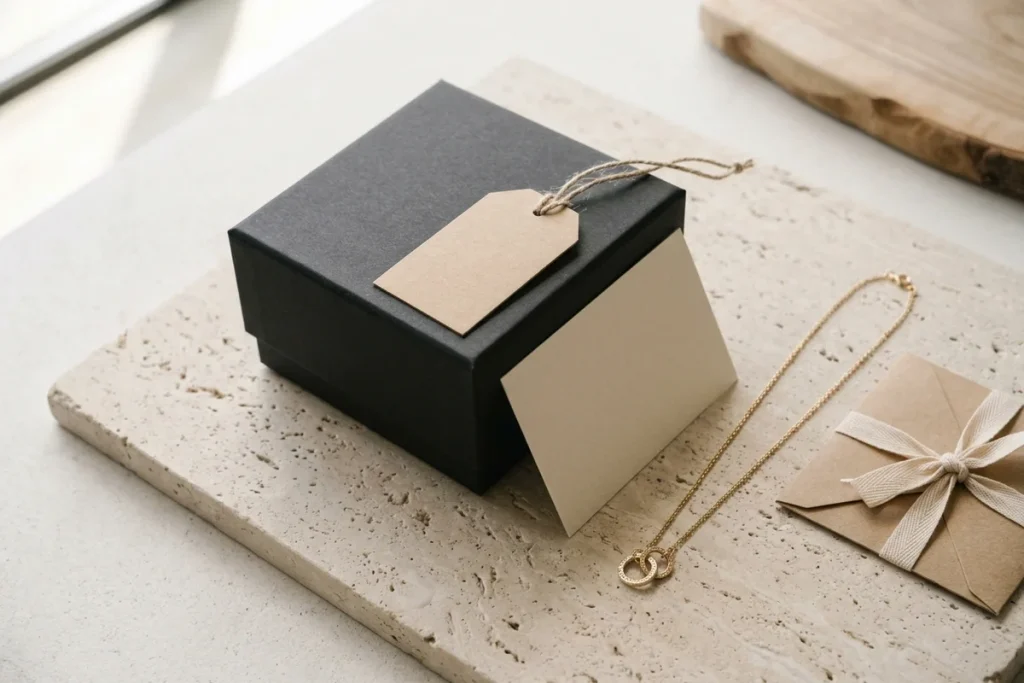
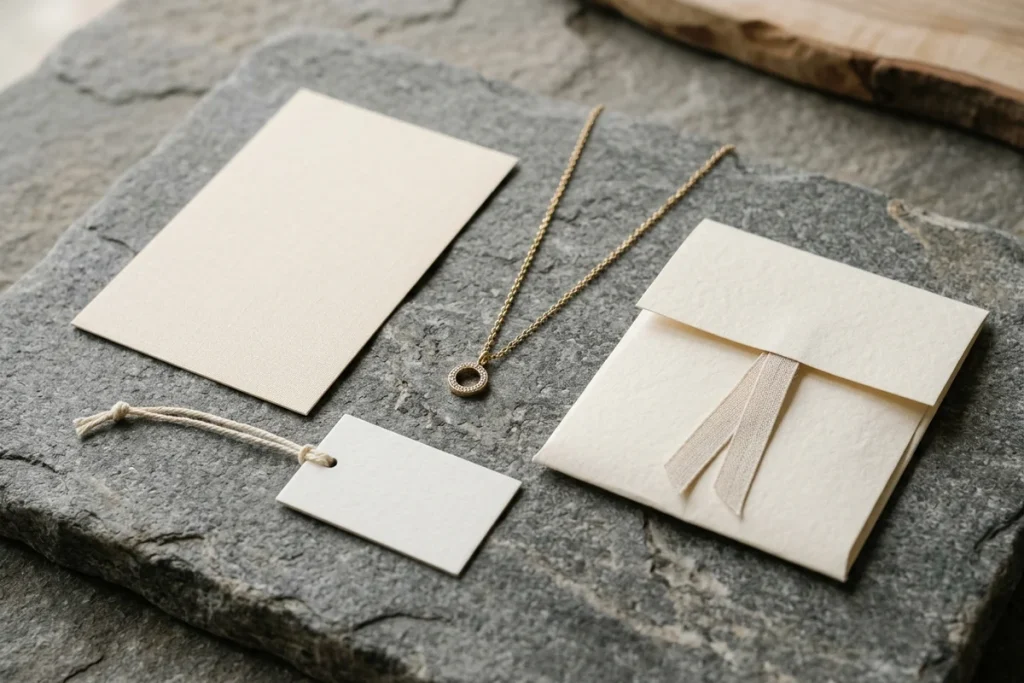
A retailer might select an existing jewelry style, for example, then add logo engraving, a branded jewelry card, a tag, or custom packaging. The underlying product is not being redesigned from scratch. The customization changes how the product carries and presents the retailer’s brand.
Everful makes the same distinction in its custom branding offering: branding options such as logo engraving, custom product cards, tags and labels, and branded packaging are applied to existing products, while made-to-order sourcing covers products built to a buyer’s specifications.
That difference matters when you talk to a supplier. Asking whether a product is “customizable” does not tell you whether you can alter its construction, dimensions, materials, or design.
Creating a product to your own specifications
A made-to-order product starts with a more detailed product brief.
You may specify dimensions, materials, colors, hardware, finishes, construction details, or other requirements that change the product itself. That usually requires more coordination than applying a logo to something already in production.
For a retailer developing a private-label line, this is where the supplier relationship becomes particularly important. Specifications need to be detailed enough that the factory can reproduce the approved product consistently, not simply create one good sample.
Everful’s private-label and custom manufacturing resources distinguish this type of custom production from ready-made sourcing and note that applicable minimums and timing depend on the customization involved.
How private label, white label, and print on demand differ
These terms sometimes overlap in everyday use, but they describe different arrangements.
White label generally starts with an existing product that multiple sellers may offer under their own branding. Your brand changes the presentation, not necessarily the underlying product.
Private label usually gives the retailer more control over how a product is branded and, depending on the supplier arrangement, may include changes to product specifications.
Print on demand is a production model in which an item is printed or otherwise decorated after a customer order triggers production. Apparel, posters, mugs, and similar products are common examples.
None of those terms automatically means dropshipping. Dropshipping describes the fulfillment path: the supplier or fulfillment partner sends an individual order to your customer rather than first sending that inventory to your store.
A supplier can provide private-label production without providing direct-to-customer fulfillment. Confirm both services separately.
Choose what to customize
Customization is most useful when it makes the product line feel more consistent with the business behind it.
That does not mean every available surface needs a logo. Decide which details matter to the product itself and which matter to its presentation.
Logos, engraving, labels, and product details
Product-level customization stays with the item after the packaging is gone.
Depending on the product and supplier, that could mean engraving a logo, adding a sewn or printed label, changing a color or finish, or producing the item to a particular specification.
A jewelry retailer, for example, might decide that a subtle logo engraving belongs on selected pieces while other products need no permanent mark at all.
Before approving any option, ask how the branding is applied, how large it will be, which surfaces are eligible, and whether the process changes the product’s material, finish, care requirements, or production time.
Product cards, tags, and branded packaging
The product does not have to change for the customer to receive a branded presentation.
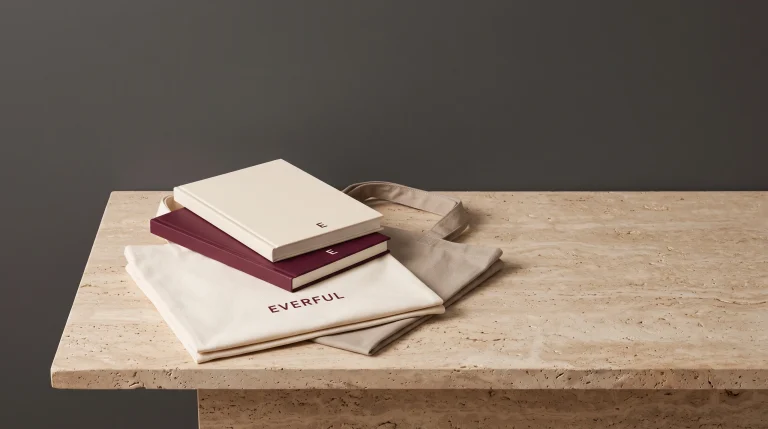
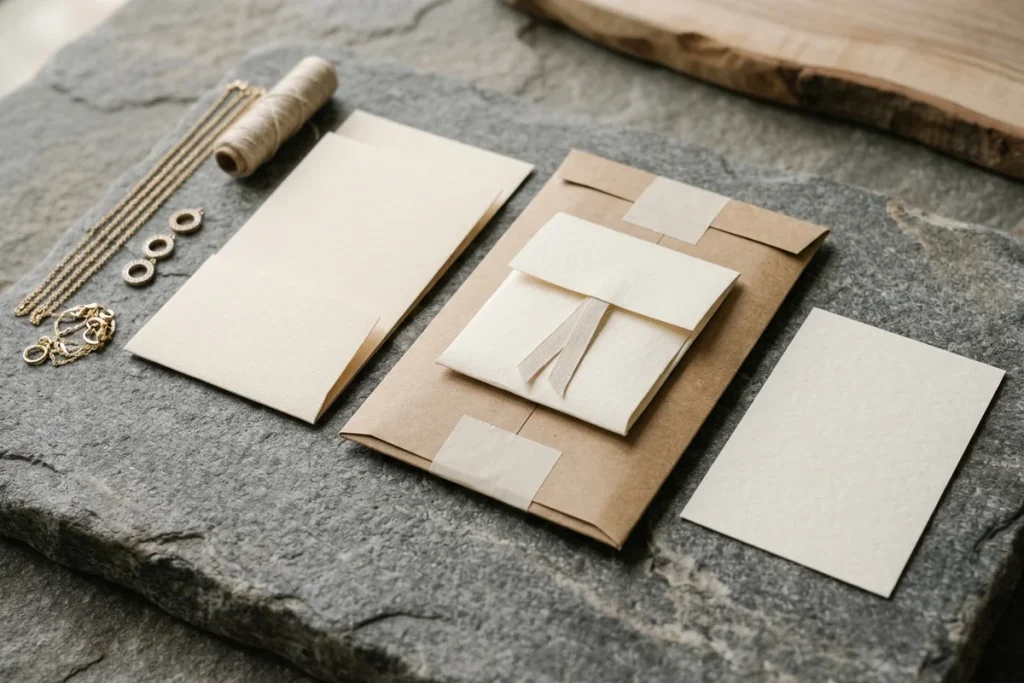
Cards, tags, labels, mailers, boxes, tissue, inserts, and other packaging elements can create that presentation around an existing product. Everful’s current custom-branding options include custom product cards, logo tags and labels, and branded packaging alongside product engraving.
These components need their own planning.
A product might have one production minimum while a custom box, mailer, or printed card has another. Packaging can also take up storage space long after it has been produced.
Treat the product and its presentation as related parts of one customer experience, but separate parts of the production plan.
Confirm production and fulfillment before committing
This is where a custom dropshipping plan either becomes operational or stays an idea.
Before ordering customized products or packaging, map what happens to every component after it is produced.
Check product and packaging minimums separately
Ready-made products and custom production should not be treated as if they follow the same minimum-order rules.
A supplier may let you buy a ready-made item in a small quantity while requiring a larger production run to engrave it, manufacture it to your specifications, or produce custom packaging. A printed box supplier may also have a different minimum from the factory making the product inside it.
Everful states that private-label minimums depend on the product and customization and that buyers can see the applicable requirement before committing.
Ask for the minimum on each customized component before calculating your launch cost.
If 100 products require 500 custom boxes, for example, you need to know what happens to the other 400 boxes and when you are likely to use them.
Establish who owns and stores finished inventory
Custom products may need to exist before individual customer orders arrive.
That is especially important when your branding method requires a production run rather than one-at-a-time customization.
Ask where the finished products go after production. Does the supplier hold them? Do they move to a fulfillment warehouse? Do they ship to you? If custom packaging was produced separately, where is it stored and how is it connected to the correct product?
Also establish ownership. Know when you pay for the custom inventory, whether it has already been purchased before a customer order arrives, and what happens to unused products or packaging if you stop selling the line.
This is one of the biggest differences between custom dropshipping and ordinary ready-made dropshipping: you may avoid storing inventory yourself without avoiding the need to produce and pay for custom inventory in advance.
Confirm individual-order shipping and how orders reach the supplier
Do not assume that a supplier capable of customization can also pick, pack, and ship one unit to one shopper.
Ask directly whether the supplier or its fulfillment partner supports individual direct-to-customer orders from the customized inventory.
If it does, document how the order arrives. Some arrangements use a platform or ecommerce integration. Others require a manual submission or another workflow. Confirm what is actually supported before building your store around it.
Then establish how the supplier identifies the correct product, variant, and packaging for each customer order.
Approve the details that must stay consistent
Once custom production begins, “close enough” is difficult to fix.
The more details you approve before the production run, the clearer the standard becomes when you inspect finished inventory or place a reorder.
Supply artwork and confirm placement, size, and finish
Start with production-ready information.
Provide the artwork format the supplier requests and document the approved logo size, placement, orientation, color, and application method. If the product has multiple variants, establish whether the same branding specification works across all of them.
For packaging, approve the structural details as well as the artwork. A beautiful box is not useful if the product does not fit securely inside it.
Everful’s current branding process allows buyers to upload a logo or artwork and set their preferences before branding is applied, with customization checked before shipment.
Review a physical sample and document the approved specifications
A digital mockup can confirm direction. A physical sample tells you what the customer will actually receive.
Check the product against your specifications, then inspect the branding itself. Look at placement, size, color, legibility, finish, adhesion, stitching, engraving depth, or any other detail relevant to the method used.
Do the same for cards and packaging.
Once approved, document what you accepted. Keep the artwork version, measurements, colors, materials, photographs, and other specifications together so the next production run has a reference point.
This is especially useful when a custom line expands into related accessories, where maintaining a consistent brand treatment across different product types may require different production methods.
Map the journey from customer order to delivery
After custom inventory is approved and produced, shift your attention from manufacturing to fulfillment.
These are two separate timelines.
A batch may take time to customize before it is available for sale. Once that inventory is ready, an individual customer order then has its own processing, packing, and shipping timeline.
Match the correct product, variant, and packaging
Customization adds more elements that can be mismatched.
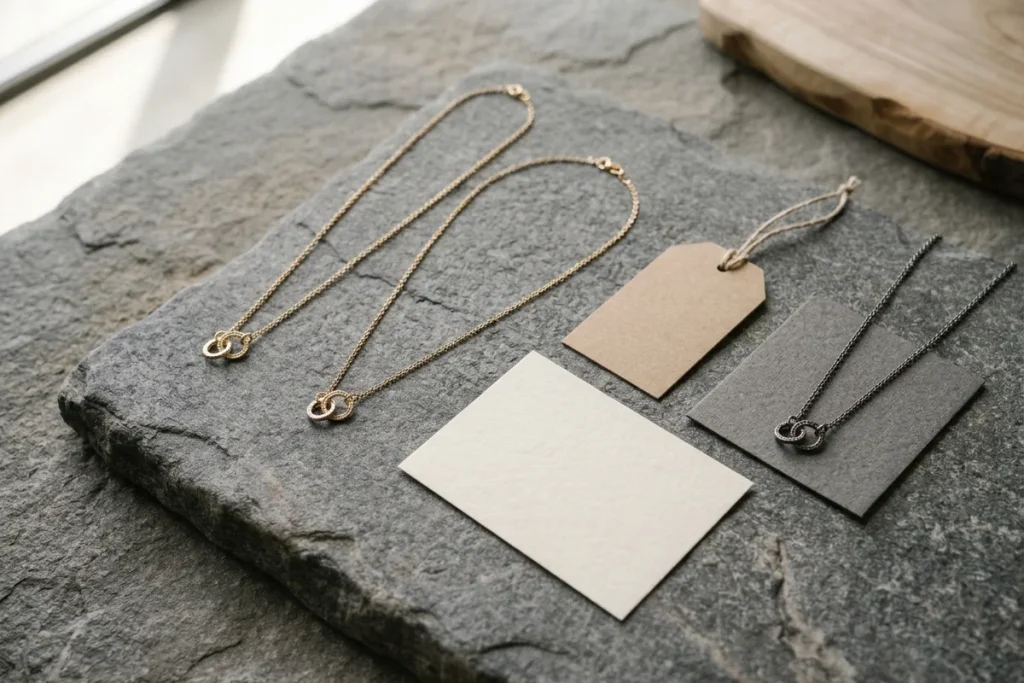
A single order may require the correct product, size or color variant, branded card, tag, insert, and packaging. If several brands, collections, or packaging versions share the same fulfillment location, the picking instructions need to distinguish them clearly.
Create SKU or inventory identifiers that separate the combinations that matter.
Then test them. Place an order for a specific variant and confirm that the parcel contains exactly the product and branding combination the customer selected.
Separate production time from shipping time
Do not give a customer a carrier transit estimate when the product still needs to be produced.
If customization happens in a batch before the item is listed as available, the customer-facing timeline may begin with normal order processing because finished stock already exists.
If the product is customized only after the customer orders, production time needs to be added before fulfillment and transit.
Everful’s public custom-branding information says branded production time depends on the branding option and order size, with timing shown during configuration and confirmed before the order is placed. Its wholesale shipping options separately distinguish order-processing time from carrier transit, which is the same distinction retailers should preserve in customer-facing delivery estimates.
Agree on tracking, errors, and replacement procedures
Custom products create exceptions that need more specific answers than “send another one.”
Determine when tracking becomes available and how it reaches your store and customer. Then establish what happens if the correct product ships with the wrong logo, the right branding is applied to the wrong variant, packaging is damaged, or a customization defect appears.
Ask who reviews the evidence, who pays for a replacement, whether the incorrect product must be returned, and how quickly a corrected order can be produced or dispatched.
Write those procedures before you need them.
Plan a custom product line with Everful
Everful currently supports custom branding and private-label/custom manufacturing, but those services should be planned separately from any individual direct-to-customer fulfillment arrangement.
That distinction keeps the sourcing decision clear.
Identify eligible products and branding options
Start by deciding whether you want to brand an existing product or create something to your own specifications.
Everful marks eligible catalog products as Customizable and offers options including logo engraving, custom product cards, logo tags and labels, and branded packaging. For products that need to be built to a retailer’s specifications rather than branded from existing stock, Everful directs buyers to its private-label and custom manufacturing service.
That gives you two different starting points: customize what already works for your assortment, or develop the product itself when the design needs to be yours.
Confirm minimums, lead times, and the fulfillment arrangement
Before committing, confirm three things separately.
First, identify the minimum order that applies to the product customization and any custom packaging. Second, confirm production timing for the exact configuration and quantity you want. Third, establish where the finished inventory will go and how it will ultimately reach customers.
Everful publicly confirms its customization and wholesale shipping capabilities, including end-to-end tracking on its wholesale shipments. Individual direct-to-customer dropshipping of customized inventory, however, should be confirmed for the specific arrangement rather than assumed from those services.
That final confirmation is what turns a custom sourcing plan into a workable custom fulfillment plan.