What is MOQ? A wholesale buyer’s guide
When new retailers hear “wholesale,” they assume it means committing to a huge order. Then the panic sets in: what if it doesn’t all sell? That is where minimum order quantity comes in, and what changes when a supplier does not set one.
Key takeaways
- MOQ stands for minimum order quantity: the smallest number of units a supplier will let you buy in one order.
- It is applied one of two ways, per style or SKU (100 units of one design) or across the whole order ($500 to check out). Ask which before you build your cart.
- Minimums exist to cover real costs: machine setup, molds, packaging ordered in runs, and labor batched by the job. The more units produced, the further those costs spread.
- In jewelry, the minimum tracks complexity rather than category. A catalog chain shares tooling that already exists; a new pendant means a new mold you pay for alone.
- High minimums hit small retailers in cash and in range. Netstock found 45% of small and mid-size businesses have been pushed to buy more than they need, and 17% now carry more than 10% of inventory unsold for a year or longer.
- Suppliers with no minimums let you order one each of ten styles instead of a hundred of one, so you learn what sells before you commit real budget.
As a retailer, no doubt you’ve found specific styles or categories that you think your customers would like, only to have your order declined because you haven’t met the MOQ. This is a real issue because you don’t know for sure whether the item will sell, but you’re being asked to commit to hundreds of units before you can really test it and find out.
The truth is that MOQ isn’t just industry jargon. It shapes what you can order and how you stock your shelves.
The good news is that it isn’t the whole story. There are suppliers that have an MOQ, and there are those that don’t. But to decide what is best for you and your store, it helps to understand how MOQ works and where it comes from. Here is how it works.
MOQ explained: why suppliers set minimum order quantities
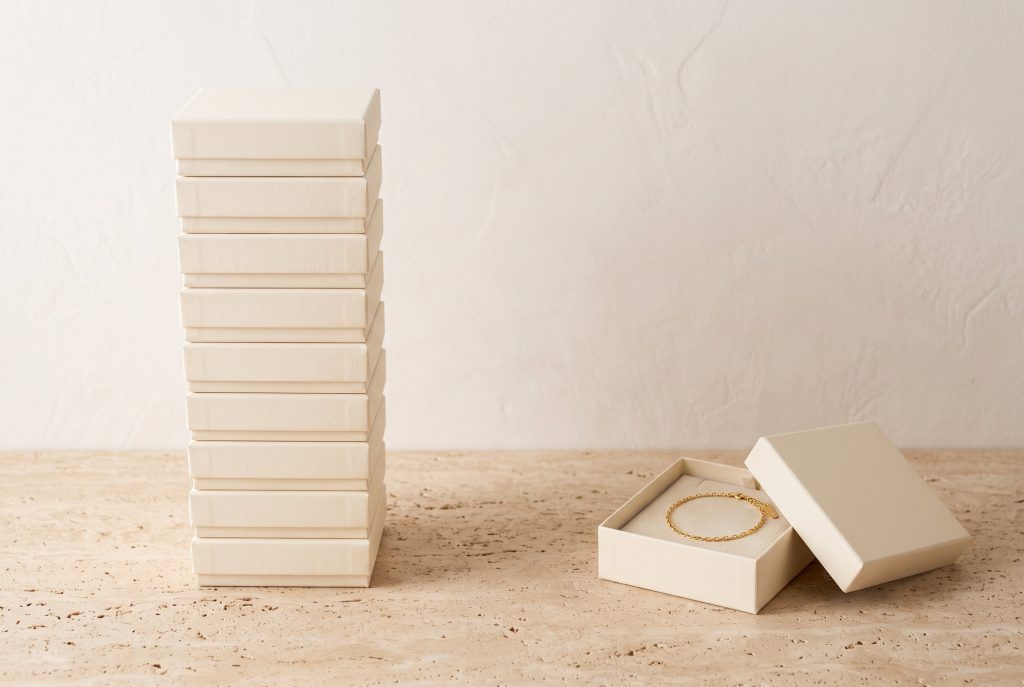
In the simplest terms, MOQ stands for minimum order quantity: the smallest number of units a supplier requires you to buy in one order. That said, there is a little more to it than that.
If you’re just learning how to start buying wholesale, you’ve probably come across the term. It isn’t just a buzzword, and it isn’t a ploy to get you to spend more. It has real implications when it comes to production. MOQ in wholesale works in two different ways. It’s either tracked per style or SKU, the individual item code you order against, such as 100 units minimum per design, or it’s factored on total order, as in you need to spend $500 minimum to check out.
MOQ in manufacturing is set for a reason. It helps manufacturers cover their costs. It costs money to produce a product. The manufacturer pays up front for machine setup, dye lots, mold creation, prep, and everything else that goes into making a product. So, it only makes sense to make as many as possible. When more of an item is produced, the per-unit cost drops, and that cost is what gets passed on to wholesale buyers. The more people ordering a given item, the further that setup cost is spread.
Then there is packaging. Packaging and labels are ordered at volume, not as single units. That cost is wrapped into the price as well. Again, the more of the item sold, the lower the packaging cost per piece, which ultimately drives down the price.
And finally, there’s labor. Orders are batched for labor and machine time. A small one-off order might take the same time to set up and produce as a large order, which also shows up in the price per item.
How MOQ works in jewelry
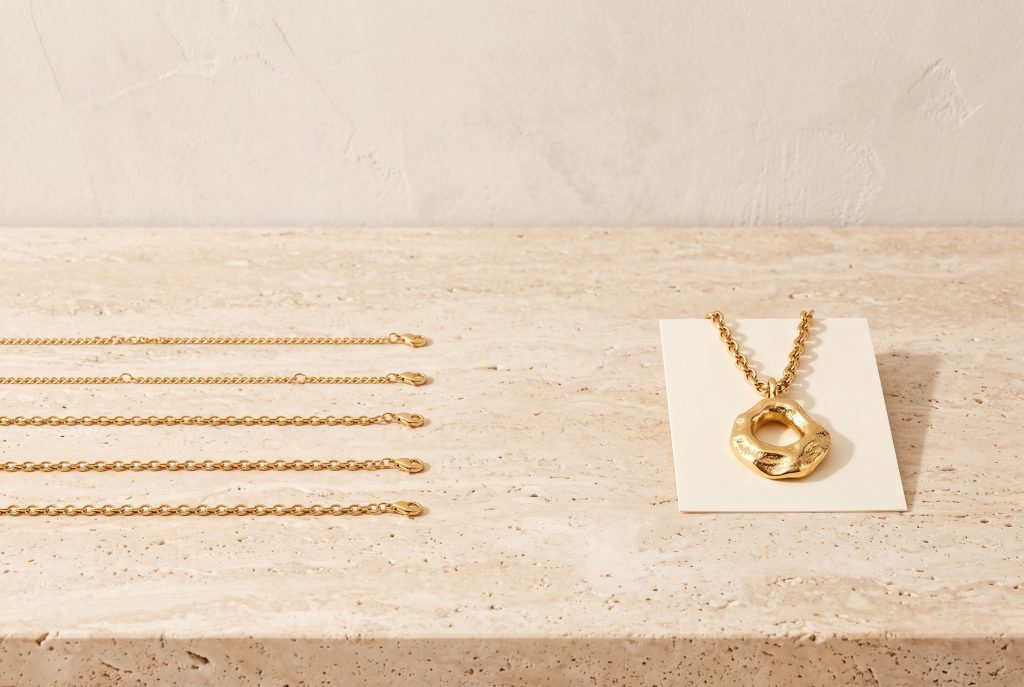
To help you understand, let’s take jewelry as an example. MOQ for jewelry tracks the complexity, not the category. Factories keep the molds and tooling for designs they have already made. So, if you’re ordering a plain chain bracelet from a wholesale catalog, you’re sharing the cost of setup, mold prep, and everything else that went into making that chain with everyone who has ever ordered that item. The factory already has what it needs to make and fill that order.
But if you want a custom pendant that isn’t in the catalog, you’re requesting a brand-new mold, new tools, custom packaging, and a dedicated setup. And you’re the only one ordering it and covering the cost, making it more expensive.
Even if the piece isn’t custom, one unit still costs more to produce than many.
In the end, it comes down to simple math: how much of the setup and production cost is shared, versus how much you cover when the item is new for you or you’re only ordering one. It doesn’t matter what the item is; what matters is how common the piece is.
How MOQ affects small and new retailers
As a retailer, you probably worry that MOQ will negatively affect your business. You’re not alone in that concern.
Having an MOQ means you’re committing money to inventory you don’t know will sell. For a new or small business where cash flow is already tight, that’s a real problem. According to the Federal Reserve Banks’ 2025 Report on Employer Firms, which draws on the 2024 Small Business Credit Survey, 75% of firms cited rising costs of goods, services, and wages as their most common financial challenge. Netstock’s 2025 Benchmark Report, which surveyed more than 130 of its users at small and mid-size businesses (SMBs), found that 45% say minimum order quantities have forced them to purchase more than they need, which ties up their cash flow.
Another concern is storage risk. A high MOQ means you’ve got to sell it or store it. Unsold stock becomes dead stock, the inventory that sits past the point where it will move, so buying high volume before you know whether it will sell poses a risk. In the same Netstock data, 17% of SMBs said more than 10% of their inventory has sat unsold for a year or longer, up from 12% the year before.
And finally, there is assortment, or the range of products a retailer chooses to stock. A high MOQ per SKU pushes you into fewer styles instead of a wide range. Take, for example, a new retail boutique stocking a jewelry line. They can either purchase one style at volume or test an assortment of styles to see what sells best before ordering at volume. Unfortunately, having a high MOQ per SKU makes that decision for them.
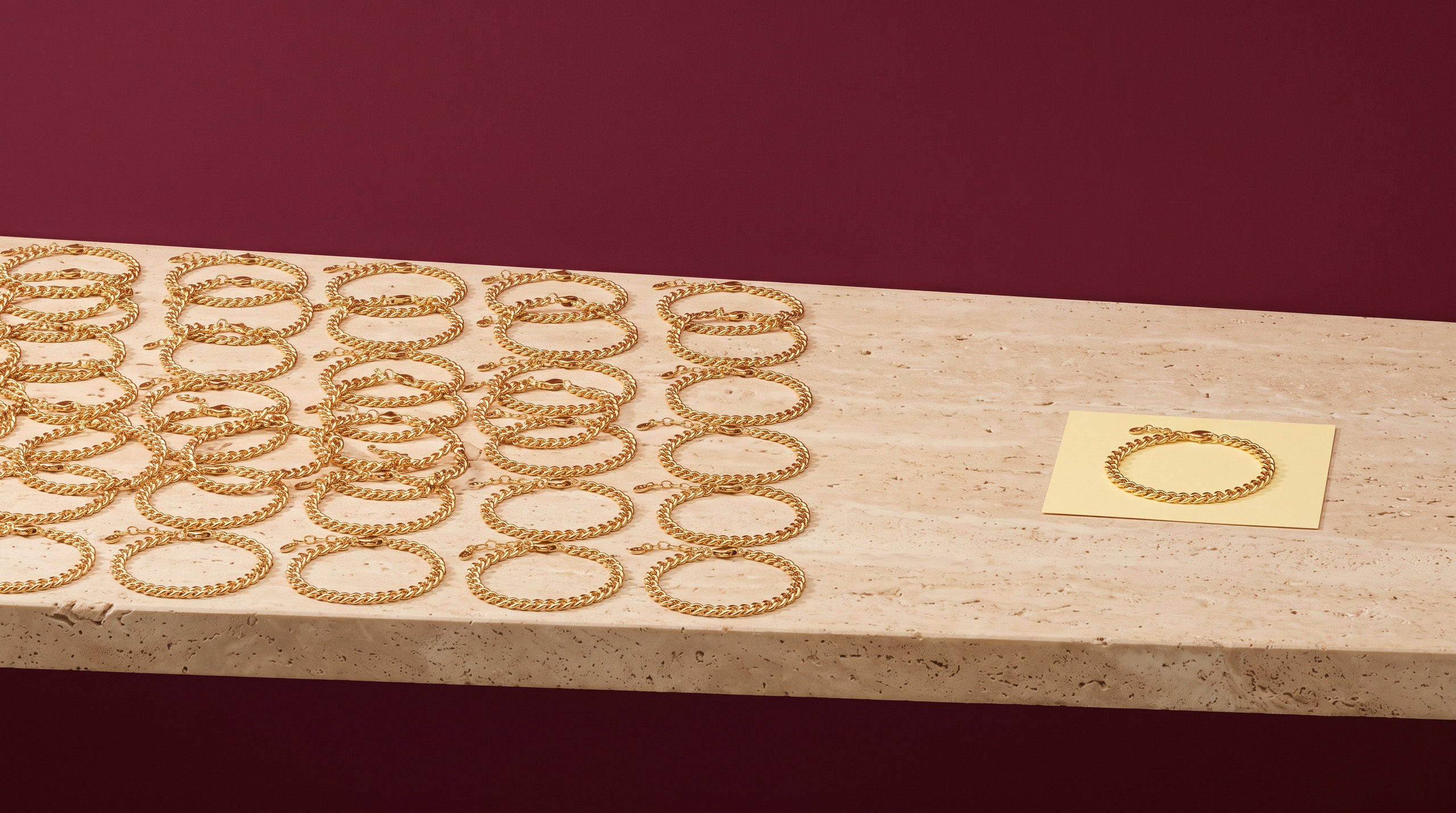
A low MOQ, or no minimums at all, means stocking 10 different styles at a low volume, which spreads the cash, inventory, and assortment risk out instead of concentrating it in one option per category.
- Cash position
- The whole budget sits in a single design before a customer has seen it
- What you learn
- Whether that one style sells, and nothing about the rest of the category
- If it does not sell
- Ninety-odd units become dead stock and take shelf space with them
- Assortment
- One option per category, chosen for you by the minimum
- Cash position
- The same budget spread across ten designs, so no single miss is expensive
- What you learn
- Which of the ten your customers actually reach for, from real sales
- If it does not sell
- You are out one unit and you reorder depth on the winners instead
- Assortment
- A range you chose, tested before you commit to any of it
Shopping wholesale with no minimums
That’s where learning how to shop wholesale with no minimums comes in. This is not like traditional wholesale because there are no minimums; you can order a single item to test it.
For you, as a small or new retailer, finding a supplier with no minimums is key. No-minimum or low-volume wholesale sourcing means you can browse, select, and check out any quantity of an item with no threshold to hit. For example, sourcing wholesale jewelry with no minimums means you can order one each of 10 different styles instead of being forced to order 100 of just one style.
The good news is that no minimums are possible with factory-direct wholesale sourcing, like at Everful.
How to test new categories with no minimums
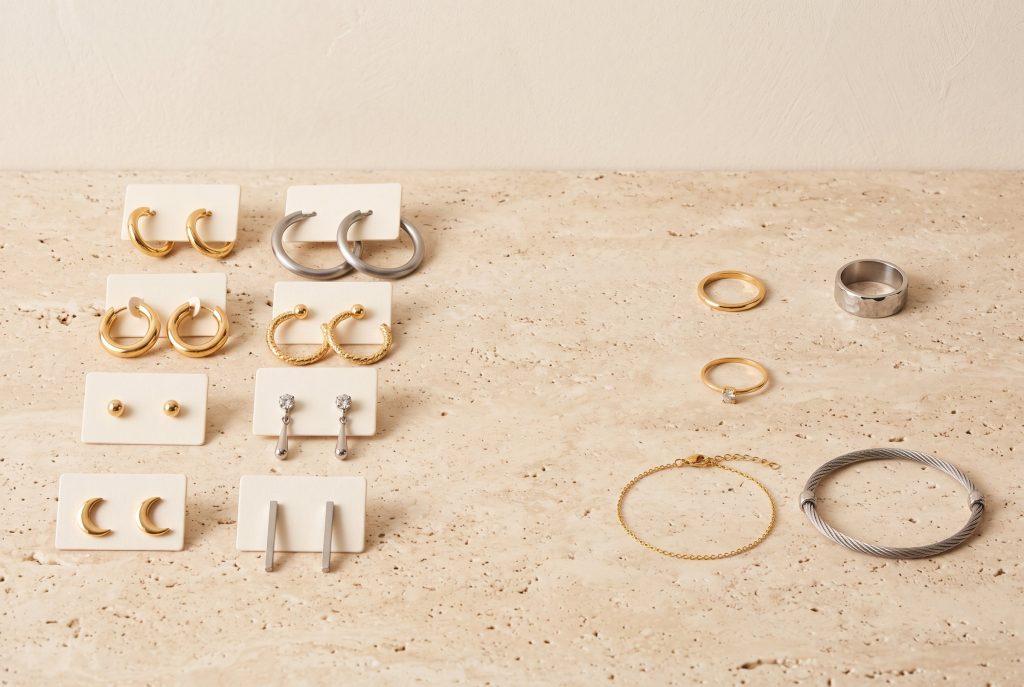
When you find a wholesale supplier with no minimums, you have the freedom to test new categories and widen your assortment. How do you do this? Say you run a small boutique that has only ever sold earrings. But now you want to expand into rings and bracelets. With no minimums, you can test several ring and bracelet styles at once. This means you reduce the risk of dead stock, or of spending money on stock that you don’t know will sell.
Once your order arrives, track how well your test items sell to decide whether a style is worth ordering at volume, or whether to skip the reorder and try a different style instead.
How Everful’s no-minimum model works
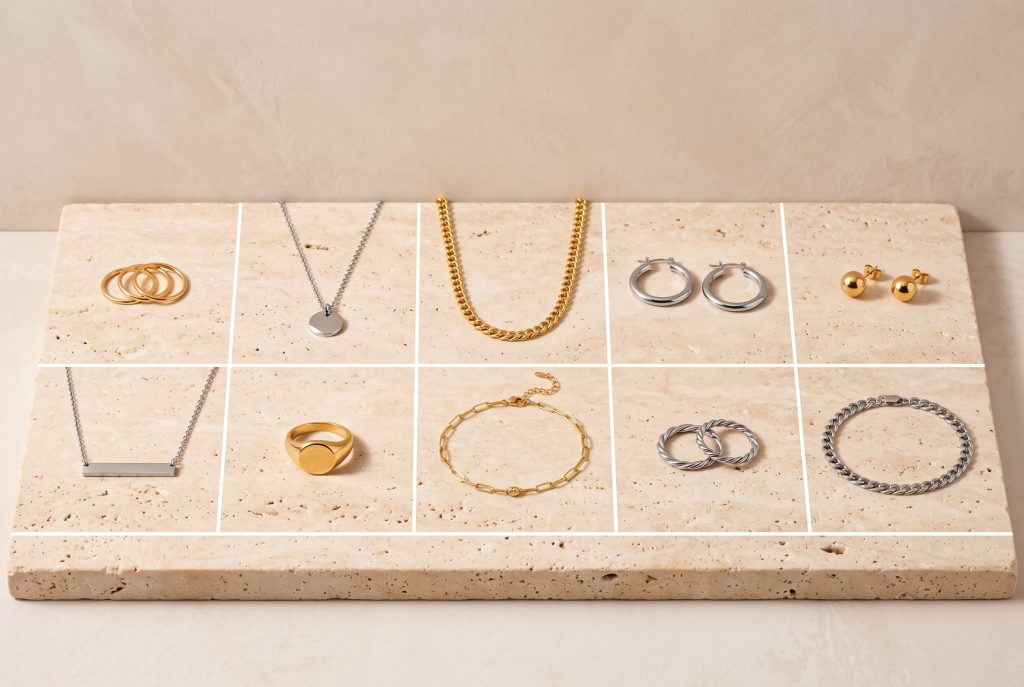
Everful works in this exact way to help you source and test categories before committing to large volume orders. Everful is a factory-direct model with no minimums, so there is no order threshold between you and factory pricing. You buy from vetted factories with no minimums, and every order is hand-inspected before it ships. It also comes from a single accountable source, with real human support behind it from order to post-sale. One unit or a thousand, you can expect the same quality and the same price.
Common questions about MOQ in wholesale
Does MOQ apply per product or per whole order?
Minimum order quantity (MOQ) can apply both ways; it just depends on the supplier. Some suppliers calculate MOQ by the number of an item or SKU that is ordered, so you clear the minimum design by design. Others calculate it by the total order value, so you can mix styles freely as long as the basket reaches the threshold. Check which model a supplier uses before you build your order, because the two lead to very different carts.
What happens if I can’t meet a supplier’s MOQ?
If you can’t meet a supplier’s MOQ, you have a few options. You can order from a different product line whose minimum you’re confident you can meet. You can ask the supplier whether the minimum is negotiable, particularly if you plan to reorder. Or you can choose a different supplier, one with no minimums.
Is a lower MOQ always better for a small retailer?
Not necessarily. A low MOQ is one factor to consider when picking a supplier, and it reduces the risk of over-buying inventory you can’t move. However, it doesn’t tell you anything about the quality of the supplier’s items, how orders are inspected, or how you reach someone when an order arrives wrong. So while it’s a good thing, it shouldn’t be the only deciding factor.
Are there wholesale suppliers with no minimum order quantity?
Yes, there are wholesale suppliers with no minimums, such as Everful. These suppliers allow you to purchase any quantity of an item, even if it’s just one, to test a category before you commit to a large volume order. That lets you learn what sells with a small amount of cash on the line instead of a full run.
Can I order samples before placing a larger volume order?
Yes, that’s how no-minimum sourcing works. You can purchase any quantity of an item, no matter how small, to test it and make sure it will sell before you order a larger volume. Everful works this way and allows you to order single items from vetted factories. When you scale, you’ll get the same price and quality as you did on that single item.