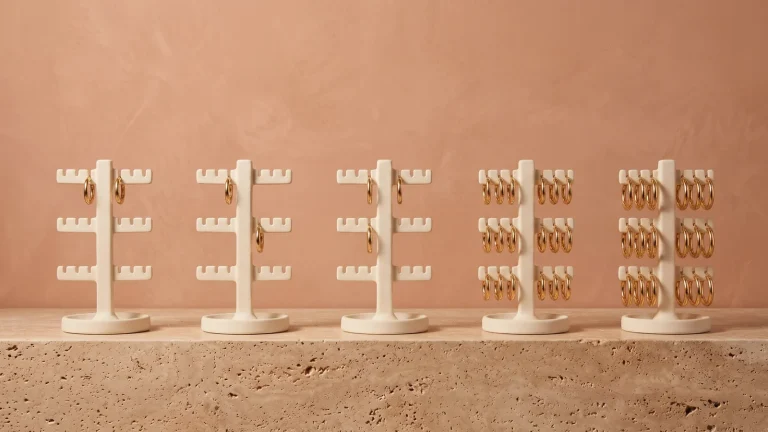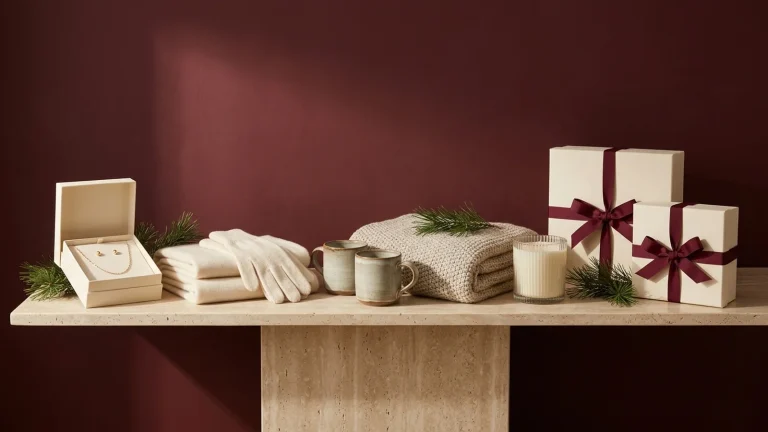
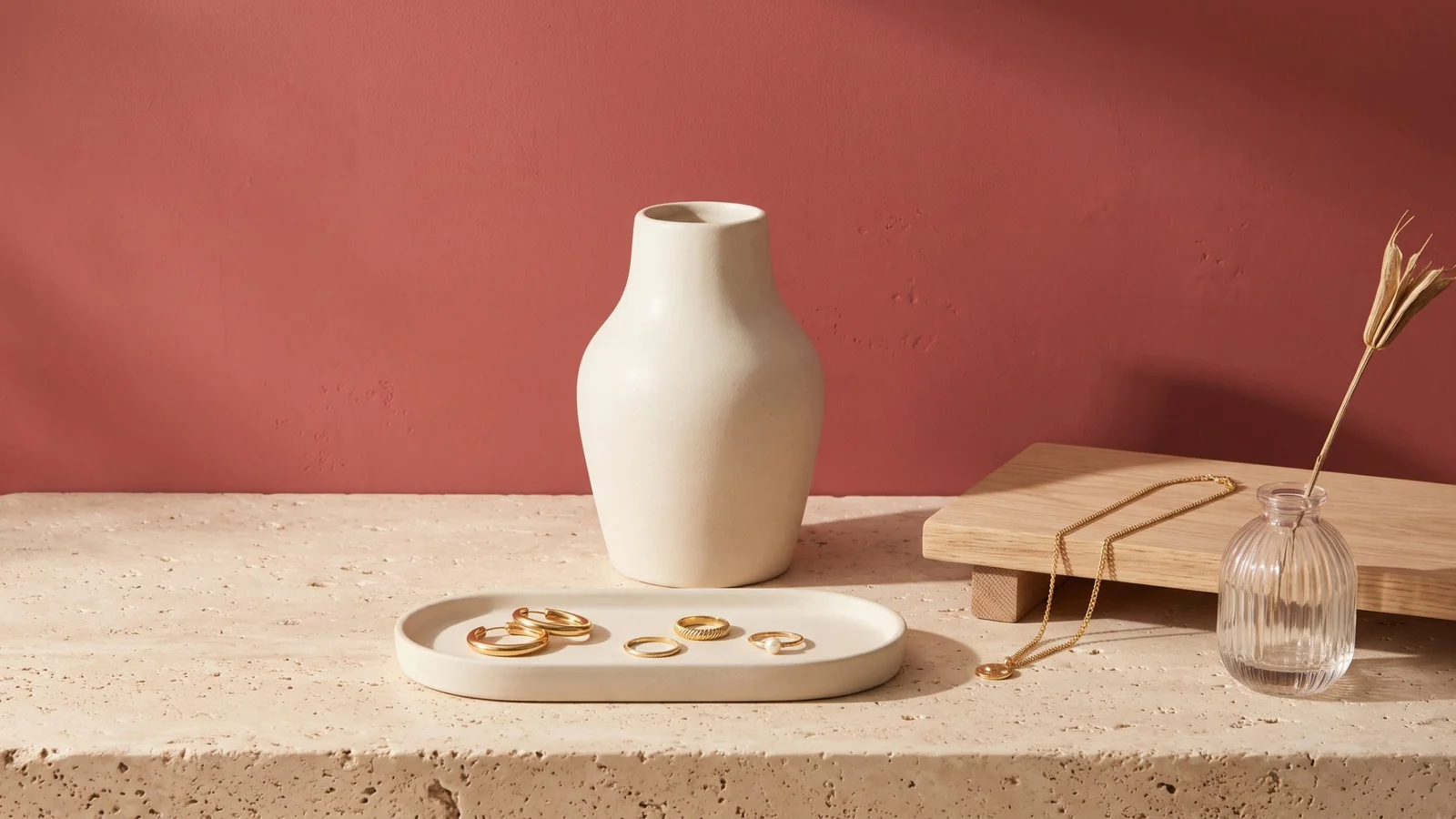
Prep your boutique shelves with minimalist essentials
Minimalist products only look effortless. Here’s how to define a minimalist look for your boutique, build a jewelry and home decor assortment that belongs together, give it room on the shelf, and test new pieces in small orders.
- Minimalist doesn’t have to mean tiny or white. An assortment feels cohesive when a limited visual vocabulary repeats across the products you choose.
- Set two or three visual rules, like a core palette and a few recurring shapes, then use texture and scale to keep the assortment interesting.
- Build the jewelry assortment on everyday forms such as small hoops, studs, simple pendants and slim rings, and compare materials and finishes, not just price.
- Choose home decor with a purpose. Trays and dishes bridge jewelry and home, and one sculptural piece can anchor a whole shelf.
- Display products in small groupings with a clear focal point, varied heights and open space between groups.
- Start with a focused first buy and reorder proven pieces before adding variations. With no minimums on most products, you can test a single piece at a time.
Minimalist products may look simple on their own, but building a boutique assortment around them takes a deliberate eye. When silhouettes, finishes, colors, and materials are restrained, small differences become more noticeable.
Start by deciding what minimalism means for your store. It might be fine gold-tone jewelry paired with warm neutrals, or geometric pieces displayed beside ceramics and natural textures. The goal is enough visual consistency that shoppers can see how the pieces belong together, without making every product look the same.
That same discipline helps with buying. A focused first assortment lets you test several product types and price points without filling your shelves with variations that serve the same purpose.
Define the minimalist look for your boutique
Minimalist doesn’t have to mean tiny, white, or nearly invisible. A minimalist assortment can include sculptural shapes, warm metals, textured ceramics, dark accents, and natural materials. What makes the assortment feel cohesive is restraint: a limited visual vocabulary repeated intentionally across the products you choose.
For boutique owners, defining that vocabulary before sourcing makes comparison easier. Instead of asking whether you like each item individually, you can ask whether it earns a place in the assortment you’re building.
Choose a consistent palette and a few recurring shapes
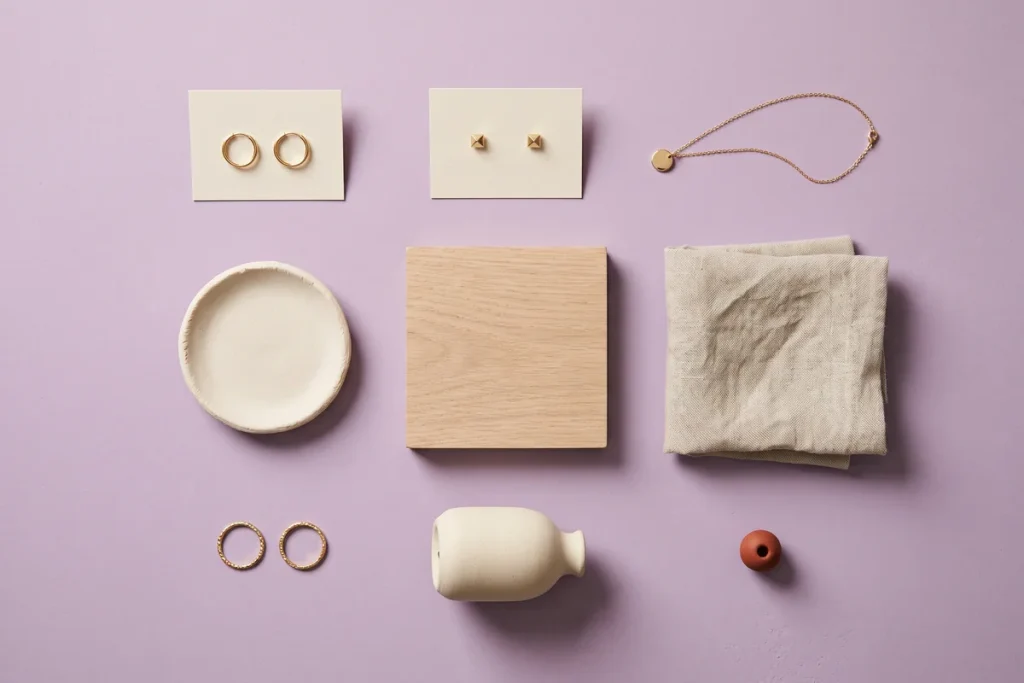
Begin with two or three visual rules. You might choose warm gold tones, cream, and natural wood for the core palette, then repeat circles and soft curves through jewelry, trays, and decorative objects. Another boutique might build around silver finishes, charcoal accents, and clean geometric lines. These rules give you room to choose different products without creating a disconnected display.
Everful’s minimalist and elegant jewelry collection provides one place to compare streamlined jewelry silhouettes within a more focused aesthetic. When evaluating pieces, look for shapes that can recur across earrings, necklaces, rings, and bracelets rather than treating each item as an isolated choice.
Use texture and contrast to keep the assortment interesting
A restrained palette needs variation somewhere else. Texture can provide it without making the display feel busy. Smooth metal can sit against matte ceramic. A polished jewelry tray can contrast with unfinished or lightly grained wood. Ribbed glass can add detail beside a simple pendant.
Scale creates contrast too. A larger sculptural vase can anchor a group of much smaller jewelry pieces without requiring another color or pattern.
The aim is balance. If every item is the same color, size, material, and finish, the assortment can become visually flat. If every item introduces something new, the minimalist idea disappears.
Build the jewelry assortment around everyday wear
For a first minimalist jewelry assortment, begin with recognizable forms that can work across different outfits and occasions. That gives you a foundation before you experiment with more distinctive silhouettes.
Small hoops, studs, and simple pendants
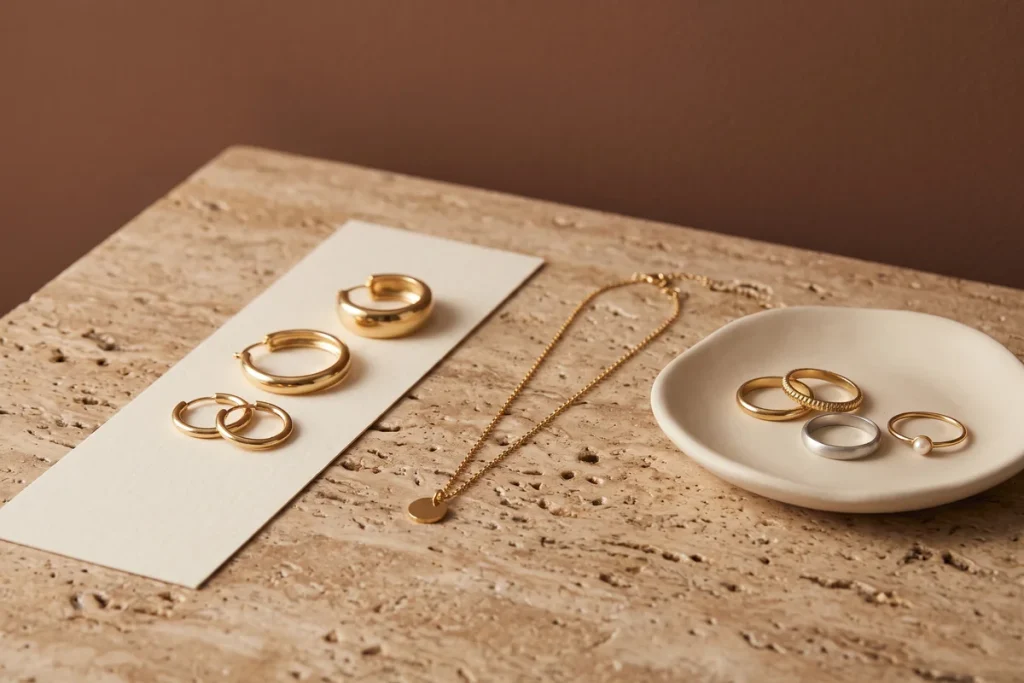
Earrings and necklaces give you several ways to vary scale without changing the overall aesthetic. A compact hoop, geometric stud, and fine pendant can each feel minimalist while serving a different preference. Within those forms, look at proportion closely. Two hoops may share the same finish but create very different impressions because one is thicker, wider, or more angular.
Simple pendants offer similar variety. A small geometric shape, pearl detail, or understated charm can add a focal point without requiring an elaborate necklace design.
For merchandising, group closely related silhouettes together so shoppers can compare them easily. A small set of hoops in different scales tells a clearer story than scattering each pair across unrelated displays.
Slim rings and bracelets that work alone or together
Rings and bracelets can add depth to the assortment without requiring large display areas. Look for pieces that make sense individually first, then consider whether some can also be combined. A slim band might sit beside another ring with a subtle texture, while a simple bracelet can be paired with a second finish or shape.
Don’t rely on the possibility of layering to justify a weak individual product. Each piece should still have a clear reason to be in the assortment.
This is also a useful place to introduce controlled variation. If your core assortment is mostly smooth gold-tone jewelry, one ribbed ring or lightly textured bracelet can create contrast while staying within the same visual language.
Compare materials, finishes, and price points
“Affordable minimalist jewelry” shouldn’t become shorthand for choosing the lowest supplier price. Compare what the customer actually receives. Look at the base material, plating or finish where applicable, construction, closures, dimensions, weight, and product-care information. Order samples when you need to judge color, surface finish, scale, or construction in person.
Then consider price as part of the assortment. Several pieces at different retail price points can give shoppers choices without forcing you to abandon a consistent aesthetic.
Everful’s boutique sourcing supports this kind of assortment planning, with the flexibility to start with a single piece on most products rather than committing to a large first order.
Add home decor with a clear purpose
Jewelry doesn’t have to sit in a jewelry-only world. A carefully chosen group of home products can reinforce the same minimalist point of view while giving your boutique additional shapes, heights, materials, and gifting possibilities. The connection should be intentional. Choose decor because it fits both the aesthetic and the way your customers might use it.
Trays and dishes for everyday organization
Small trays and dishes can bridge jewelry and home decor naturally. They have an everyday function, but they can also become part of the display itself. A simple dish can hold rings or studs. A longer tray can organize a small bracelet grouping. Sold separately, the same pieces can be used for keys, coins, or other small items at home.
Look closely at dimensions before ordering. A product photo can make a tray appear larger or smaller than it really is, and scale matters when you’re planning both merchandise and shelf layout.
Vases and sculptural accents with simple forms
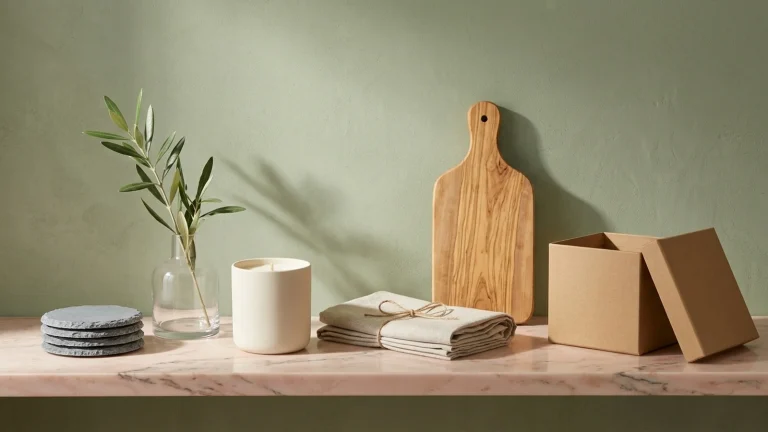
A minimalist vase doesn’t need to disappear into the background. A distinctive silhouette can provide the focal point for an otherwise quiet shelf. Curved ceramic forms, geometric vessels, or simple sculptural objects can give the eye somewhere to land before it moves to smaller products around them.
The minimalist items collection can help you compare home and lifestyle pieces within the same broader aesthetic rather than sourcing each category without reference to the others.
Keep the number of statement forms controlled. If five sculptural pieces are competing for attention on one shelf, none of them is functioning as the focal point.
Warm textures that complement clean lines
Minimalism doesn’t require a cold display. Wood grain, woven details, warm ceramics, stone-like surfaces, and softly textured fabrics can sit comfortably beside clean lines when the palette remains controlled.
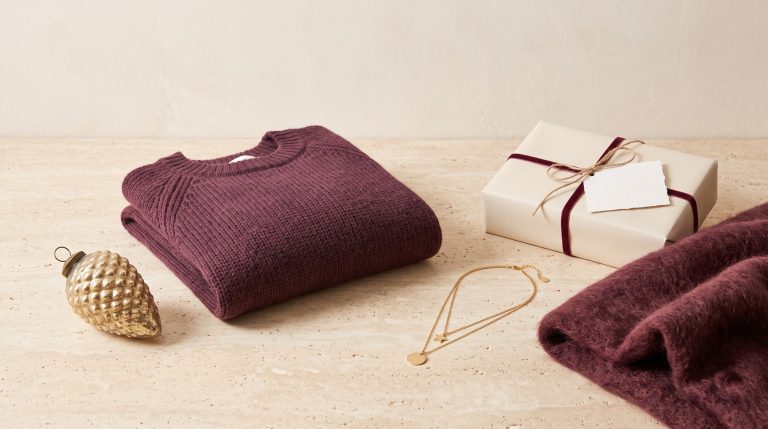
This is where a warm minimalist approach differs from simply filling a shelf with white products. Texture creates depth. Natural-looking materials soften hard edges. A limited accent color can keep the display from feeling anonymous. Use those details to support your jewelry rather than overwhelm it.
Give each piece room on the shelf
Minimalist merchandising depends as much on the space around products as on the products themselves. When every available inch is filled, small differences in shape and finish become harder to notice. Leaving deliberate gaps gives shoppers a clearer way to read each group.
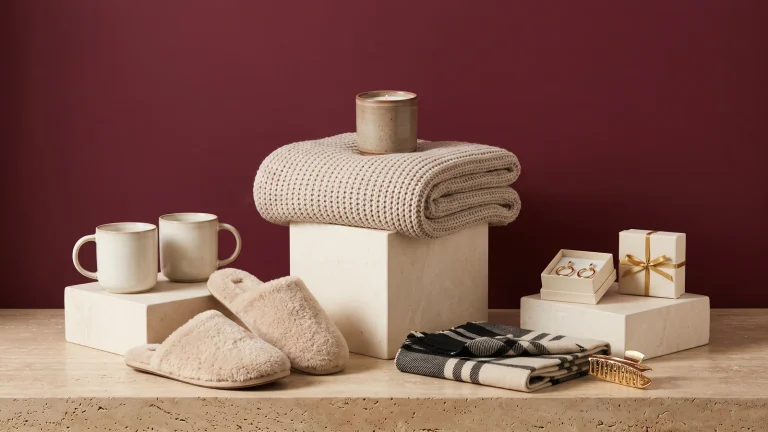
Build small groupings with a clear focal point
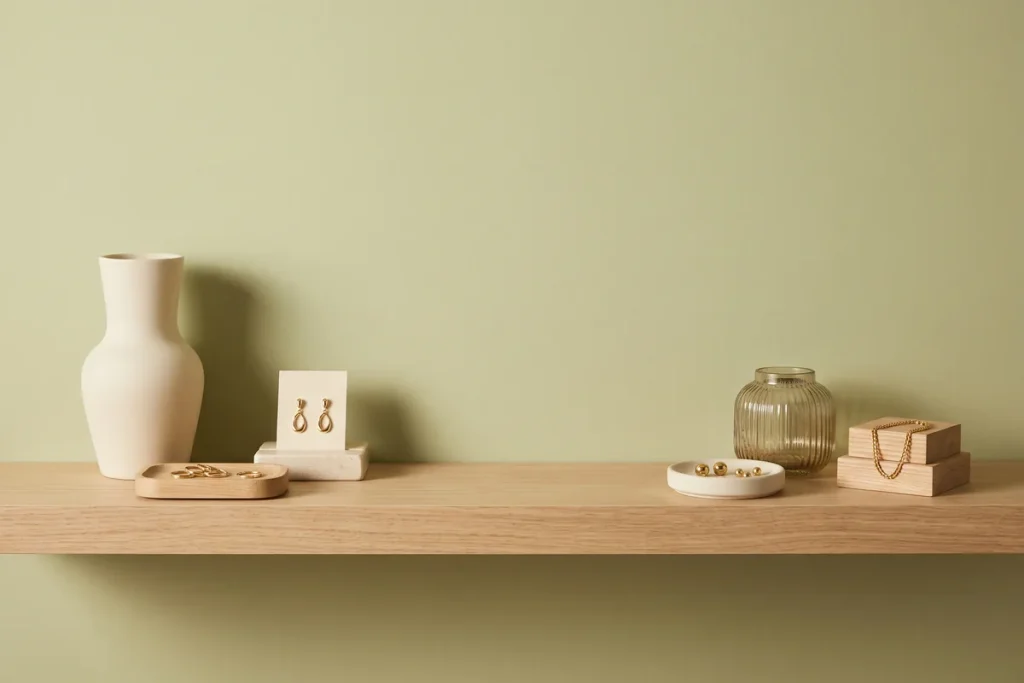
Instead of spreading individual products evenly across a shelf, build small visual groups. One group might begin with a ceramic vase, then use a low tray and two jewelry displays around it. Another might center on a sculptural dish with a few rings and earrings arranged nearby.
Choose one item to lead each grouping. The remaining products should support it through shape, material, color, or use. This makes the display easier to scan while still allowing several products to share the same shelf.
Vary display height and leave space between groups
A row of products at one height can flatten the display, even when the individual pieces are strong. Use risers, stands, boxes, trays, or the decor itself to create several levels. Keep smaller jewelry where shoppers can see its detail rather than placing it directly behind a taller object. Then leave a visible break before the next group begins.
Open space doesn’t mean the shelf is unfinished. In a minimalist display, it helps establish hierarchy. It tells the eye which products belong together and where one idea ends before another begins.
Pair jewelry with useful decor for gifting
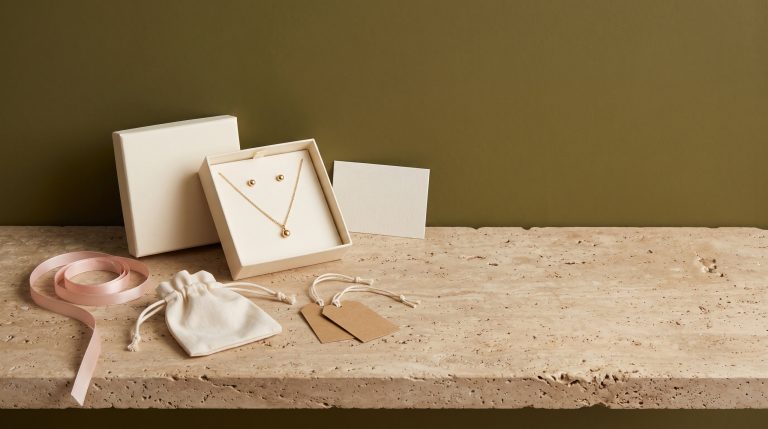
Cross-category displays work best when the pairing makes sense beyond color. A ring beside a small jewelry dish creates an obvious connection. Earrings displayed near a compact tray can suggest a useful combination. A pendant presented with a small giftable object can create a coordinated grouping without forcing the products into a prebuilt set. This approach can also help customers imagine how the products live outside the store.
Keep the pairing selective. The goal is to show a useful relationship, not attach a second product to every jewelry item on the shelf.
Make a focused first buy and replenish selectively
A cohesive assortment doesn’t require dozens of versions of the same idea. Starting with fewer, more distinct choices makes it easier to see what customers respond to and what the display is missing.
Everful’s factory-direct sourcing lets you compare jewelry and home decor from 30K+ vetted factories in one place while you build that first selection.
Test a small range across your key price points
Choose a first buy that answers specific questions. Do customers respond more strongly to gold-tone or silver-tone pieces? Do they prefer tiny studs or slightly more visible hoops? Does a functional tray attract more interest than a purely decorative accent? You don’t need ten versions of each product to start learning.
On most Everful products, you can start with a single piece rather than committing to a large minimum order. Use that flexibility deliberately. Test differences that teach you something about the assortment rather than adding variations simply because they’re available.
Reorder proven pieces before adding more variations
When an item earns a reorder, give that signal weight. It can be tempting to use every new purchase to introduce something different, but a minimalist assortment benefits from continuity. Replenishing products that have already found a place in the assortment can create a more recognizable core. Then add variations where they solve a specific gap.
If a simple pendant is working, you might test a related shape or finish. If a neutral tray sells consistently, a second size may be more useful than adding another unrelated decor category. Keep the assortment moving, but let each expansion build on what you’ve learned.
Check dimensions and finishes before mixing new stock into the display
A product can match your aesthetic online and still disrupt the display when it arrives. Check dimensions before ordering, particularly for home decor and display pieces. Compare jewelry measurements too. “Small” and “dainty” are subjective descriptions, while millimeter and inch measurements tell you how pieces will relate physically.
Finish matters in the same way. Two products described as gold-tone may not be visually identical. Whites can lean warm or cool. Wood finishes can vary significantly. Ceramics described as neutral may carry gray, cream, beige, or pink undertones.
When exact coordination matters, compare samples or physical products rather than assuming category labels guarantee a match.
Common questions about stocking minimalist essentials
What is minimalist jewelry?
Minimalist jewelry uses restrained forms and details rather than elaborate ornamentation. It can include simple hoops, studs, pendants, slim rings, bracelets, geometric shapes, pearls, and other streamlined designs. Minimalist doesn’t require every piece to be tiny or delicate.
What is minimalist home decor?
Minimalist home decor emphasizes purposeful objects, clear forms, controlled color palettes, and intentional use of space. It can include ceramics, trays, vases, sculptural accents, natural materials, and textured pieces. The goal is restraint and cohesion, not the removal of all color or decoration.
Is minimalist jewelry always small and delicate?
No. Dainty jewelry can fit a minimalist assortment, but minimalism can also include larger hoops, geometric forms, sculptural pieces, or thicker bands. A piece can have visual presence while still using a restrained shape, finish, and level of detail.
How can a boutique display minimalist products without making shelves look empty?
Use small product groupings, varied heights, and clear focal points. Open space between groups helps define the assortment rather than making it look unfinished. Trays, risers, stands, and selected home decor can add structure without filling every part of the shelf.
Can minimalist decor include color and texture?
Yes. A controlled accent color or textured material can keep a minimalist display from feeling flat. Wood, ceramic, glass, stone-like finishes, woven details, and warm neutrals can create contrast while maintaining a restrained overall palette.
How can a boutique test a minimalist assortment without overstocking?
Start with a focused selection of distinct products across the categories and price points you want to evaluate. On most Everful products, you can start with a single piece rather than committing to a large minimum order. Track which pieces earn reorders, then add depth or closely related variations based on what you learn.