How to build corporate and employee appreciation gift sets
Most corporate gift programs get decided by a spreadsheet: one item, one quantity, everyone on the list. That is why so much of it ends up in a drawer. Here is how to work out your real budget per person, what lands at each price tier, and how to assemble a set people actually keep.
Key takeaways
- Useful beats novel. The corporate gifts that survive past the first week are the ones people already reach for: something they carry, something on their desk, something in their kitchen.
- Work out your own number before you shop. Total budget, divided by headcount, divided again by how many gifting moments you cover in the year.
- Under $5 covers everyone, under $10 is where most employee programs should sit, and $25 and above is for the short list where the gift does reputational work.
- A set beats a single item at the same total cost, because it gives the recipient more than one thing to use and reads as assembled rather than ordered.
- Presentation is the cheapest lever and the one most often skipped. Budget for the bag, the tissue, and the card explicitly.
- A discreet logo beats a heavy one. Custom branding on packaging or one element of a set reads as appreciation, the same logo on everything reads as marketing.
Corporate gifting fails in a predictable way. Someone gets a budget, orders the same branded item for 400 people, and most of it ends up in a drawer. The waste is not the money, it is that the gesture reads as procurement rather than appreciation. Getting it right is mostly a sourcing problem: choose things people will actually use, spend the budget where recipients notice it, and buy at a cost per person that lets you cover everyone. This guide covers all three.
What gifts employees and clients actually want
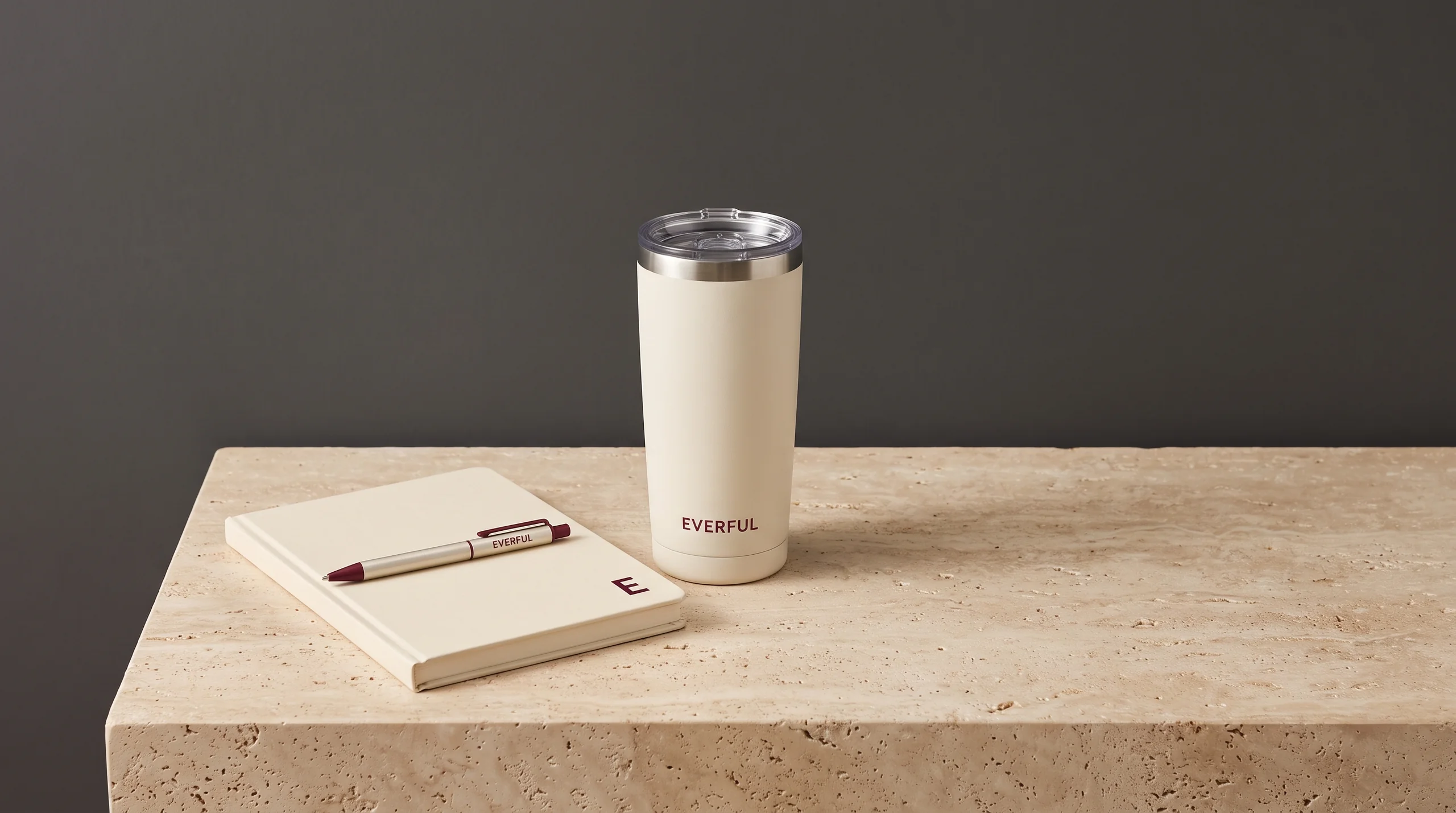
Usefulness beats novelty. The items that survive past the first week are the ones people already reach for: something they carry, something on their desk, something in their kitchen. Keychains, cardholders, pens and notebooks, insulated tumblers, and small kitchen pieces all clear that bar. Novelty items and branded merchandise nobody chose tend not to.
Two other factors matter more than the item itself. Presentation changes how a gift lands, since the same tumbler handed over in a printed box reads differently from one pulled out of a shipping carton. And a small element of choice, even two or three options, shifts the gesture from allocation to acknowledgment.
For client gifting the calculation shifts. Fewer recipients means more budget per person, and the item is doing reputational work rather than morale work. That is where a higher-quality single piece in proper packaging earns its cost.
How much to budget per recipient
The only number that matters is your own: total budget divided by headcount, then divided again by how many gifting moments you plan to cover in the year. Work that out before you look at a single product, because it decides which tier you are shopping in and stops you settling on something you cannot afford to buy 400 of.
That last division is what most plans miss. A budget that looks generous for one annual gift becomes thin once you add work anniversaries, onboarding, and a year-end gesture. Sourcing at a lower unit cost is what makes covering all of them possible.
Under $5 per person
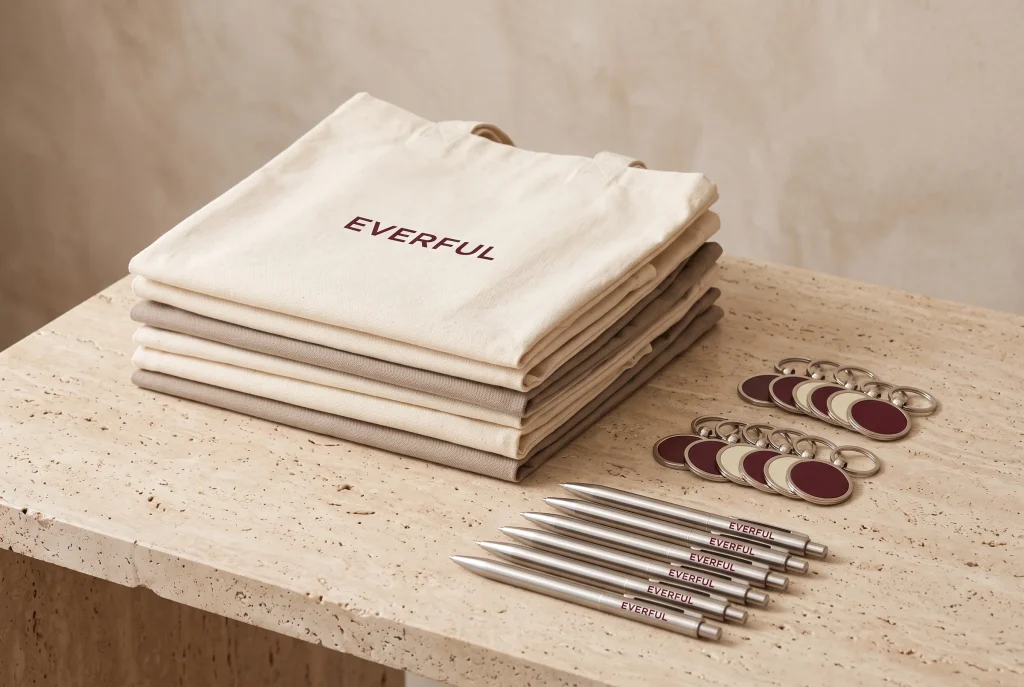
At this level you are buying volume items that still feel considered. Keychains, pens, thank-you card sets, sealing stickers, and small desk items all sit here comfortably at factory-direct pricing, meaning the price you get when an order comes straight from a vetted factory with no reseller taking a margin in between. This tier works well for all-staff moments where reach matters more than impact, such as an appreciation week or a company-wide thank you.
The mistake to avoid is treating this tier as disposable. A cheap item in a proper gift bag reads as thoughtful, while the same item loose in a box does not, and the bag costs very little.
Under $10 per person
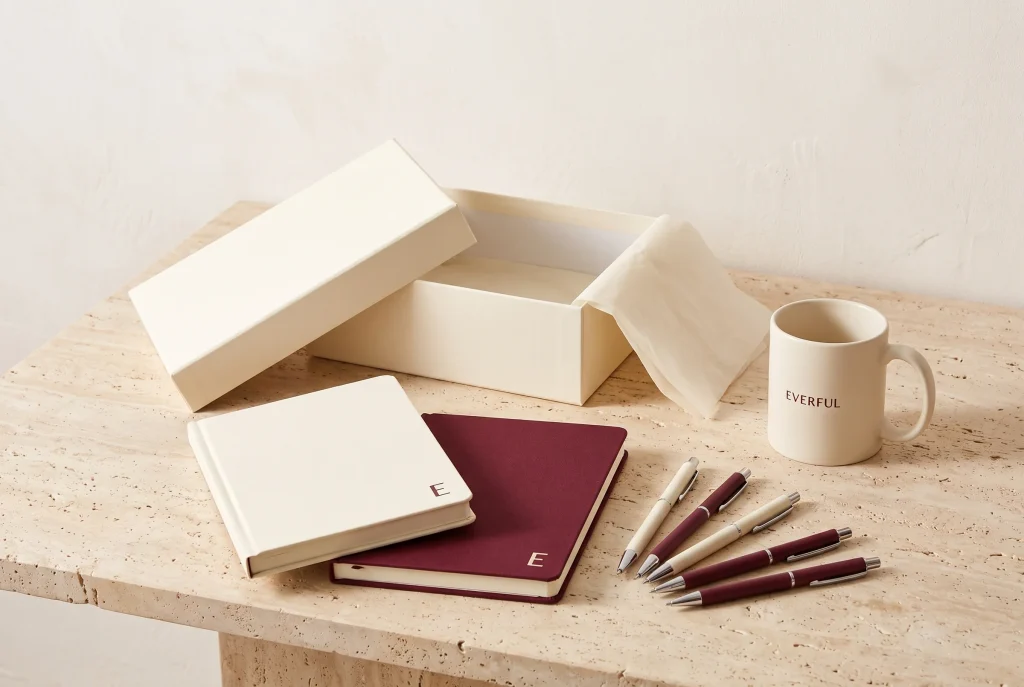
This is where most employee appreciation programs should sit, because it is the first tier that supports a small set rather than a single item: a notebook and pen, a cardholder, or a desk piece plus packaging and a card. Pull from office and school supplies and home and kitchen to build combinations rather than buying one item in volume.
$25 and above for clients and executives
Reserve this tier for smaller recipient lists where the gift carries reputational weight. Insulated tumblers and vacuum flasks, leather cardholders and wallets, and stainless steel desk pieces all work, presented in a rigid box with a card. At this level the packaging is not optional, since an unboxed premium item undercuts the impression you paid for.
Building a custom corporate gift set
A set is more effective than a single item at the same total cost, because it gives the recipient more than one thing to use and reads as assembled rather than ordered. Build every gift set from the same three parts.
Choosing the core gift
Pick one item the recipient will use weekly, and let it set the tone for the rest. A tumbler suits a distributed team, a notebook and pen suits a desk-based one, a cardholder suits client-facing staff. Choose for the recipient’s day rather than for what photographs well in a catalog.
Adding custom branding and personalization
Custom branding is available, and the question is how much of it to use. Everful offers four options: logo engraving on the product itself, custom product cards, logo tags and labels, and branded packaging. A discreet logo on packaging or on one element of a set works better than the same logo across every component, because heavily branded gifts read as marketing rather than appreciation. Personalization, an initial or a name, has the opposite effect and lifts perceived value at almost no cost.
Branding a set you intend to sell rather than give is a different exercise with its own lead times, and our guide to custom-branded gift sets covers that side of it.
Gift bags, boxes, and presentation
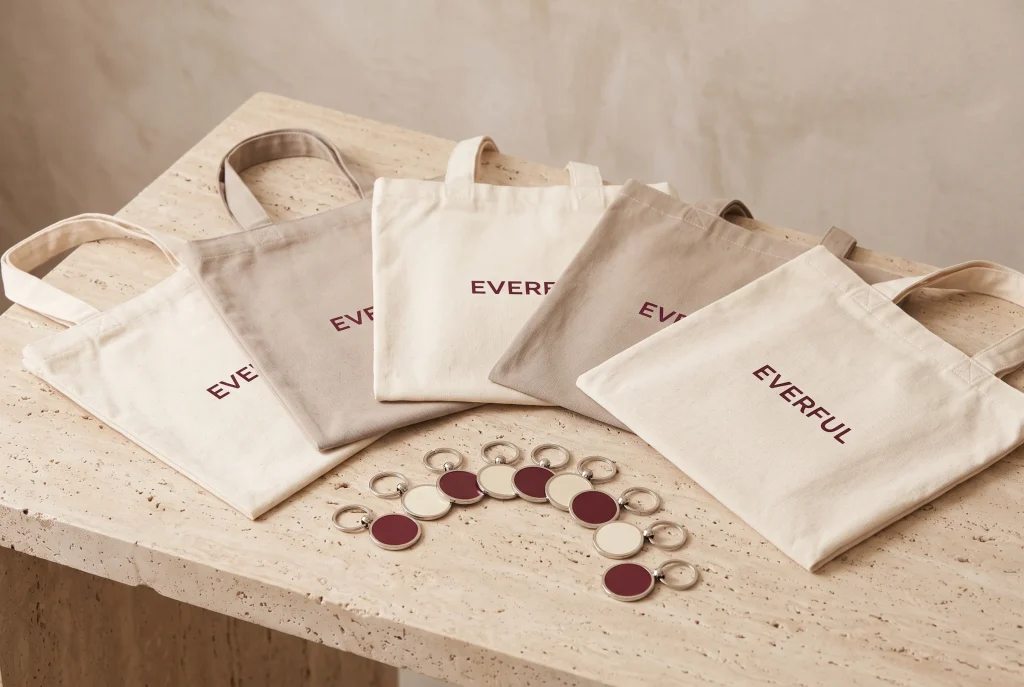
Presentation is the cheapest lever available and the one most often skipped. Gift bags and boxes, tissue, ribbon, and a printed card turn assorted items into a gift. Budget for it explicitly rather than treating it as an afterthought, and buy it in a neutral palette so the same stock serves the whole year.
Promotional gifts for events and client outreach
Event and outreach gifting has a different objective. Here the item is a reminder rather than a reward, and the constraints are volume, portability, and cost per unit. Small, flat, useful items win: cardholders, pens, keychains, sticker sets, and notebooks all travel well in a bag and survive the trip home.
Order several options in small quantities rather than one item in a large one. Trade show and outreach demand is unpredictable, and four options at low unit cost give you flexibility across events that a case pack of a single item does not.
Whatever is left over is not waste, either. Event stock that does not move at one show carries to the next one, or into the onboarding cupboard, provided you have kept it undated and off-theme.
When to order for Employee Appreciation Day and year-end
Employee Appreciation Day falls on the first Friday in March, which is 5 March in 2027, and year-end gifting concentrates through late November and December. Both need lead time, meaning the stretch between placing the order and having stock in hand, and both are routinely handled late. If you are buying seasonal stock as well, fold the gifting order into the same holiday inventory planning calendar instead of treating it as a separate errand.
- For March appreciation programs, place orders in January so there is time to receive, assemble sets, and distribute across locations.
- For year-end, order by early October. December shipping windows tighten sharply due to holiday demands, and assembling sets for several hundred people takes longer than most plans allow. If assembly is the part you cannot absorb, concierge support can handle sourcing and assembly for gift kits and employee welcome kits.
- For onboarding and anniversary gifting, order once per quarter and hold stock, since these arrive continuously rather than on a date.
Where to source corporate gifts factory-direct with no minimums
If you are new to buying wholesale for your own company rather than for resale, how wholesale for corporate buyers works covers the basics. Most corporate gifting suppliers set order minimums, which forces a decision before you have any evidence. You commit to one item, in one quantity, for everyone, and if it does not land you find out after the invoice.
Everful is factory-direct with no minimums, meaning there is no order floor and no minimum spend to clear, which changes the sequence. You can order samples across several options, pick what works for your team, and buy the rest at a unit cost that leaves room for packaging and for covering more than one gifting moment in the year. Custom branding is available on top of that, so a set can carry your logo without a separate supplier or a separate minimum.
The full range, including desk and office pieces, drinkware, cardholders, keychains, gift packaging, and thank-you card sets, sits in the corporate gifts collection.
Browse the corporate gifts collection for factory-direct pricing, custom branding, and no minimums, and eligible items fly free. New products are added daily, and every order is hand-inspected before it ships.

Common questions about corporate and employee gifting
What is a good gift for staff to order in large volumes?
Something they will use weekly. Insulated tumblers, notebooks and pens from office and school supplies, cardholders, keychains, and small kitchen items all hold up better than novelty or branded apparel. Presentation matters as much as the item, so budget for a bag or box and a card rather than distributing loose stock.
What gifts do employees really want?
Practical items they would otherwise buy themselves, and some element of choice. Two or three options at the same price point land better than one item issued to everyone, because the gesture reads as recognition rather than allocation. Keep logo branding light, since a gift that reads as company merchandise gets used less than one that reads as a gift.
How much do companies spend on corporate gifting?
It depends entirely on headcount and how many occasions you cover. Take your total gifting budget, divide by headcount, then divide again by the number of moments you want to reach. That figure, not an industry average, tells you which price tier to shop in.
How much can an employer give as a gift to an employee?
There is no single dollar cap, and the treatment depends on the form of the gift. In the United States, small non-cash items of low value are generally treated differently from cash and gift cards, which are typically handled as taxable compensation regardless of amount. Rules vary by jurisdiction and change over time, so confirm the current treatment with your accountant or tax advisor before setting a program budget.
Can I get custom-branded corporate gifts without a large minimum order?
Yes. Custom branding is available without a minimum order quantity, which means you can brand a small run for a specific team or event rather than committing to a single large order. That also makes it practical to test two or three options before committing the full budget.