How to build bridesmaid gift sets
Bridesmaid gifts are one of the few wedding categories where the buyer wants a finished set and will pay not to have to build it herself. For boutiques and gift shops, the margin sits in the assembly, not in the pieces.
Key takeaways
- A bridesmaid gift set needs three things: one piece of jewelry, presentation that reads as a gift, and one or two items that get used on the wedding day itself.
- Stock jewelry by finish, not by design. Wedding parties coordinate, so your buyer needs matching pieces and you cannot predict which metal she wants.
- Personalization lets one buyer give several related gifts that are still individually specific, which is something no other component in the set does. Initial pendants and tie-the-knot pieces are the formats that carry it.
- Presentation is the part sellers underbuy and it carries almost no seasonal risk. Proposal boxes and wedding-day boxes sell to the same customer twice in one wedding cycle.
- Buy components in counts of 12 and 24 so they divide cleanly into parties of four, six, and eight with no orphaned stock.
- Decide on two or three fixed sets rather than improvising, and source factory-direct with no minimums so you can test an assortment before committing to it.
Source the components in volume, assemble the sets, and sell the result. It works as a category because a wedding party needs several matching gifts at once, which is a buying pattern almost nothing else in gifting has. This guide covers what goes into a set, where to source each part, how to buy components in counts that divide cleanly into a party of four, six, or eight, and how to price the result so there is a complete set at every budget.
What goes into a bridesmaid gift set
Nearly every set that sells well follows the same shape. One piece of jewelry does the emotional work, a bag or box does the presentation, and one or two small items fill the space so the gift feels complete rather than sparse.
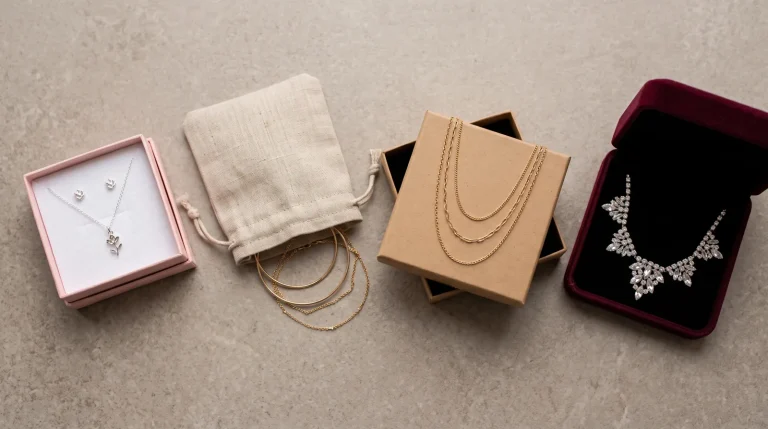
- A jewelry piece: a pendant necklace, a pair of earrings, or a bracelet. This is the item the recipient keeps.
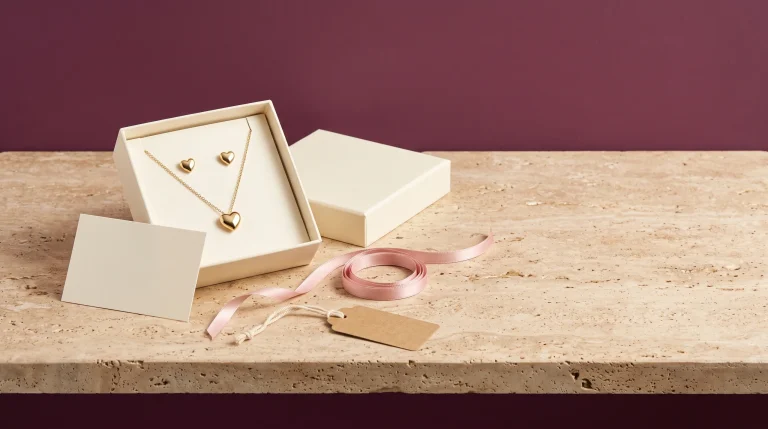
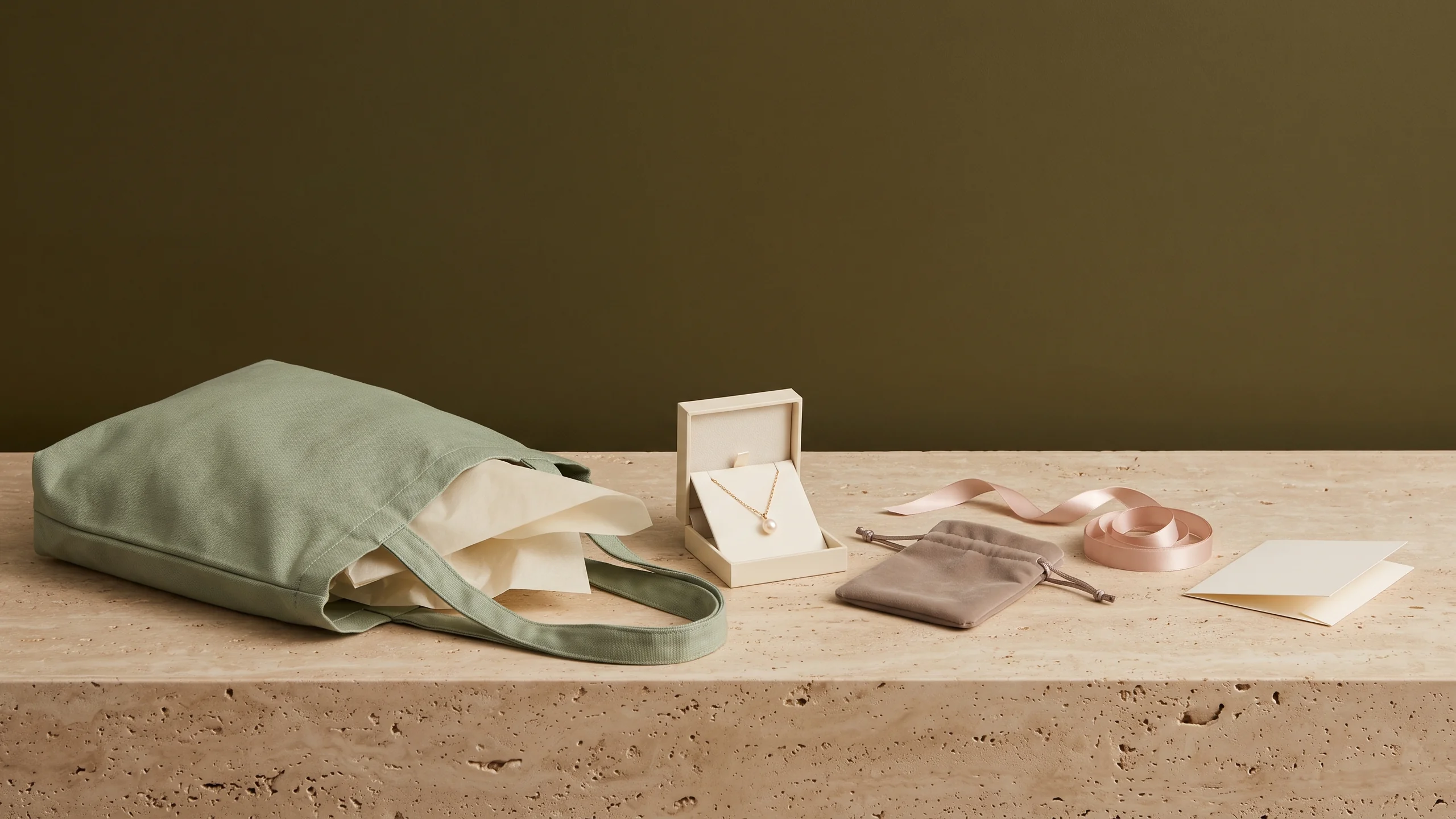
- Presentation: a gift box, a tote, or a drawstring pouch, plus a card. This is what makes it read as a gift rather than a purchase.
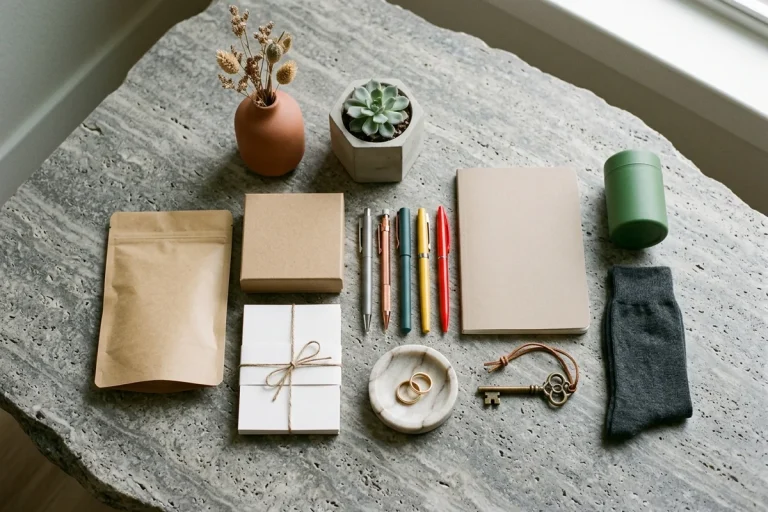
- Filler with a purpose: a hand fan, a keepsake, a scented candle, or a small accessory. Items that get used on the wedding day itself perform better than generic additions.
A set built to this pattern carries a price the loose components cannot command, because the buyer is paying for the curation and the presentation as much as for the contents. That is the whole reason to assemble rather than resell the parts individually.
Sourcing bridesmaid jewelry in large quantities
Jewelry is where buyers are most specific and where sourcing decisions matter most. Buyers ask for a finish before they ask for a design, so stock by metal and material first and let the design range sit underneath.
Pearl bridesmaid jewelry
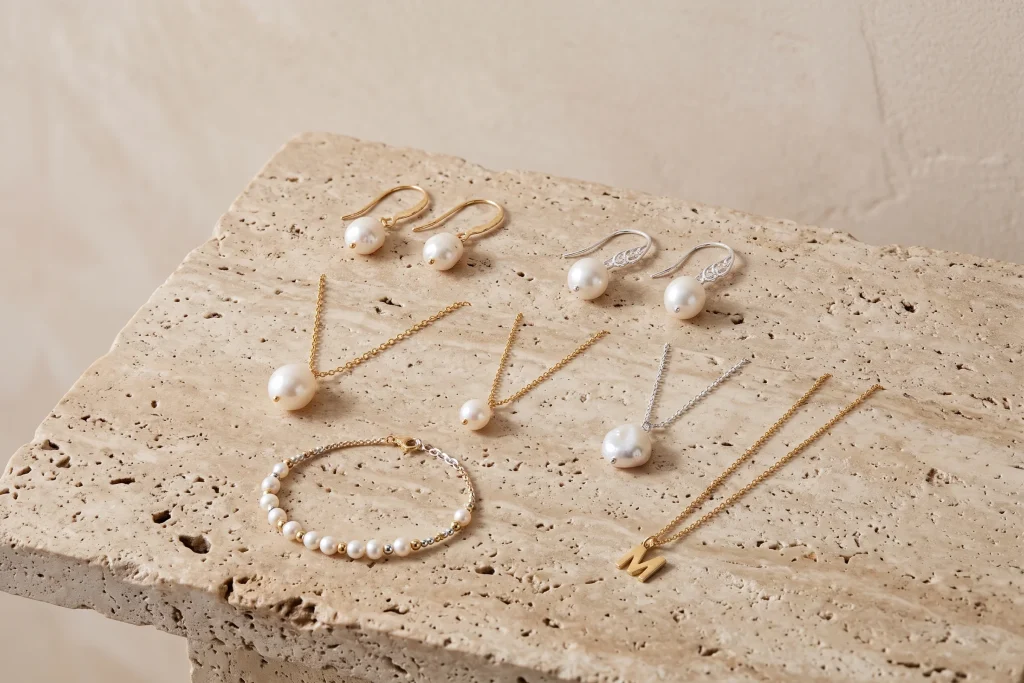
Pearl reads as bridal without needing any wedding-specific detailing, which makes it the safest material to buy in depth. Freshwater and imitation pearl drop earrings, pearl bracelets, and simple pearl pendants all suit a bridesmaid set and stay wearable afterward. Browse earrings for the pieces that move fastest in this category.
Gold and silver jewelry sets
Stock both finishes rather than picking one. Wedding parties coordinate, so a buyer purchasing six gifts wants six matching pieces in whichever metal suits her palette, and you cannot predict which. Stainless steel and plated pieces in gold and silver tones cover the range at a cost that leaves room for margin on the finished set. Jewelry sets and necklaces are the core of this section.
Personalized and initial pieces
Personalization does something on this category that nothing else in the set can. Initial pendants, name necklaces, and knot or tie-the-knot pieces carry a meaning that matches the occasion, and they let one buyer give six related gifts that are still individually specific. Pieces that arrive on a printed card with a short message do even better, since the card completes the gift with no extra assembly.
Gift boxes, bags, and presentation
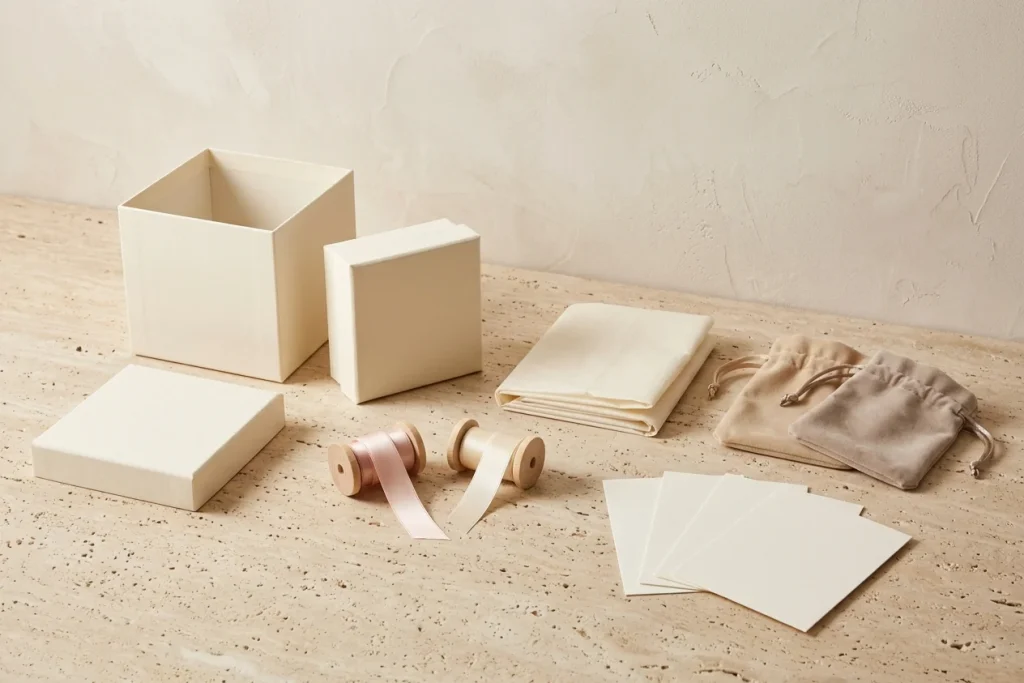
Presentation is the part of the set sellers most often underbuy, and it carries almost no seasonal risk, since the same stock serves every gifting occasion in the year.
Gift boxes and proposal boxes
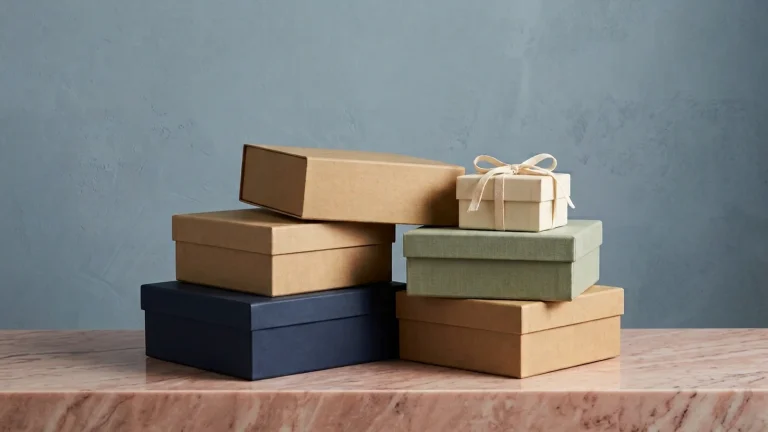
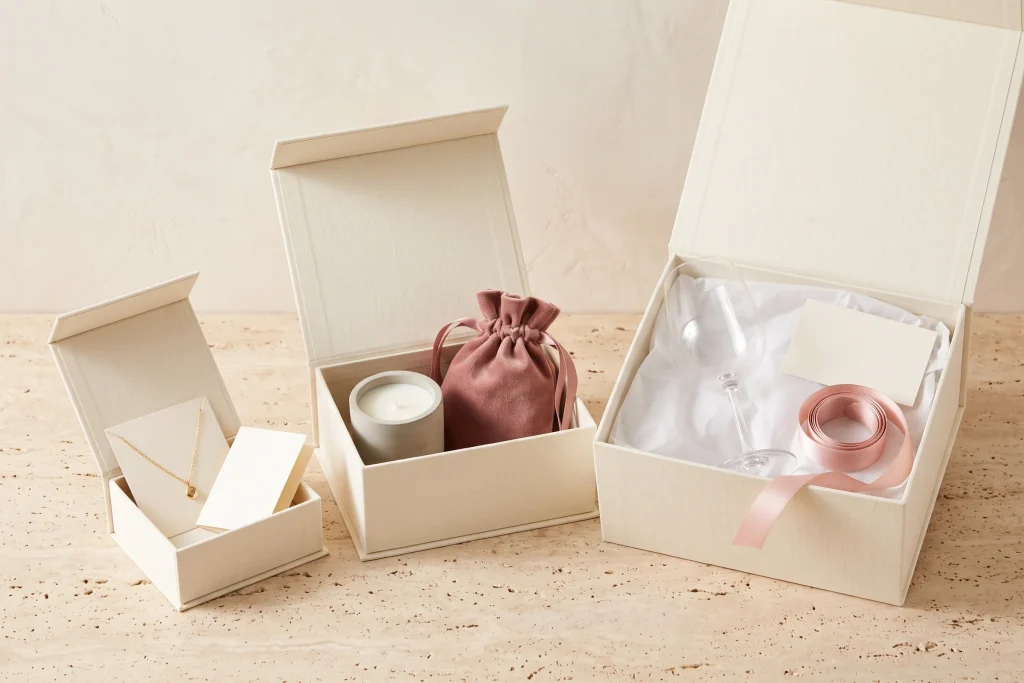
Two formats do different jobs. A proposal box is bought early, when the bride asks someone to be a bridesmaid, and tends to be smaller and lighter. A wedding-day box is bought later and holds more. Stocking both lets you sell to the same customer twice in one wedding cycle. Rigid boxes with ribbon, plus tissue and a card, are the components. The wedding collection carries favor boxes, ribbon, and packaging in volume.
Tote bags and drawstring pouches
Printed totes and satin or organza drawstring pouches serve as both packaging and gift. A tote holds the rest of the set and gets reused, which buyers register as value, and a small pouch protects jewelry inside a larger box. Gift bags and pouches cover both, and neutral colorways let the same stock work across different wedding palettes.
How to assemble a bridesmaid gift set
Decide on two or three complete sets at fixed price points, then buy components in the ratios those sets require. Assembling combinations improvised from whatever is in stock produces inconsistent margin and makes reordering guesswork. If you want the fuller mechanics of theming and pricing a bundle, our guide to building a seasonal gift set assortment covers them.
If you would rather not manage components arriving from several suppliers, in-house repackaging consolidates them into one protected shipment, hand-checked and barcoded, so the parts of a set arrive together rather than in pieces across three deliveries.
Building sets of four, six, and eight
Wedding parties cluster at four, six, and eight, so those are the counts your sets have to serve. The Knot’s 2023 Real Weddings Study put the typical number of bridesmaids at four, which is the low end of the range you are stocking for. That has a direct sourcing consequence: you need each component in multiples that divide cleanly into those numbers, or you could end up with orphaned stock. Buying jewelry in counts of 12 and 24 covers all three party sizes without remainder.
Offer sets as a bundled multiple rather than as individual gifts wherever you can. A listed set of six removes the buyer’s arithmetic and lifts the transaction well above a single unit sale.
When to order bridesmaid sets
The category has two buying moments in one wedding and they sit months apart. The proposal box is bought when the bride asks her wedding party, early in the planning year. The finished wedding-day set is bought close to the date. Stocking for both means holding the proposal formats year-round and building depth in the finished sets ahead of the main wedding season.
Order back from that, not from the wedding date. Components have to arrive, be assembled, and be on the shelf before the buyer starts looking, and a set is only sellable once every part of it is in stock, so the slowest component sets your timeline. If you also sell into events and weddings rather than only across a retail counter, the same lead applies with less room in it, because an event buyer has a fixed date and no second chance.
Price tiers for a bridesmaid set
Price the set, not the pieces. Your buyer comes in with a per-person budget already decided, and the larger her wedding party, the lower that per-person figure goes. Build three tiers so there is a complete set at whatever she has to spend, and source the components factory-direct so every tier still carries margin.
- What is in it
- One jewelry piece, a drawstring pouch, and a card
- Who buys it
- Larger wedding parties, where the per-person budget is thinnest
- Its job
- Simple and complete, so nothing about it reads as an afterthought
- What is in it
- A matched necklace and earring pair, a rigid gift box with ribbon, and a printed card
- Who buys it
- Most of your buyers
- Its job
- Where most sets should sit, and the tier to buy deepest
- What is in it
- Personalized jewelry, a printed tote, and one or two wedding-day items such as a hand fan or a candle
- Who buys it
- Small parties, and buyers giving one gift rather than six
- Its job
- Fewer sales, materially better margin, and it makes the core set look like the sensible choice
Sourcing bridesmaid sets with no minimums
Assembling sets means buying several different components at once, and order minimums make that expensive. A case pack of one earring style, one box size, and one pouch color forces you to guess the whole assortment before you have sold anything.
Everful is factory-direct with no minimums, so you can buy across finishes and formats in small counts, assemble a few sets, and see what sells before committing. Custom branding is available as well, which matters if you are building sets under your own label rather than reselling loose pieces.
New products are added daily, and every order is hand-inspected before it ships, whether it is six pendants or six thousand. Eligible items fly free.
Common questions about building bridesmaid gift sets
What do bridesmaids actually want as a gift?
Something wearable and something usable on the wedding day. Jewelry that works beyond the wedding consistently outperforms occasion-only items, and small practicals such as hand fans, pouches, and totes get used rather than stored. Heavily themed novelty items tend to be the least kept part of a set.
How do you build a bridesmaid gift box?
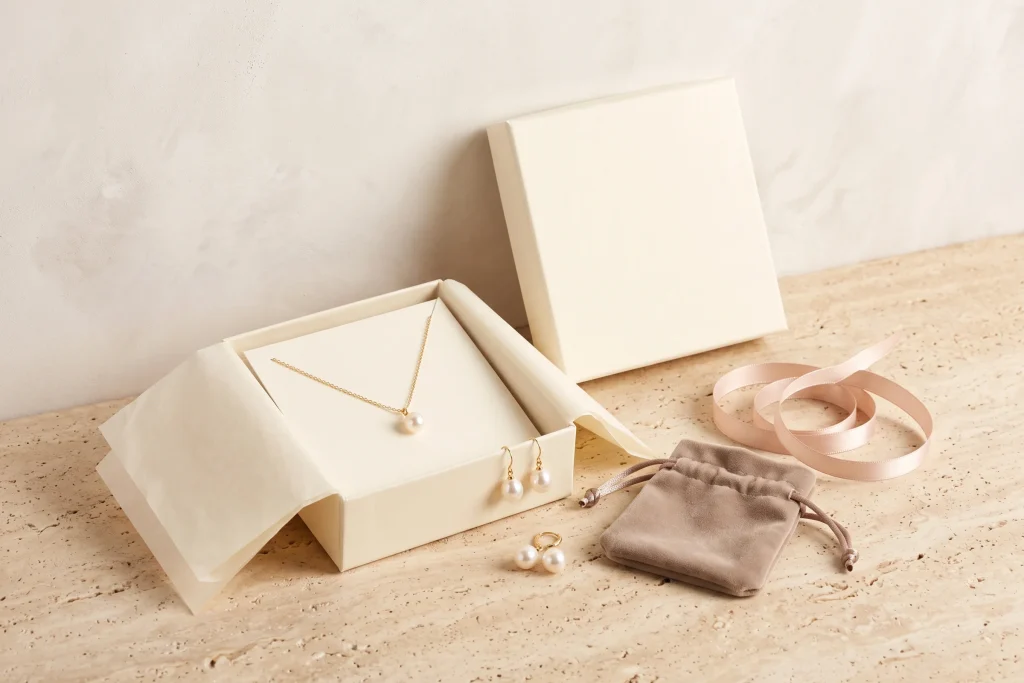
Start with a rigid box sized to your contents, then layer in tissue, the jewelry piece in its own pouch, a small keepsake or wedding-day item, and a printed card on top. A printed tote or drawstring pouch can serve as both the packaging and part of the gift, which keeps the cost down while making the set look fuller. Buy the components in counts that divide into four, six, and eight so you can assemble sets for any wedding party size without leftover stock.
How much do buyers spend on bridesmaid gifts?
Buyers work to a per-person budget, and larger wedding parties push that figure down, which is why sets priced for a party of six or eight sell well. Build entry, core, and higher-ticket tiers so there is a complete set at whatever your customer has to spend.
Where can I buy bridesmaid jewelry in volume?
Sourcing factory-direct removes the distributor markup and gives you the unit cost needed to build sets at a margin. The more useful question for a small seller is the minimum order, since buying six of one style rather than a full case pack is what makes testing an assortment practical.
Can I sell bridesmaid gift sets I assemble myself?
Yes, and assembling is where the margin sits. A completed set commands more than its component cost, because the buyer is paying for the curation and the presentation as much as the contents. Custom-branded gift sets covers what it takes to sell those sets under your own name, including the lead time branding adds.