How to tie a scarf: 7 easy styling ideas for boutiques
One scarf can be a neck knot, a headband, and a handbag accent by lunchtime. Here are seven easy ways to tie a scarf, which shapes work best, and how to show customers the range in your store.
- Square scarves are especially versatile. They work for neck knots, headbands, ponytails, and handbag accessories.
- Long scarves are ideal for layering. Simple loops and loose drapes work well with sweaters, jackets, and coats.
- Different materials create different looks. Lightweight silk-style fabrics are useful for decorative knots, while heavier scarves suit casual layering.
- Styling demonstrations help customers visualize products. Mannequins, photographs, and short tutorials can show several uses for the same scarf.
- Start with a focused assortment. Choose sizes, colors, and patterns that complement the clothing and accessories your store already carries. Sourcing with no minimums lets you test a few designs first.
A scarf or wrap might be one of the most versatile accessories in your boutique. Tie it around the neck, wear it as a headband, or wrap it around a handbag, and the same piece can create three completely different looks.
That’s part of what makes scarves useful for retailers. Customers may like a particular pattern or color, but showing them how to tie a scarf helps them imagine wearing it with clothing they already own. And you don’t need complicated knots or elaborate displays to demonstrate that versatility.
A few simple styling techniques can turn an ordinary scarf into a polished outfit accessory, a casual hair accent, or a thoughtful addition to a gift. In this guide, we’ll walk through seven ways to wear a scarf, explain which scarf shapes work best, and share practical ideas for incorporating these looks into your boutique.
Choose the right scarf for each style
Before experimenting with different scarf knots, take a look at the scarf itself. Its shape, size, and fabric determine which styles will be easiest to create.
A small square scarf might be perfect for a French knot or handbag accent, but it probably won’t have enough length for a loose, layered look. A long winter scarf offers more coverage but can feel bulky when tied into a small neck knot.
Square scarves vs. long scarves
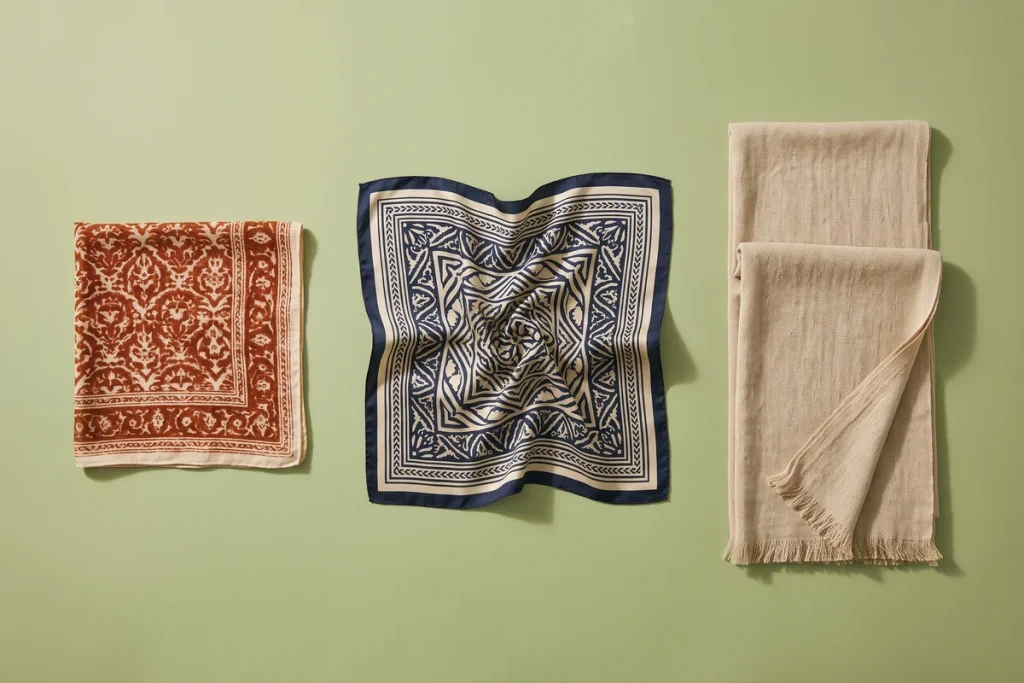
Square scarves are useful for decorative styling. You can fold them into narrow bands, tie them around your neck, or use them as hair accessories.
Long rectangular scarves work better for loops, loose knots, and layered outfits. They pair naturally with sweaters, coats, and casual clothing. Lightweight wraps offer additional coverage and can be draped around the neck or shoulders.
Here’s a quick comparison:
How material changes the look
Fabric also makes a difference. Silk and silk-style scarves generally have a smooth finish that works well for compact knots and decorative folds. Cotton scarves can create a more casual appearance, while wool and wool-blend scarves are often better suited to colder-weather outfits.
When selecting scarves for your boutique, consider how easily the fabric folds, whether it holds a knot, and how it feels against the skin. You can explore different shapes and materials in Everful’s wholesale scarves and wraps category.
7 ways to tie a scarf
You don’t need to learn dozens of complicated techniques to make scarves appealing. These seven styles are easy to demonstrate and work with a variety of outfits.
7 ways to tie a scarf at a glance
Each knot and the scarf that suits it best.
Classic neck knot
Best with: Small square scarves
French knot
Best with: Small or medium squares with a smooth finish
Simple loop
Best with: Long cotton, knit or wool-blend scarves
Loose draped knot
Best with: Lightweight rectangular scarves and wraps
Silk scarf headband
Best with: Lightweight silk-style squares
Ponytail scarf
Best with: Small square or narrow scarves
Handbag handle wrap
Best with: Small squares and twilly-style scarves
1. The classic neck scarf knot
A classic neck knot is one of the easiest ways to wear a square scarf. It adds color near the neckline without covering much of the outfit.
How to tie it:
- Fold a square scarf diagonally into a triangle.
- Roll or fold the triangle into a narrow band.
- Place the scarf around your neck with both ends facing forward.
- Tie a loose knot at the front.
- Adjust the ends until they sit comfortably.
Best with: Small square scarves, lightweight cotton, and silk-style fabrics.
Styling idea: Pair a patterned neck scarf with a plain white blouse or button-down shirt. The scarf adds visual interest without requiring additional layers.
2. The French knot
The French knot creates a slightly more polished look. Instead of tying the scarf directly at the center of the neck, position the knot toward one side.
How to tie it:
- Fold a square scarf into a narrow band.
- Wrap it around your neck.
- Bring both ends toward the front.
- Tie a small knot slightly off-center.
- Adjust the ends so they fall neatly to one side.
Best with: Small or medium square scarves with a smooth finish.
Styling idea: Try this look with a blazer, fitted sweater, or collared blouse.
3. The simple loop
If you’re working with a longer scarf, the simple loop is a practical place to start. It’s easy to adjust and works well with casual layers.
How to tie it:
- Fold a long rectangular scarf in half.
- Place the folded scarf around your neck.
- Pull the loose ends through the loop.
- Adjust the fabric so it rests comfortably.
Best with: Long cotton scarves, soft knits, and wool-blend scarves.
Styling idea: Pair a neutral scarf with a sweater or jacket for a coordinated fall or winter outfit.
4. The loose draped knot
A loose draped knot offers a relaxed alternative to tighter scarf styles. It’s particularly useful when you want to show more of a scarf’s pattern.
How to tie it:
- Place a long scarf around your neck.
- Leave one end slightly longer than the other.
- Tie a loose single knot below the neckline.
- Adjust the ends so they hang naturally.
Best with: Lightweight rectangular scarves and soft wraps.
Styling idea: Wear a printed scarf over a simple dress or neutral sweater to make the accessory the focal point.
5. The silk scarf headband
Wondering how to wear a silk scarf without tying it around your neck? Try turning it into a headband. This style works particularly well with colorful square scarves.
How to tie it:
- Fold a square scarf diagonally.
- Roll it into a narrow band.
- Place the center of the band across the top of your head.
- Bring both ends underneath your hair.
- Tie the ends at the nape of your neck.
Adjust the scarf so it feels comfortable and stays in place.
Best with: Lightweight square scarves and silk-style fabrics.
Styling idea: Pair a patterned headband scarf with a simple summer dress or casual blouse.
6. The ponytail scarf
A scarf tied around a ponytail is a simple way to introduce color and movement. It also gives customers another reason to consider a smaller square scarf.
How to tie it:
- Secure your hair in a ponytail using a regular hair tie.
- Fold a square scarf into a narrow band.
- Wrap the scarf around the base of the ponytail.
- Tie a knot or bow over the hair tie.
- Let the ends hang naturally.
Using a separate hair tie helps keep the ponytail secure.
Best with: Small square scarves, narrow scarves, and lightweight fabrics.
Styling idea: Coordinate the scarf with a blouse, handbag, or another accessory.
7. The handbag handle wrap
Scarves aren’t just for clothing. Wrapping a scarf around a handbag handle can add color to a simple bag and create a coordinated accessory look.
How to tie it:
- Fold a small scarf into a narrow strip.
- Tie one end around the base of the handbag handle.
- Wrap the scarf evenly along the handle.
- Secure the opposite end with a small knot.
For a simpler variation, tie the scarf into a bow on one side of the handle.
Best with: Small square scarves and narrow twilly-style scarves.
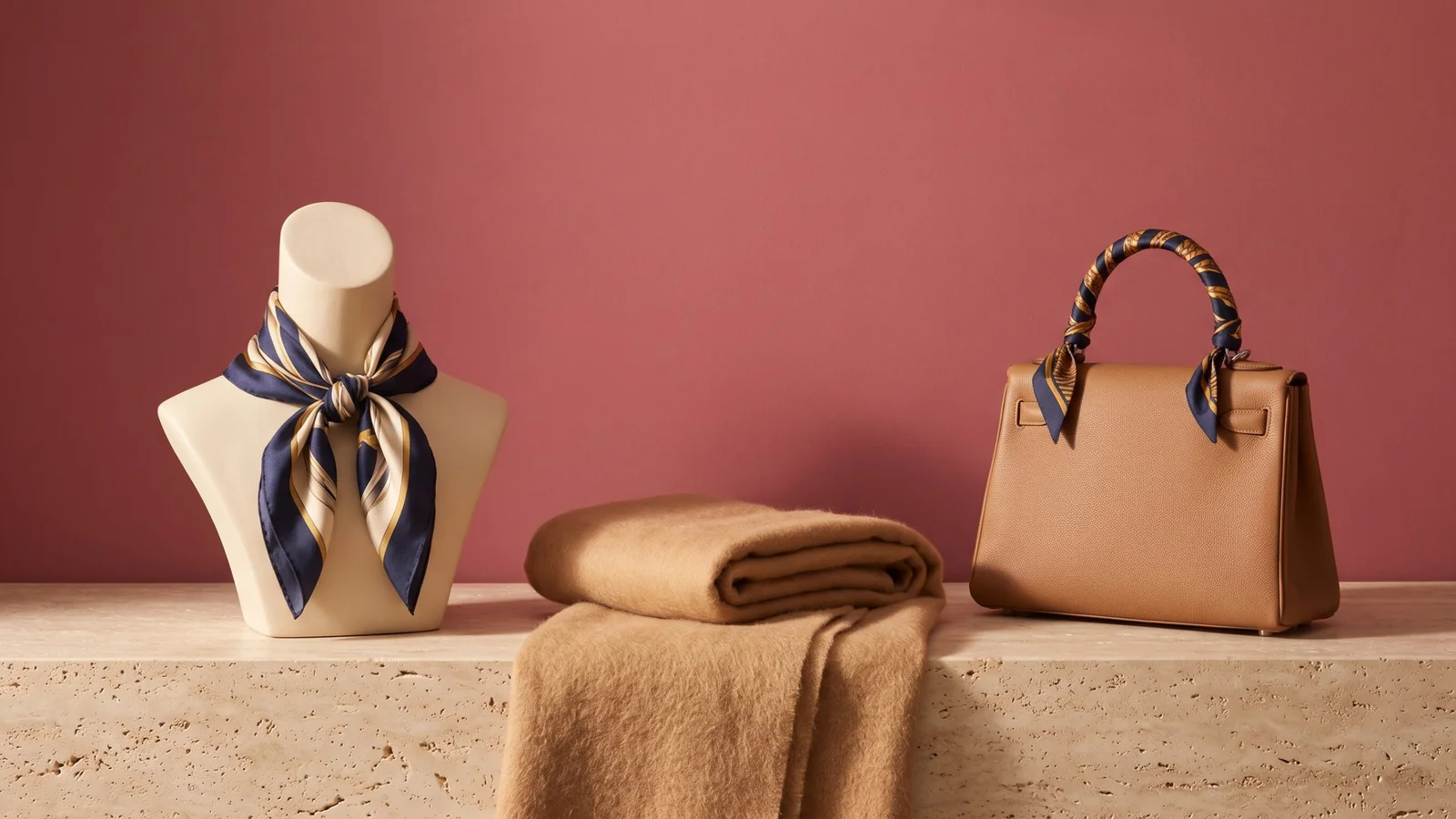
Styling idea: Display a handbag with a coordinating scarf to show customers how the two accessories work together.
How to wear a silk scarf with different outfits
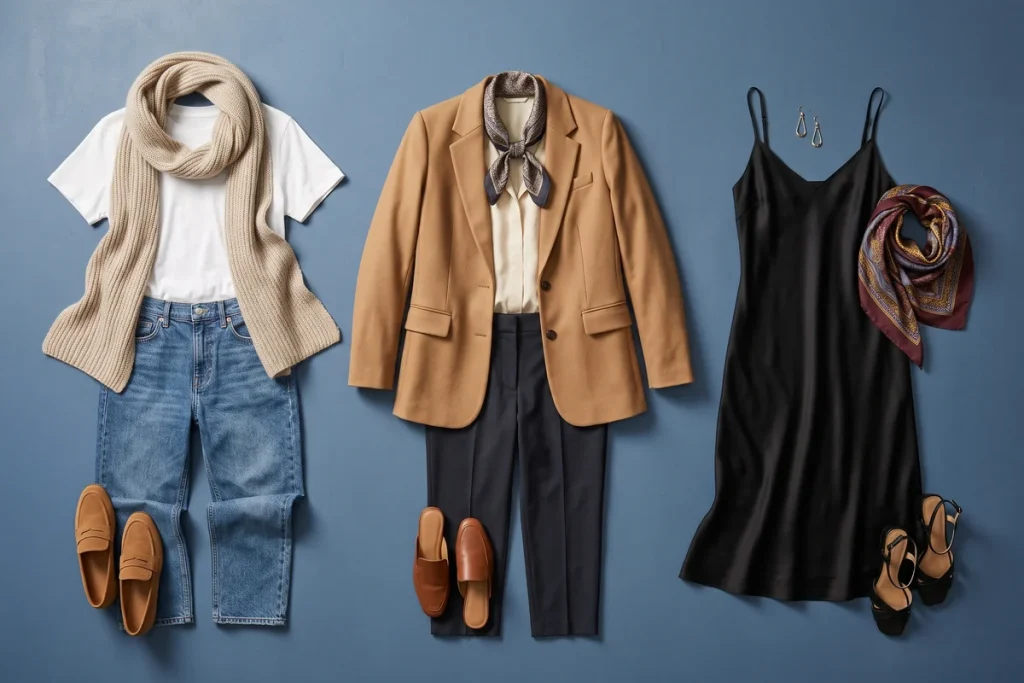
Once you’ve learned a few scarf knots, the next step is choosing the right outfit. The same scarf can feel casual, polished, or dressy depending on what you pair it with.
With a blouse or blazer
A square scarf tied at the neck works well with structured clothing. Try a small French knot with a neutral blazer or a classic neck knot with a button-down shirt.
If the outfit already has a bold print, choose a simpler scarf. If the clothing is neutral, a patterned scarf can provide contrast.
With sweaters and casual layers
Long scarves are useful for everyday outfits. A simple loop adds texture to a sweater or jacket, while a loose drape works well with lightweight layers. For boutique displays, this is an easy way to show customers how scarves can complement clothing they might already own.
With dresses and neutral outfits
A colorful scarf can refresh a simple dress without changing the entire outfit. For example, a patterned square scarf can add interest to a black dress, while a soft neutral wrap can complement a more colorful look. When styling mannequins, choose scarf colors that coordinate with the clothing rather than compete with it.
How to style scarves on boutique mannequins
Customers are more likely to understand a scarf’s versatility when they can see it styled. Instead of displaying every scarf folded on a shelf, use a few mannequins or accessory displays to demonstrate how the same product works with different outfits.
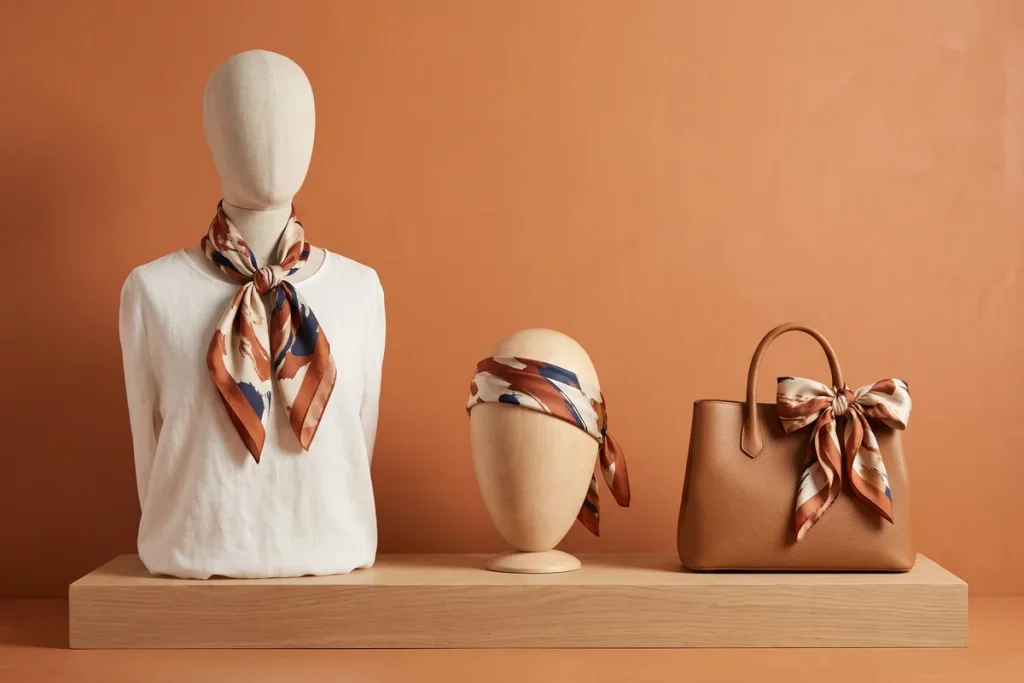
Show multiple ways to wear one scarf
One effective approach is to feature the same scarf in three different looks. For example:
- Look 1: Tie the scarf around the neck with a blouse.
- Look 2: Wear it as a headband with a casual outfit.
- Look 3: Wrap it around a handbag handle.
This demonstrates versatility without requiring three different products. You can also place a small styling card next to the display showing how to recreate each look.
Pair scarves with complementary accessories
Scarves work naturally alongside handbags, jewelry, outerwear, and other accessories. If your boutique sells handbags, try displaying a coordinating scarf around one handle. For clothing displays, use scarves to introduce accent colors that complement the featured garments. Keep additional inventory nearby so customers can easily find the exact scarf used in the display.
Turn scarf styling ideas into retail content
Scarf tutorials can also help customers who shop online. A product photograph shows what a scarf looks like, but a short demonstration can explain what customers can actually do with it.
Create short scarf tutorials
Choose one technique and break it into a few simple steps. For example, a short video could show how to fold a square scarf, create a French knot, and pair it with a blazer. Keep the camera focused on the scarf so viewers can follow the movements. Use the same product featured in your store or online listing.
Add styling cards to product displays
Printed styling cards can help customers remember different ways to tie a scarf. A useful card might include the technique’s name, a few illustrated steps, and a photograph of the finished look. You can place these cards near scarf displays or include them with purchases.
Show multiple looks in product photography
For online listings, consider including photographs of the scarf laid flat and styled in different ways. This helps shoppers evaluate the pattern, dimensions, and finished appearance. A square scarf might be photographed around the neck, in the hair, and tied to a handbag. These examples communicate versatility without relying on lengthy product descriptions.
How to choose wholesale scarves for your boutique
When purchasing scarves wholesale, variety matters, but so does choosing products that work with your existing merchandise. A large assortment of unrelated prints may be harder to merchandise than a smaller selection of coordinated designs.
Start with versatile shapes and colors
For a new scarf assortment, consider stocking a combination of small square scarves, larger squares, and long rectangular styles. Choose a few neutral colors, classic patterns, and seasonal prints that complement your clothing inventory. This gives customers different styling options without requiring a large initial investment.
Compare materials and product specifications
Before ordering, review each scarf’s dimensions, fabric composition, care instructions, and available colors. A scarf described as silk-style may be made from synthetic materials rather than natural silk.
Check the product specifications so you can describe the material accurately. Explore scarves and wraps, fashion bandanas, head scarves, and scarf wraps to compare available designs.
Test your assortment before expanding
Start with a manageable number of designs and monitor which products customers purchase. Pay attention to colors, patterns, sizes, and the styling techniques that generate interest. For example, if shoppers respond well to handbag scarf displays, you may want to expand your selection of smaller square scarves.
If long scarves perform better during colder months, consider adjusting future orders around seasonal demand. For additional purchasing guidance, Everful provides resources on boutique wholesale sourcing, wholesale suppliers for retailers, and factory-direct sourcing.
Everful has no minimums, so you can test a few designs in each shape before expanding. Before ordering, confirm product availability and wholesale shipping options.
Common questions about how to tie a scarf
What is the easiest way to tie a scarf?
A classic neck knot is one of the easiest scarf styles. Fold a square scarf into a narrow band, place it around your neck, and tie a loose knot at the front.
How do you wear a silk scarf around your neck?
Fold a silk scarf into a narrow band and tie it at the front or side of your neck. Smaller square scarves work well for decorative knots, while larger scarves can be draped more loosely.
What are different ways to wear a scarf?
Scarves can be styled with classic neck knots, French knots, simple loops, loose drapes, headbands, ponytail ties, and handbag wraps. The best method depends on the scarf’s shape, size, and fabric.
How do you tie a scarf around a handbag?
Fold a small scarf into a narrow strip, secure one end around the handbag handle, and wrap the fabric along the handle. Tie the opposite end to keep it in place. You can also create a decorative bow.
What type of scarf is best for boutique styling?
Square scarves are especially versatile because they work for neck knots, hair accessories, and handbags. Long rectangular scarves are useful for layered outfits and casual styling.
How can boutiques display scarves?
Boutiques can style scarves on mannequins, pair them with complementary clothing and accessories, and provide simple tying tutorials. Showing multiple uses for one scarf helps customers visualize different looks. The same approach works for larger department stores and multi-category retailers.