Holiday merchandising strategies that increase basket size
Holiday shopping brings a wave of traffic into your store, and almost everyone who walks in is ready to buy. Whether shoppers have a list or not, there is at least one person on it they do not know what to buy for. Holiday merchandising strategies let you capitalize on that.
A shopper will take a few steps into your store, glance around, and decide quickly whether to stay and shop or leave and try the next store. How your store is set up for that first impression does the heavy lifting for you. It all comes down to merchandising, meaning how your products are displayed to drive sales.
By now you have done your holiday inventory planning. These holiday merchandising ideas for retailers cover how to display, bundle, cross-sell, and group by price point to grow basket size, the total value of items purchased in a single transaction.
- The season rewards preparation. The National Retail Federation counted a record 202.9 million shoppers over Thanksgiving weekend 2025, and 96% made a holiday-related purchase.
- Fewer visits, more intent. Sensormatic Solutions forecasts US holiday store traffic down 3.5% in 2026, while conversion rates rose 5.2% year over year this summer, so every display has to work harder.
- Set up one layered gift table near the start of the main aisle, with eight to 12 products and backstock underneath.
- Bundle two or three items into one clearly priced gift. Jewelry, accessories, and home décor pair naturally.
- Cross-sell two companion pieces beside each big gift, stock small add-ons at checkout, and sell holiday packaging next to the displays it matches.
- Group gifts into $20, $40, and $60 zones so shoppers can buy within budget, and fill gaps factory-direct with no minimums.
The importance of holiday merchandising
The holiday season is the most important time of year for merchandising. It brings in festive foot traffic and drives revenue through discovery and impulse buys. According to the National Retail Federation and Prosper Insights & Analytics, 202.9 million people shopped over Thanksgiving weekend 2025 alone, and 96% made a holiday-related purchase. About 67% of what they spent went to gifts.
Those shoppers are also more deliberate about where they go. Sensormatic Solutions forecasts US holiday store traffic down 3.5% in 2026, while conversion rates rose 5.2% year over year this summer. Fewer shoppers are coming through the door, but the ones who do are ready to buy.
Holiday shoppers are making dozens of small decisions, and they all want to finish their list. That creates urgency and decision fatigue. You can solve both by making it easy for them: reduce friction and increase discovery. The holiday merchandising ideas below will help you do just that.
Holiday gifting displays that drive discovery and impulse buying
Holiday gift displays drive discovery and impulse buying by showing shoppers something they had not thought to buy as a gift. Strong displays reduce decision fatigue and give shoppers ideas for specific people on their list.
How to set up gift tables and themed displays
Placement comes first. Put your main gift table near the front, but not right inside the door. Place it closer to where the main aisle starts, so shoppers see it as they walk in and pass it on the way to most of the store.
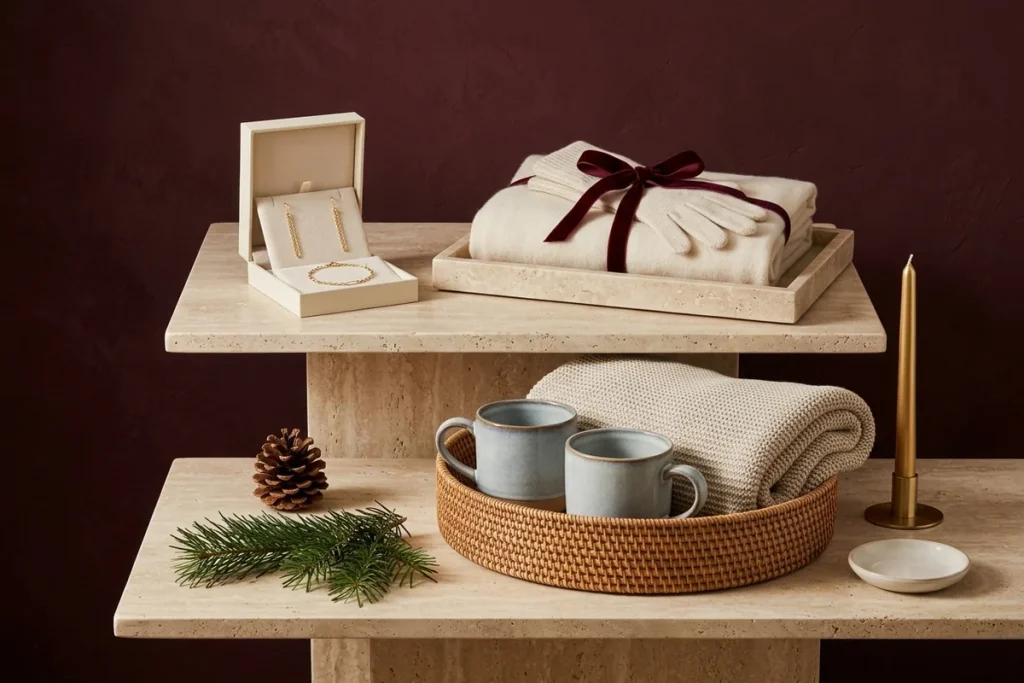
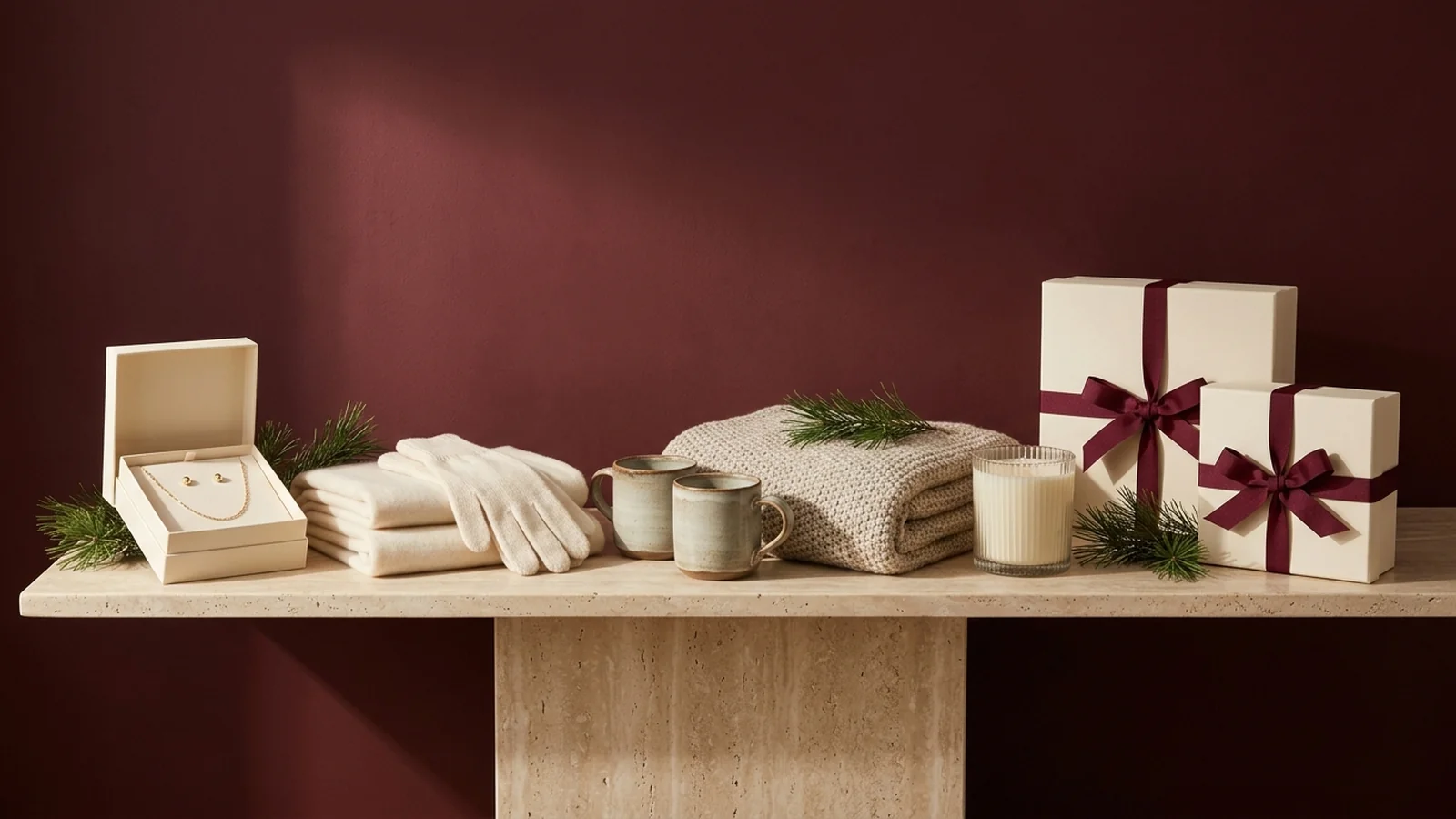
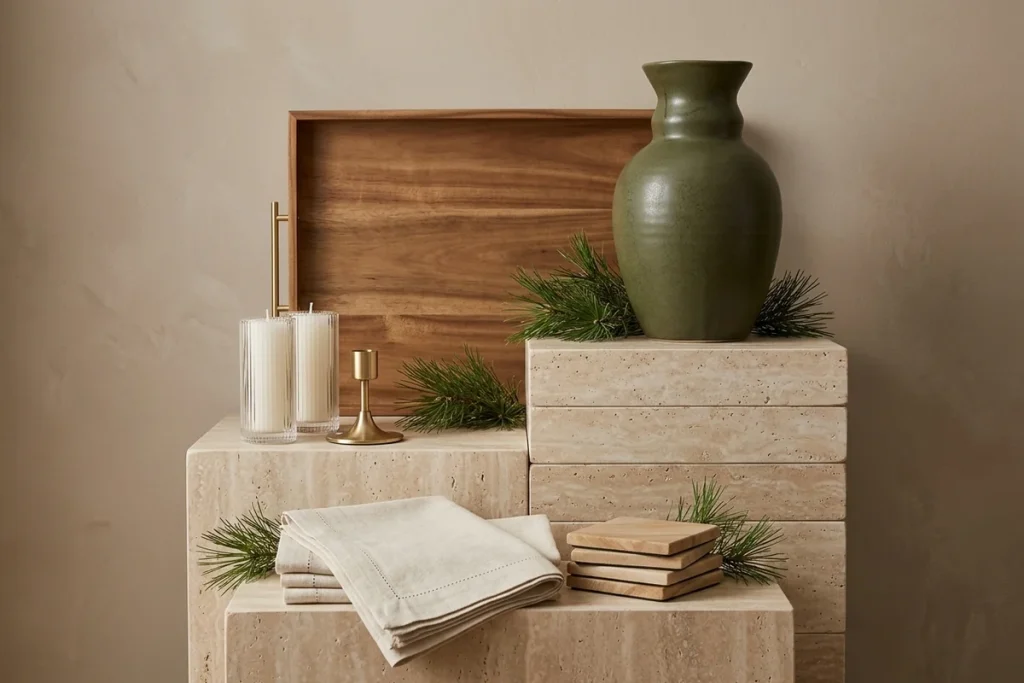
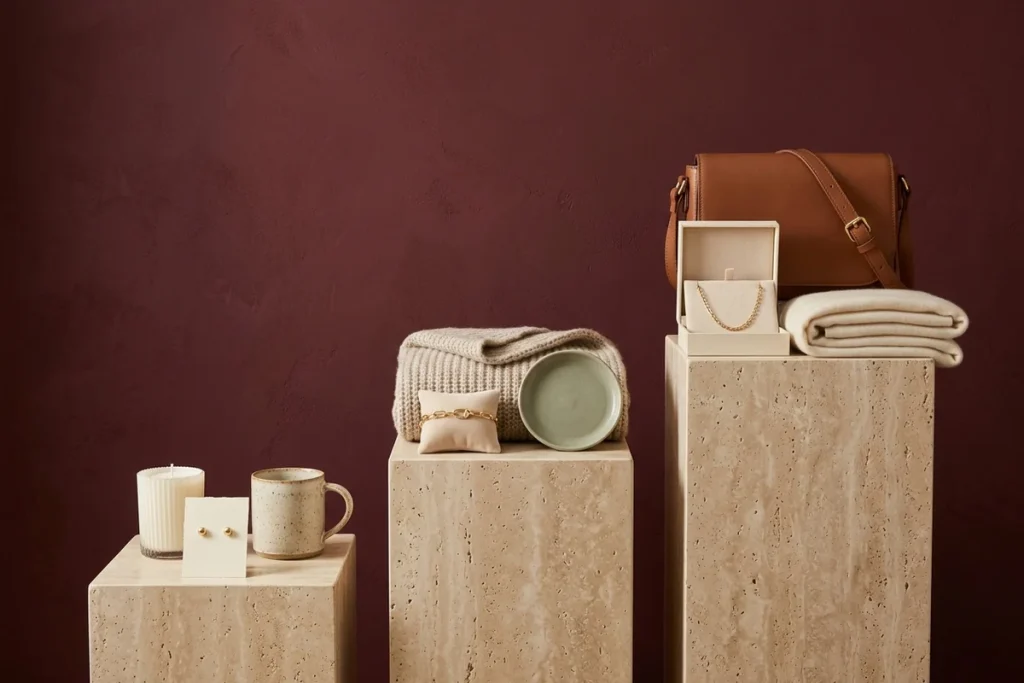
Set the table up in layers so everything is visible. Aim for three heights built from stacked boxes, display risers, or tiered stands. Put the tallest level in the back or center, followed by the middle level, then the shortest.
Whether you build a table by category or by theme, limit it to eight to 12 products and keep two to three units of each under the table. That way the table always looks well stocked and every item is easy to grab.
A category display showcases one category’s products, while a themed display pairs items from different categories around a specific recipient or occasion. A holiday hostess table, for example, could combine serving trays, candles, and a home décor piece. Crossing categories increases basket size by bringing together items otherwise spread across the store, right at your shoppers’ fingertips. It gives them ideas they might not have thought of.
Bundles and curated sets that increase perceived value
Holiday bundling takes two or three items and makes them one gift. Because it is presented as a single gift, it has a higher perceived value. It also increases basket size, because the shopper who came in for one gift leaves with two or three items.
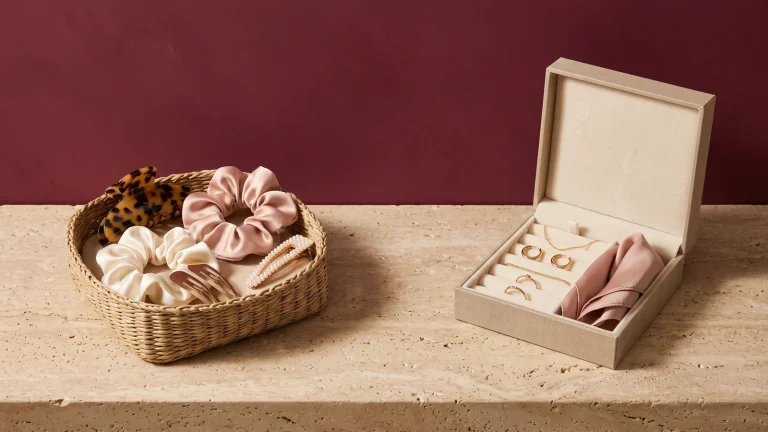
Present bundles clearly as gifts: together on a tray, tied together, or in an open box or basket. Display them on one of the higher tiers of a gift table, and place the individual items that make up each bundle separately on the lower tiers or nearby, so the bundled gift becomes the obvious choice.
Bundled jewelry, accessories, and home items
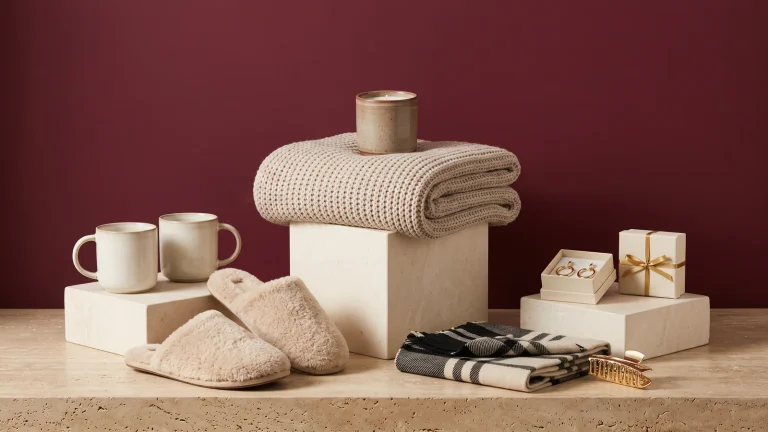
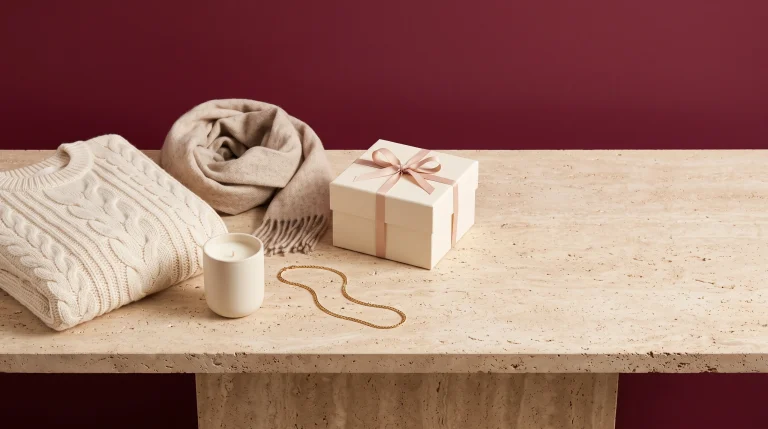
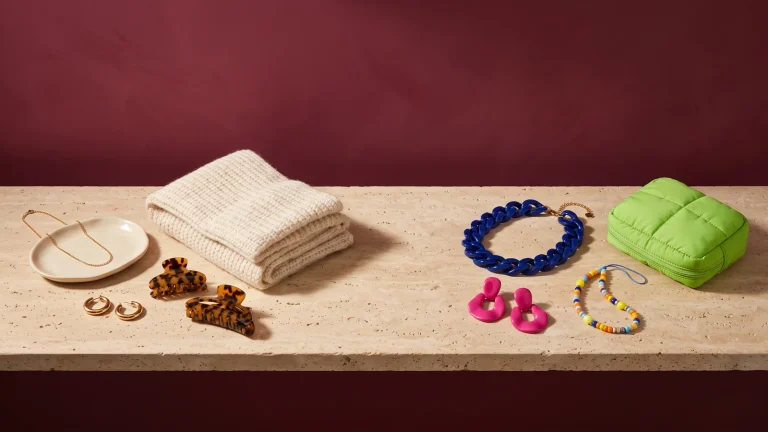
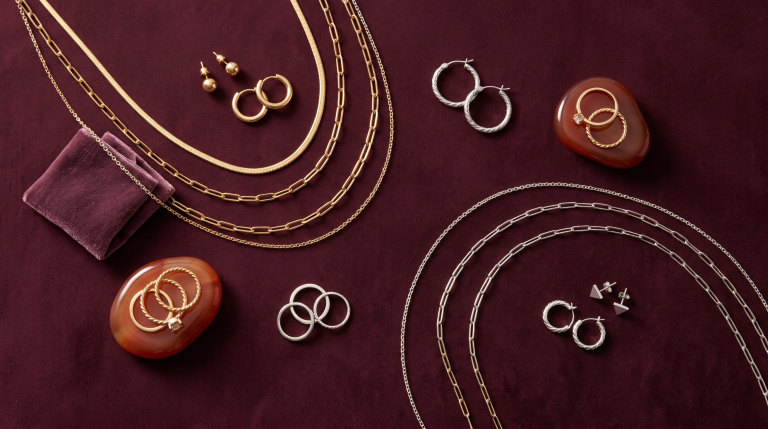
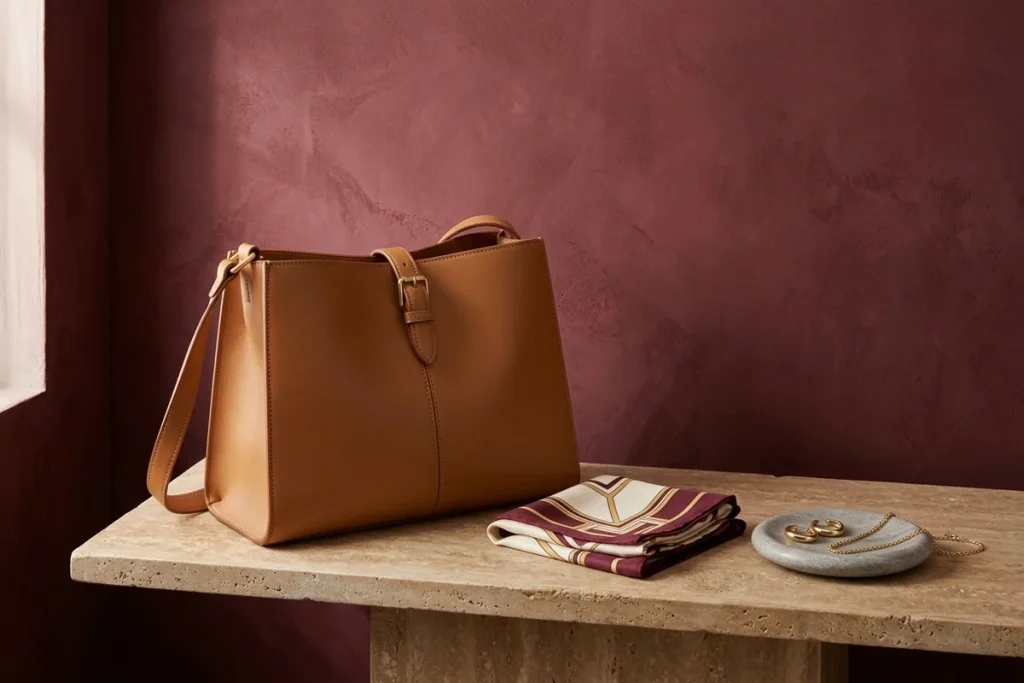
Certain items pair naturally, and jewelry, accessories, and home items make especially strong bundles. For a jewelry gift set, pair matching earrings and a bracelet, or a necklace with earrings or a bracelet. For accessories, try a scarf with matching gloves, or a hair clip with a compact mirror. For a cozy home bundle, pair two mugs with a blanket.
Price each bundle clearly to take the friction out of the purchase. You have made the decision easy for your shoppers: the discovery, the obvious choice, and the price are all there. No guessing and no decision needed.
Cross-selling strategies for holiday traffic
Once a customer decides on a purchase, your work gets easier, and this is where you can increase basket size. Offer holiday cross-sells that complement the main purchase.
Identify your five biggest gifts, then pick two companion pieces for each. If a camera is the big sale, place extra film and a camera case nearby. If a customer buys a cozy robe, put slippers and a mug beside it. These are easy decisions once the big one is made. Place the complementary items on the endcap of the aisle where the big item sits.
Add-on items near checkout
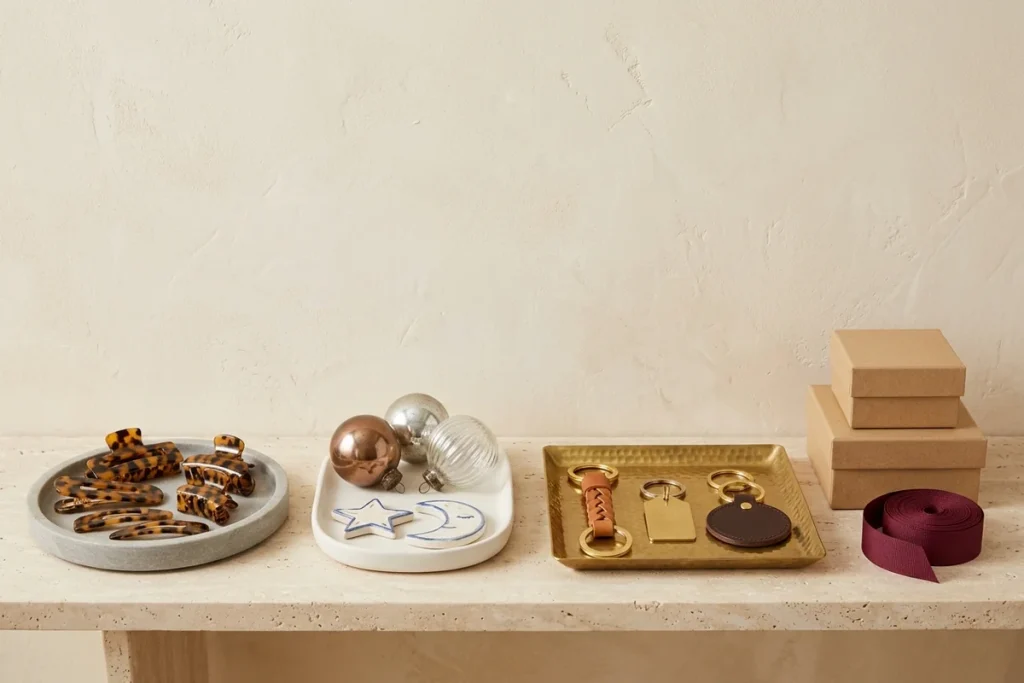
The checkout line is another big opportunity for cross-selling. Lines are longer during the holidays, so shoppers have more time to browse while they wait. Choose small items that finish a present or work as stocking stuffers, like hair clips, ornaments, and keychains. Price them low so saying yes takes no thought, and place them at hand height, not too low or too high, so they are easy to grab and go.
Convenience add-ons
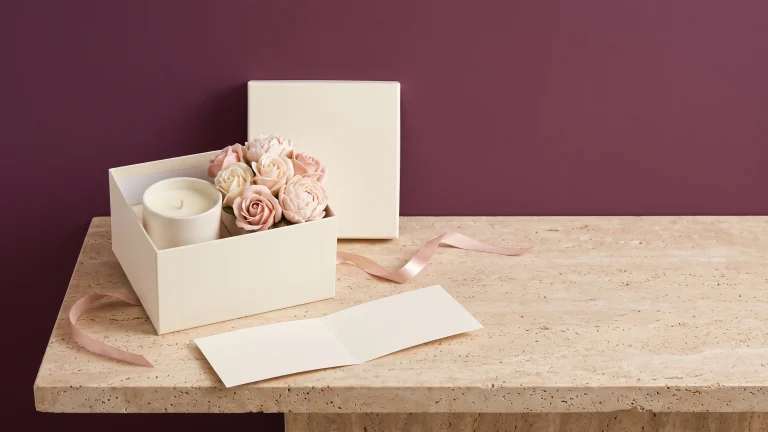
Holiday packaging is one more way to grow basket size. Gift wrap, gift boxes, gift tags, and ribbons are an easy yes once the gift is chosen. Shoppers can finish the whole gift in your store and leave with it ready to give, packaging and all.
Choose gift wrap that matches each themed bundle and display it next to that table. Keep gift boxes in a few sizes and gift tags at checkout for last-minute add-ons, and hang holiday gift bags near your accessory bundles for convenience.
Holiday price-point merchandising helps shoppers self-select
Holiday price-point merchandising makes it easy for shoppers to stay within budget for everyone on their list. It reduces decision fatigue by offering items from different categories in the same price bracket. Instead of comparing price tags, shoppers find everything in one place and can choose with confidence that it is the right price.
$20, $40, and $60 holiday gift zones
Set up three price zones: $20, $40, and $60. Arrange them on shelves or tables in price order, so shoppers can see the breakdown at a glance and decide whether to spend a little more at the next table.
Choose items that check a range of people off your shoppers’ lists. Make sure each price zone covers a friend, a co-worker, a host, and a teacher, and give each zone the same number of products so no zone looks thinner than the others.
Everful supports holiday merchandising with no minimums
With your holiday merchandise in place, you do not need another large order, but you may find gaps as you build out your displays. A bundle might need one more piece, a price zone might look thin, or an item might sell better paired with something from a different category. Everful is factory-direct with no minimums, so you can fill those gaps with a few units or 10,000, with no order floor to clear.
Testing merchandising ideas with small-volume orders
The same holds if your checkout add-ons or a themed display you expected to sell out are not moving. With Everful, you can place a small order to test what works better in those spots before you commit to a larger one.
When you are ready for that bigger order, you can expect the same quality as the test run. Every order, whatever its size, is hand-inspected before it reaches you, so it can go straight onto your floor during the busy season.