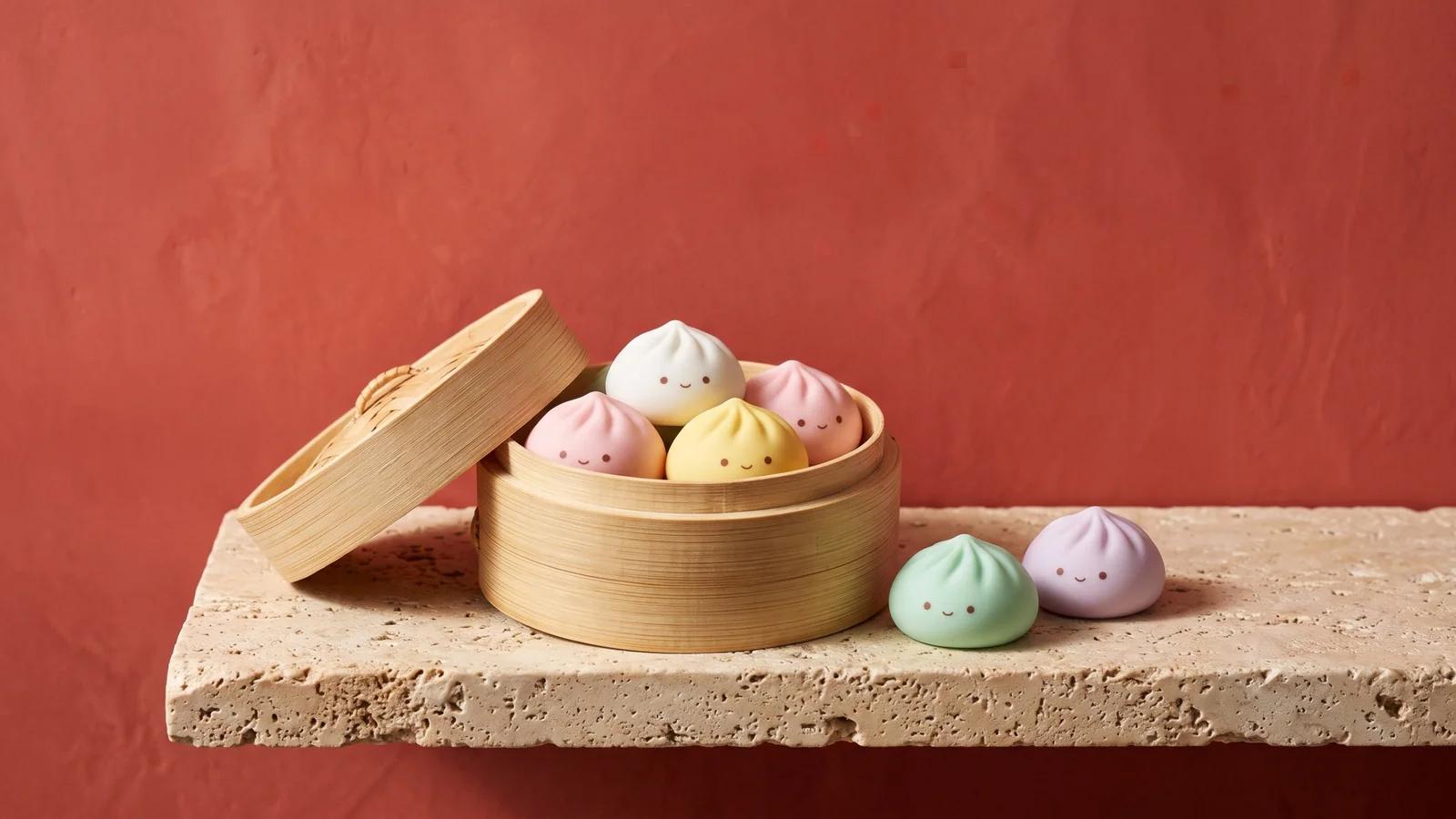
What are squishy dumplings and why should retailers stock them?
They look good enough to eat, they’re satisfying to squeeze, and they fit almost any counter. Here’s what squishy dumplings are, why shoppers pick them up, and how to test them without overstocking.
- Squishy dumplings are soft novelty toys shaped like dumplings, often with faces and mini steamer packaging. They’re toys, never food.
- Construction varies: slow-rising foam, soft elastomers, gel fillings and solid foam all feel different, so check specs or order samples.
- Cute designs, short demo videos and collectible variations drive interest, though none of them guarantees repeat sales.
- Review age grading, small parts, labeling and safety documentation before selling to children.
- Start with three or four styles at checkout, track sell-through, and reorder the winners. Sourcing with no minimums keeps the test small.
You’ve probably seen them in toy stores, gift shops, or scrolling through social media: tiny, squeezable dumplings with cute faces, soft textures, and miniature packaging that makes them look almost good enough to eat.
Squishy dumplings are part of a broader squishy trend that’s bringing playful, food-shaped toys into novelty gift assortments. Their appeal is simple. They’re fun to look at, satisfying to squeeze, and small enough to fit into a variety of retail displays.
For retailers, these toys offer an opportunity to introduce something different without dedicating an entire section of the store to a new product category. But are squishy dumplings worth stocking, and how can you tell which styles your customers will actually buy?
Here’s what to know before adding these cute stress-relief toys to your wholesale inventory.
What are squishy dumpling toys?
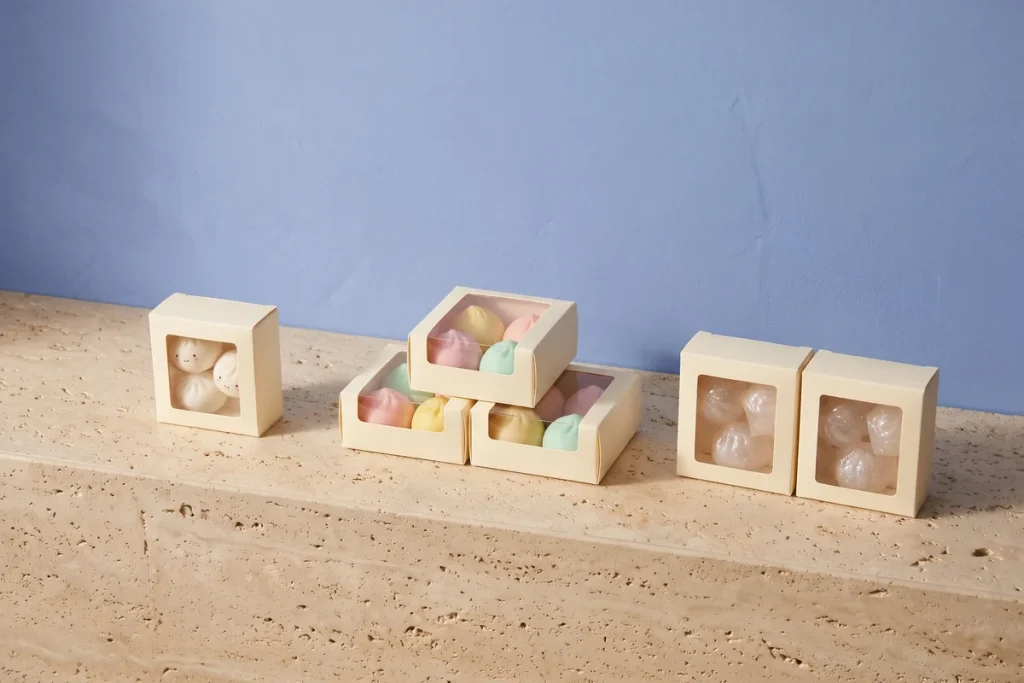
Squishy dumplings are soft novelty toys designed to resemble miniature dumplings. They often feature rounded shapes, playful facial expressions, and packaging inspired by traditional food containers, such as small steamer baskets.
Although they look like food, these products are toys and should never be presented as edible items. Like other squishy toys, their main feature is a soft, compressible texture. Customers can squeeze them and watch the material change shape, although the exact effect depends on how the toy is made.
What makes squishy dumplings different from other squishy toys?
Traditional stress balls often have simple round shapes, while squishy dumplings combine a recognizable food design with a tactile experience. Some products resemble individual dumplings, while others are sold in coordinated sets or miniature containers. Their small size and novelty packaging can make them particularly suitable for gift shops and checkout displays.
However, not every squishy dumpling feels the same. Different constructions may include:
- Slow-rising foam: Compresses and gradually returns to its original shape.
- Soft elastomers: Offer a flexible, rubber-like texture.
- Gel-filled designs: Contain a filling that shifts when squeezed.
- Solid foam constructions: Provide a lightweight, compressible feel.
Before purchasing, check the actual product materials and specifications. Similar-looking squishies can have different textures, durability, and handling requirements.
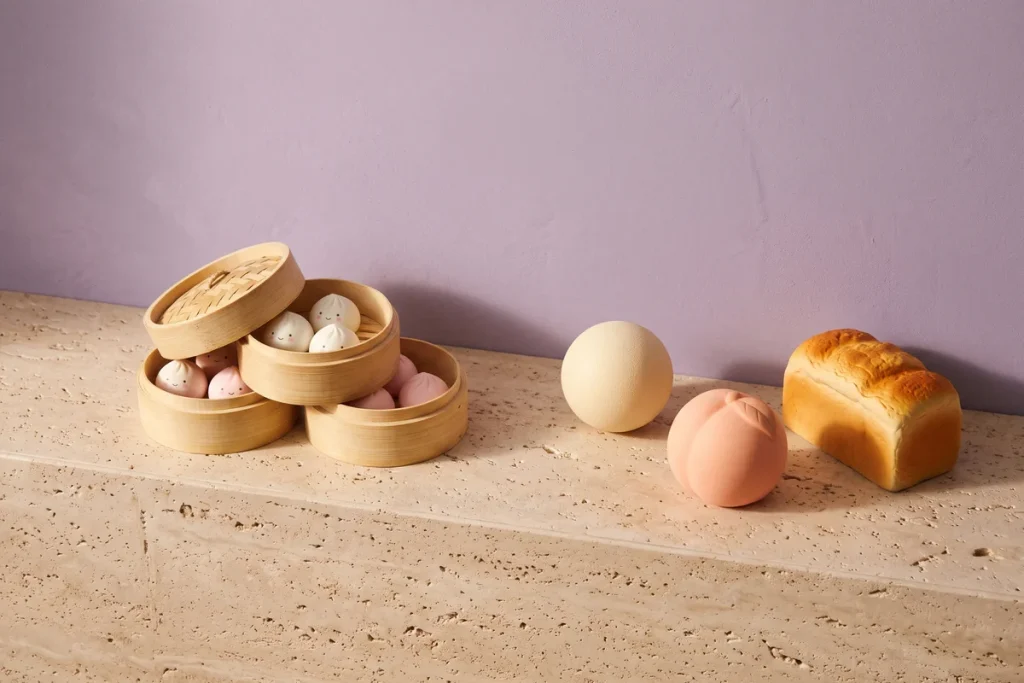
Why are squishy dumplings trending?
Part of the appeal of squishy dumplings is that they combine several familiar novelty toy features into one product. They’re cute, tactile, and available in designs that can be easy to recognize in a crowded display. Their food-inspired appearance also gives retailers opportunities to create playful product presentations.
Cute designs make them easy to notice
Food-shaped novelty products turn everyday objects into playful accessories. Dumplings, pastries, fruit, and other recognizable foods can be especially appealing when presented in miniature sizes or decorated with expressive faces.
For retailers, these designs offer something different from traditional animal-shaped toys or plain stress balls. A small display of colorful dumpling squishies can introduce variety to an existing novelty section without requiring a complete merchandising change.
Squishy toys work well in short videos
Squishy toys are particularly suited to visual demonstrations. A short video can show the toy being squeezed, how quickly it returns to shape, and what the packaging looks like when opened. This gives shoppers a clearer understanding of the product than a static image alone.
Retailers can use short product demonstrations on social media or online product pages to highlight actual textures and features. Just make sure the demonstration accurately represents the item being sold.
Different designs create collectible appeal
Some squishy dumplings are offered in multiple colors, facial expressions, or themed variations. These differences can encourage shoppers to compare designs or choose more than one style.
Mystery assortments may also introduce an element of surprise, although retailers should confirm how those products are packaged and distributed. Collectible appeal doesn’t guarantee repeat purchases, but it gives retailers an opportunity to test which designs generate the most interest.
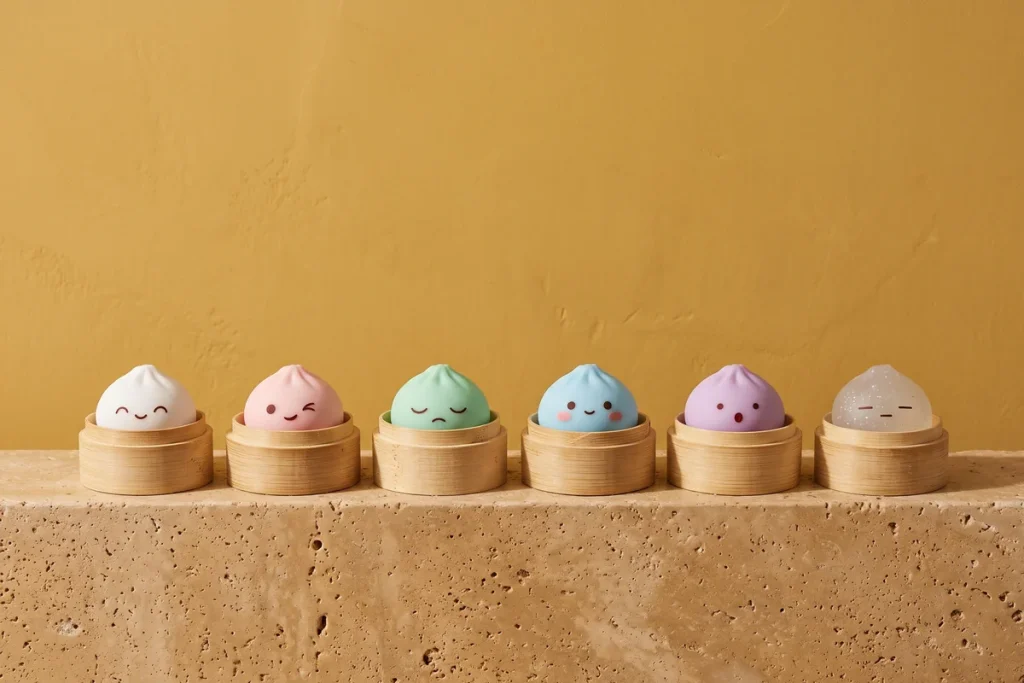
Which squishy dumpling styles should retailers stock?
If you’re introducing squishy dumplings for the first time, you don’t need every available variation. A small assortment of different shapes, textures, and price points can help you learn what your customers prefer.
Mini squishy dumplings
Miniature designs are useful for compact displays and small gift assortments. Their size can make them easier to organize in countertop trays or baskets, especially when space is limited. However, small products require careful attention to age recommendations and applicable small-parts requirements.
Colorful and slow-rising squishies
Colorful dumpling designs can add visual variety, while slow-rising products offer a different squeeze experience. Retailers can compare these variations to determine whether customers are more interested in appearance or texture.
Avoid assuming that a product is slow-rising simply because it’s labeled as a squishy. Check the listing or sample to verify how it behaves.
Collectible sets and mystery assortments
Coordinated sets may appeal to customers who enjoy collecting different novelty designs. Mystery assortments can also make a display more interactive, but buyers should understand how the assortment is packaged.
For example, does each package contain one random design, or does the wholesale order include a fixed assortment? Clarifying these details before purchasing helps retailers plan their displays and pricing.
What to compare before ordering
The best assortment depends on your customers and the types of novelty merchandise your store already sells.
How to check wholesale squishy toy quality and safety
Squishy dumplings may look simple, but retailers should evaluate them as carefully as other toys. Materials, construction, labeling, and intended age groups all affect whether a product is appropriate for your store.
Inspect materials and construction
Start by reviewing the materials used to manufacture the toy. If the product has a filling, inspect the seams and outer surface for potential leaks or weak points. For foam or elastomer squishies, check whether the toy maintains its intended shape after normal handling.
Ordering samples can be useful when evaluating an unfamiliar supplier or product design. Avoid describing products as non-toxic, tear-proof, or safe for all ages unless those claims are supported by appropriate documentation.
Review age recommendations and safety documentation
Children’s toys sold in the United States may be subject to requirements administered by the Consumer Product Safety Commission (CPSC). Depending on the product, these can include testing, certification, age grading, labeling, and restrictions related to small parts or other hazards. Before purchasing, confirm that the supplier can provide the required product information and documentation.
Squishy toy buying checklist
Before you order, pay particular attention to:
Age recommendations and warnings
Material composition
Small parts or detachable components
Seams and accessible fillings
Packaging and labeling
Applicable safety testing and certification
Retailers should also confirm that products meet the requirements of the country where they will be sold.
How to merchandise squishy dumplings in your store
Squishy dumplings don’t necessarily need a large display to attract attention. Because they’re compact and visually distinctive, retailers can introduce them alongside existing novelty products.
Start with a checkout display
Checkout counters are useful places to test smaller products. A tray or basket of colorful squishy dumplings can catch shoppers’ attention while they wait to complete a purchase.
Keep the display organized, with clear pricing and enough space for customers to browse. If customers are allowed to squeeze a product before purchasing, consider providing a designated demonstration sample rather than opening packaged inventory.
Create a food-themed novelty section
Squishy dumplings can also be grouped with other food-shaped toys. For example, a display might feature dumpling squishies alongside fruit-shaped squeeze toys, pastry-inspired designs, or other playful accessories. This creates a recognizable theme and gives shoppers several related products to explore.
Retailers can also pair squishies with age-appropriate fidget toys or stress relief toys.
Use small gift bundles
Another option is to combine squishy dumplings with complementary novelty merchandise. Depending on your customers, this might include stickers, stationery, or other small accessories.
Bundles can make gift shopping easier and help introduce customers to products they might not otherwise notice. Just be sure to calculate the combined wholesale cost before setting the bundle price.
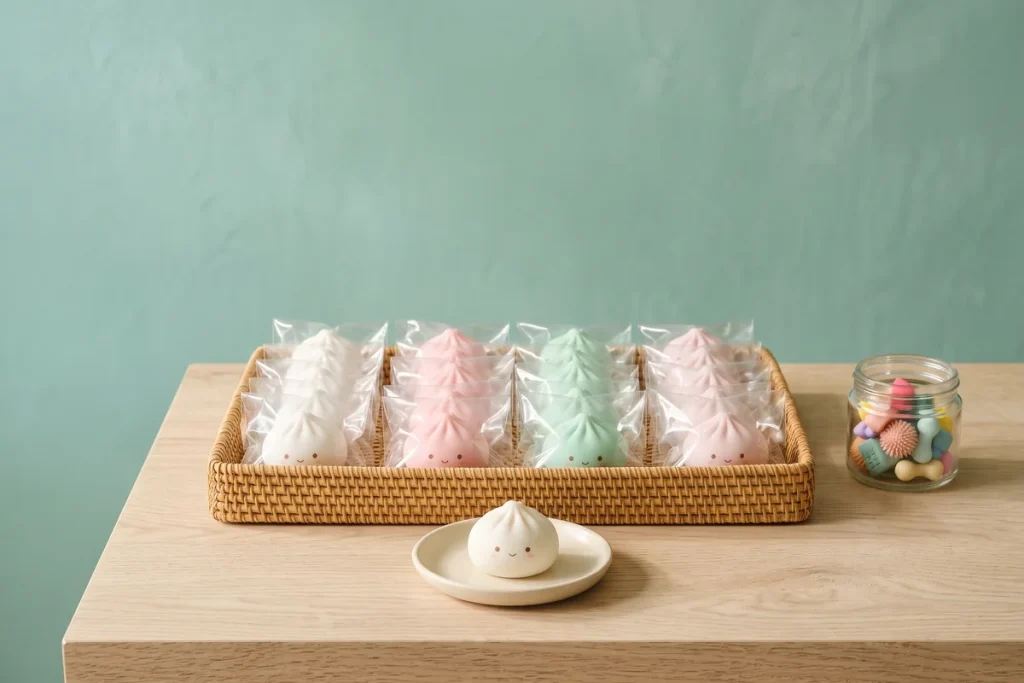
How to test the squishy trend without overstocking
Novelty toy demand can change quickly. A product that attracts attention online won’t necessarily sell at the same pace in every retail store. That’s why starting small is often a practical approach.
Begin with a focused assortment
Instead of ordering a large quantity of one design, consider testing a few different styles. For example, you might introduce a classic dumpling design, a colorful variation, and a slow-rising option.
Place them in the same display and monitor which products customers purchase. This gives you information about local demand before committing more of your inventory budget.
Track sales and reorder based on demand
Sell-through rate is a useful way to evaluate how quickly inventory is selling. The basic formula is:
Sell-through rate = Units sold ÷ Units available for sale × 100
If you begin with 20 squishy dumplings and sell 15 during a defined period, your sell-through rate is 75%.
Here’s how a simple inventory tracker might look:
These figures are hypothetical and are included only to demonstrate inventory tracking.
In this example, the classic dumpling design has the highest sell-through rate.
That could make it a reasonable candidate for replenishment, provided demand remains consistent and the product meets your margin requirements.
Retailers should also consider customer feedback, reorder lead times, and seasonal purchasing patterns before expanding an assortment.
Where to buy squishies wholesale
Finding the right wholesale squishy toys involves more than choosing the cutest designs. Retailers should compare product quality, packaging, minimum order quantities, shipping costs, and the availability of styles that fit their customers.
Everful offers several toy categories to explore when building a novelty assortment. Start with Everful’s wholesale squishy toys collection to compare available designs. You can also browse squeeze toys, fidget toys, and other related categories to build a coordinated selection.
For retailers evaluating sourcing arrangements, Everful provides additional information about factory-direct purchasing, wholesale products for resellers, and wholesale suppliers for retailers.
Everful has no minimums, so you can order a few units of each design and reorder the ones that sell. Before placing an order, review the product specifications and check the available wholesale shipping options.
Starting with a manageable assortment and expanding based on actual customer demand can help you introduce the squishy trend without overcommitting inventory.
Common questions about squishy dumplings for retailers
What are squishy dumplings?
Squishy dumplings are soft, squeezable novelty toys designed to resemble dumplings. They may feature playful facial expressions, different textures, and miniature food-inspired packaging.
Why are squishy dumplings popular?
Squishy dumplings combine cute food-shaped designs with tactile interaction. Their novelty appearance, collectible variations, and suitability for short product demonstrations can make them appealing gifts.
Are squishy dumplings safe for children?
Safety depends on the specific product, its construction, and the intended age group. Retailers should review age recommendations, warnings, and applicable safety documentation before selling any toys to children, squishy ones included.
Where can retailers buy squishies wholesale?
Retailers can explore wholesale toy suppliers and marketplaces, including Everful’s squishy toy and squeeze toy collections. Compare product specifications, minimum order quantities, and shipping costs before purchasing.
How should retailers display squishy dumplings?
Squishy dumplings can be displayed in countertop trays, organized baskets, or themed novelty gift sections. Clear pricing, coordinated product groupings, and designated demonstration samples can help shoppers explore the assortment.
How can retailers test the squishy trend?
Start with a small selection of designs and track sales by product style and price point. Use sell-through rates and customer feedback to determine which products to reorder.