

How to set up a hat bar for your boutique or event
A hat bar lets shoppers pick a blank cap, choose their patches and leave with a hat they designed themselves. Here’s how to set one up, from supplies and station layout to pricing, inventory and running it at a pop-up or private event.
- A custom hat bar lets customers personalize a blank cap with patches, adding a hands-on experience to a boutique, pop-up, market or private event.
- Pick your format first. Space, customer volume, budget and staffing decide the layout and how much inventory you need.
- Buy blank caps, patches and application tools as a set, and check they’re compatible before you buy any of them.
- Group patches by theme, color or price, and keep any heat equipment in a controlled area away from customers.
- Price each hat to cover the blank, patches, labor, overhead and event fees, using either an included-patch or an itemized model.
- For events, confirm venue and power requirements, plan inventory around guest count and track what sells to sharpen your next order.
A custom hat bar gives customers a hands-on way to personalize a hat by choosing a blank cap, selecting patches or embellishments and creating a design that reflects their style. For boutiques, pop-up shops, markets and private events, it can add an interactive experience to a retail display or gathering.
Setting up a successful hat bar takes more than a collection of hats and patches. You need suitable supplies, an organized display, a safe customization process, clear pricing and enough inventory for the number of customers you expect to serve.
This guide explains how to set up a custom hat bar, choose blank hats and patches, organize your station, price customized products and plan a boutique activation or mobile event.
How to set up a custom hat bar step by step
Start with a format that suits your space, audience, budget and event plans. A permanent in-store station may need a different layout and inventory depth than a compact setup for a market or private party.
Choose a hat bar format for your boutique, pop-up or private event
A boutique hat bar can operate as a dedicated area where shoppers customize hats while browsing the store. A pop-up station can introduce the concept at markets, shopping events and temporary retail activations. A private-event hat bar may be organized around a guest count, event schedule and the host’s budget.
Before choosing a format, consider:
- Space: How much room is available for browsing, customization and checkout?
- Customer volume: Will guests arrive gradually or all at once?
- Customization method: Will hats be decorated on-site, or will customers select designs for later completion?
- Budget: How much can you invest in blank hats, patches, equipment, displays and packaging?
- Staffing: Who will help customers choose designs and operate any pressing equipment?
Start with a manageable setup and expand once you understand customer preferences and the time it takes to complete each hat.
Plan a custom hat bar setup around your space and customer flow
Arrange the station so customers can move through the process without crowding the display or getting in the way of equipment.
A practical layout has separate areas for:
- Blank hats and size or style options
- Patch browsing and design selection
- Customization and application
- Cooling or finishing, where required by the application method
- Mirror checks, packaging and checkout
Keep the customer-facing selection area separate from any hot equipment. If the station is small, use trays, labeled containers and vertical displays to make supplies accessible without covering the working surface.
Create a checklist for your first hat bar event
Before opening, confirm that you have the products, tools, signage and operating procedures needed to run the station.
- Blank hats in your selected styles and colors
- Patches and embellishments organized for easy browsing
- Application tools compatible with your chosen patches
- Manufacturer-approved instructions and any required protective equipment
- Stable work surface and good lighting
- Mirror and sample hats
- Clear pricing and customization instructions
- Packaging and a designated pickup area
- Payment and checkout process
- Backup supplies and a plan for managing customer queues
Hat bar supplies: blank hats, patches and equipment
The supplies you choose shape the look of your hat bar, how customers interact with it and how efficiently you can complete each order. Choose products that work together, and check that your hats, patches and application tools are compatible before you buy any of them.
Choose blank baseball caps and other customizable hat styles
Blank baseball caps are a practical starting point because they offer a familiar shape and a visible front panel for decoration. Depending on your audience and the products available, you may also consider other customizable hat styles.
Compare blank hats by:
- Crown shape and available decoration area
- Material and surface texture
- Closure and fit options
- Color selection
- Construction and stitching
- Unit cost and supplier order requirements
The surface and construction can affect which decoration methods work well. Check product specifications before choosing patches or tools.
Build a balanced assortment of iron-on patches and embellishments
Offer a selection of patches for hats that gives customers creative choices without making the display difficult to navigate. You might group designs by theme, color, occasion or visual style.
Potential groupings include:
- Initials, letters and numbers
- Nature and outdoor-inspired designs
- Food, hobbies and playful motifs
- Seasonal and holiday themes
- Neutral designs and colorful statement pieces
Start with a curated range instead of trying to carry every possible design. As you learn what customers choose, you can adjust the assortment and test new themes.
Select a suitable hat press and follow patch-maker instructions
Not every patch or hat can be applied using the same method. Some products, such as iron-on patches for hats, may require heat, while others may be designed for sewing or a compatible adhesive. Application requirements depend on the patch backing, hat material and manufacturer’s instructions.
Before purchasing equipment, verify that the tool is suitable for the products you intend to use. Follow the patch and equipment makers’ guidance for temperature, pressure, application time and handling. Test the complete process on sample materials before offering it to customers.
If heat is involved, keep the equipment in a controlled work area, keep customers away from hot surfaces and train staff in safe operation. Allow items to cool or finish as directed before handing them over.

How to organize a hat patch bar display
An attractive display should make it easy for customers to see their options, compare designs and start creating a hat. Organization matters most at busy events, where customers may have limited time to browse.
Arrange patches by theme, color and price
Use shallow trays, dividers or labeled containers to separate patch designs. Grouping similar items together helps customers find what they want and makes restocking easier.
You can organize patches by theme, such as letters, nature, travel or seasonal designs. Alternatively, arrange them by color or price if those are the main factors customers use to choose.
Keep frequently selected designs within easy reach, and let your sales records decide which patches earn the most display space.
Keep popular hat styles easy to browse and try on
Display a manageable selection of hat styles and colors where customers can see them clearly. Use mirrors and sample hats to help shoppers imagine the finished product.
If you carry multiple sizes or fits, label them so customers can compare options without repeatedly asking staff for help. Keep reserve stock nearby but separate from the customer display to prevent clutter.
Display examples without limiting customer creativity
Finished sample hats help customers understand how patches might look when combined. Display a variety of approaches, such as a simple single-patch design, a coordinated group of patches and a bolder arrangement.
Treat samples as inspiration, not fixed templates. Customers should understand which elements are available and how pricing works, while keeping the freedom to create their own combinations.

How to price custom hats at a hat bar
Pricing should cover the blank hat, patches, labor, operating costs and the profit your business aims to earn. A simple pricing structure also helps customers decide without needing a custom quote for every design.
Set a base price for each blank hat
Begin by calculating the cost of the blank hat, including any inbound shipping and other costs that go into getting the product ready for sale.
Then determine how the base price fits your target margin and customer expectations. Different hat styles may have different prices because their costs, construction and perceived value vary.
Avoid setting one price for every hat if your costs vary significantly. A small number of clearly labeled price tiers can make the display easier to understand.
Decide whether patches are included or priced individually
There are two common approaches to pricing customization:
- Included-patch model: The base hat price includes a set number or selection of patches.
- Itemized model: Customers pay a base price for the hat and an additional amount for each patch or embellishment.
An included-patch model can simplify decisions, while itemized pricing gives flexibility to customers who want different designs. You can also combine the two, such as including one patch and charging for additional pieces.
Make sure your pricing sign explains what is included, which options cost extra and whether any premium patches have different prices.
Account for labor, supplies, event fees and target margin
A profitable price accounts for more than the merchandise itself. Consider staff time, consumable materials, equipment costs, event fees, packaging, payment processing and other operating expenses.
For a simple illustration, suppose a customized hat has the following estimated costs:
These figures are examples, not recommended market prices. If the target gross margin were 50%, a simplified calculation would be:
Selling price = Total cost ÷ (1 − Target gross margin)
$15 ÷ (1 − 0.50) = $30
A $30 selling price would leave $15 above the illustrated $15 cost, a 50% gross margin on the selling price. Your actual pricing should use your own costs, local market, tax treatment and business goals.
How to run a mobile hat bar business or pop-up event
A mobile hat bar brings the customization experience to a venue outside your permanent store. Good planning helps you estimate inventory, transport supplies and serve customers without making the process feel rushed.
Confirm venue, power, table and setup requirements
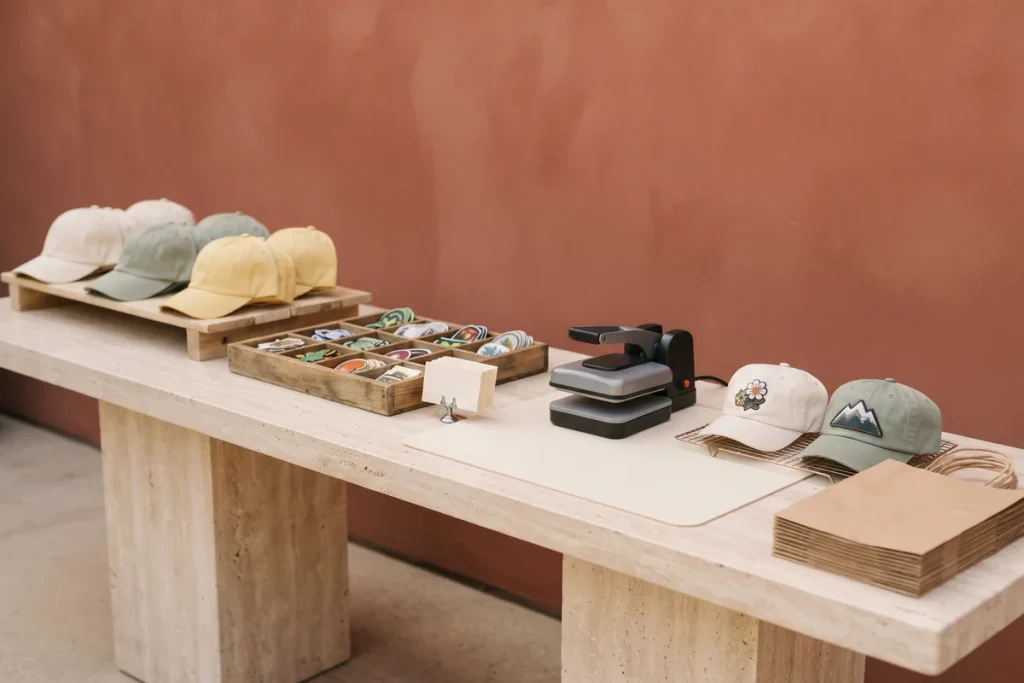
Before accepting an event, ask the organizer about the available space, table dimensions, power access, setup and teardown windows, venue rules and any restrictions on equipment.
If you plan to use heat-application tools, confirm that the venue permits them and that the power supply and workspace are suitable. Have a backup plan for any process that depends on equipment or electricity.
Clarify fees, sales arrangements, insurance requirements and responsibilities with the host before the event.
Estimate inventory for guest count and event length
Use the expected guest count, event length and the nature of the occasion to estimate how much inventory to bring. Guest count is a planning input, not a guarantee that every attendee will buy a hat.
For a first event, you can build an estimate using a few scenarios:
- Conservative: A smaller share of guests buys a hat.
- Expected: Sales reflect your most realistic estimate based on the event format and audience.
- High demand: More guests buy, or customers buy more than one item.
For each scenario, estimate the number of hats and patches needed, then consider which colors and styles can serve multiple customers. Keep extra stock of versatile options when practical, but avoid overcommitting to niche designs before you have sales data.
Prepare a simple workflow for customizing and handing off hats
A clear workflow keeps the station organized and helps customers understand how long the process may take.
A typical sequence is:
- Customer chooses a hat.
- Customer selects patches and confirms the design.
- Staff checks the selected items and confirms the price.
- The design is applied using the appropriate method and instructions.
- The hat is allowed to cool or finish as required.
- Staff checks the result, packages the item and hands it to the customer.
For busy events, consider using a numbered order card or simple queue system. Explain any wait times and keep finished orders separate from items still being customized.
How to source hat bar supplies wholesale
Wholesale sourcing can help you build an assortment of blank hats, patches and related supplies that fits your budget and your customers’ needs. Before placing an order, compare the products, specifications, costs and purchasing requirements.
Compare wholesale sourcing options for blank hats and craft supplies
Look at the total cost and suitability of each product, not unit price alone, whether you buy from a distributor or factory-direct. Material, quality, available colors, order quantities, shipping and expected delivery time can all affect the value of a purchase.
Blank hats, patches and other craft supplies may come from different suppliers, so compare them as a set and not one item at a time.
Explore custom branding options for branded event merchandise
If you are creating hats for a store, business, team or hosted event, consider whether custom branding is part of the offering. Branded merchandise may require different artwork, production methods, quantities and lead times from a customer-designed patch bar.
Confirm which custom branding services are available for the specific products you intend to order. Not every blank hat or patch can be branded in the same way.
Review product specifications and order requirements before buying
Before committing to a larger order, confirm:
- Hat dimensions, materials, fit and available colors
- Patch dimensions, backing and application requirements
- Product costs and any order minimums
- Shipping costs and expected delivery timing
- Whether samples or smaller test orders are available
- Compatibility among the hats, patches and application equipment
Evaluate the full terms and product specifications, and choose an order size that fits your budget and the demand you can reasonably expect.
Build a hat bar that works for your customers
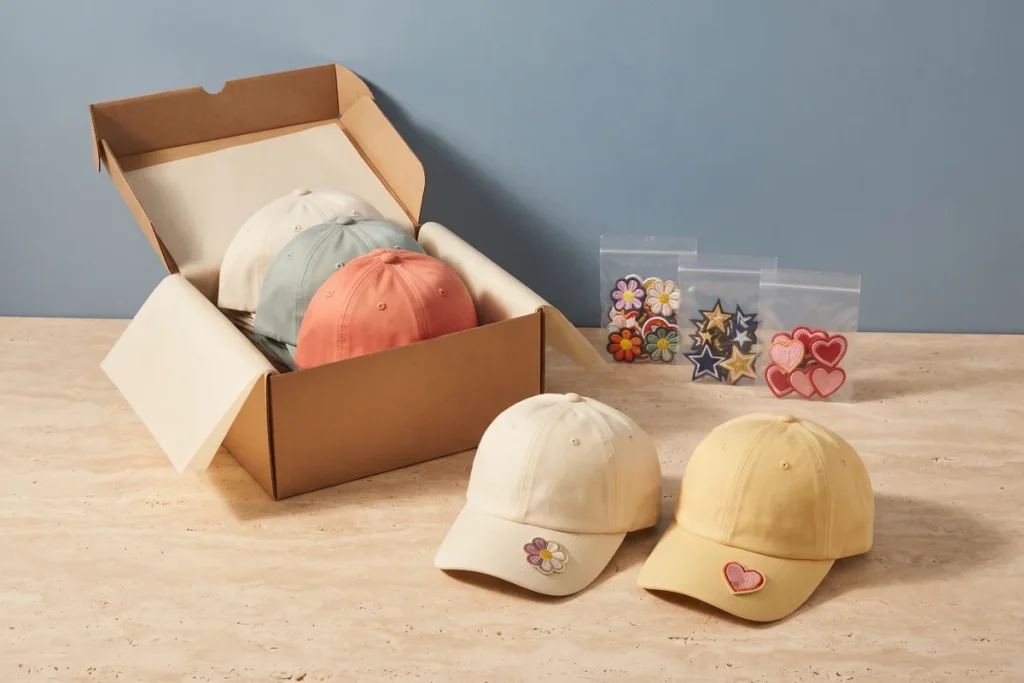
A well-planned hat bar combines appealing product choices with a clear customer experience. Start with a focused selection of blank hats and patches, use compatible tools, organize the display so customers can browse comfortably and set prices that account for all relevant costs.
For boutiques and event vendors, the first setup is also a chance to learn. Track which hat styles, colors, patch themes and price points customers choose. Use those observations to refine your display and plan future wholesale orders with more confidence.
Common questions about setting up a hat bar
What is a hat bar?
A hat bar is a station where customers personalize hats by selecting a blank hat and choosing patches or other embellishments. Depending on the setup, customers may design the hat themselves with assistance or have staff apply the selected decorations.
How do you set up a custom hat bar?
Choose a format, source compatible blank hats and patches, organize a browsing and customization area, set clear pricing and prepare a safe application process. Test the workflow before opening and keep checkout, finishing and pickup areas organized.
What supplies do you need for a hat patch bar?
Common supplies include blank hats, patches, display trays, labels, pricing signs, a mirror, packaging and payment or checkout tools. If patches require heat or another application method, you will also need compatible equipment and must follow the manufacturers’ instructions.
Can you use a regular heat press for hat patches?
It depends on the hat, patch backing, press design and manufacturers’ instructions. A regular flat press may not fit a curved hat surface or provide suitable contact. Check equipment and patch specifications before use, test on sample materials and follow the required safety procedures.
How much should you charge for a custom hat?
Your price should cover the hat, patches, labor, supplies, overhead, event fees and your target margin. You can charge a base price with included patches or a base price plus individual patch fees. Calculate your actual costs and check that the final price fits your intended customers and market.
How do you start a mobile hat bar business?
Choose your event format, source and test supplies, create a portable display, set your pricing and confirm venue requirements before accepting bookings. Plan inventory around guest count and event length, prepare a customization workflow and track sales and costs after each event to improve future estimates.