How to start a permanent jewelry or charm bar business
Customers love leaving with jewelry they helped make. Here’s how to choose between permanent jewelry and a charm bar, budget for startup, stock a focused assortment, price your services and run your first pop-up.
- Choose your business model first. Permanent jewelry requires specialized welding equipment, while charm bars use traditional jewelry-making tools.
- Budget beyond inventory. Include equipment, training, insurance and event fees.
- Start with a focused assortment. Versatile chains and popular charms make inventory easier to manage.
- Price for the full experience. Materials, labor and operating expenses all affect profitability.
- Test before expanding. Use early events to find popular styles, and order with no minimums on most products so you can try new charms a piece at a time.
A customer chooses a chain, picks a few charms, and leaves with jewelry they helped create. That personalized experience is what makes permanent jewelry and charm bars appealing, whether you’re selling at a weekend market, hosting private parties, or adding a service to your boutique.
For business owners, the opportunity goes beyond selling jewelry. You’re offering customers a way to create something personal while building a business around customization. The supplies, equipment, and startup costs depend on the experience you want to offer, though. Here’s how to choose your business model, build an assortment, price your services, and prepare for your first event.
Permanent jewelry vs charm bars: Which business is right for you?
Both businesses offer personalized jewelry, but the customer experience and equipment requirements are different.
Permanent jewelry offers a custom-fitted experience
Permanent jewelry typically involves fitting a bracelet, anklet, or necklace to a customer and using a specialized pulse-arc welder to connect the chain instead of a clasp. The finished piece is designed for extended wear, although it can be removed by cutting the chain or connector.
This business model requires appropriate welding equipment, compatible jewelry components, hands-on training, and a safe workstation.
Charm bars make customization simple
A charm bar lets customers choose a bracelet or necklace chain and personalize it with decorative charms, letters, or pendants. Unlike permanent jewelry, charm bar pieces typically use removable clasps. Customers can take them off, change their look, or add charms later.
Charm bars generally require less specialized equipment, making them an accessible option for makers who want to start with a smaller investment.
You can also offer both services. Starting with one, however, makes it easier to understand your costs and customer preferences before expanding.
What does it cost to start a jewelry business?
Your startup budget depends on the equipment, inventory, and selling format you choose. A portable charm bar has different requirements from a permanent jewelry service, but both need more than jewelry supplies.
Equipment, training, and business expenses
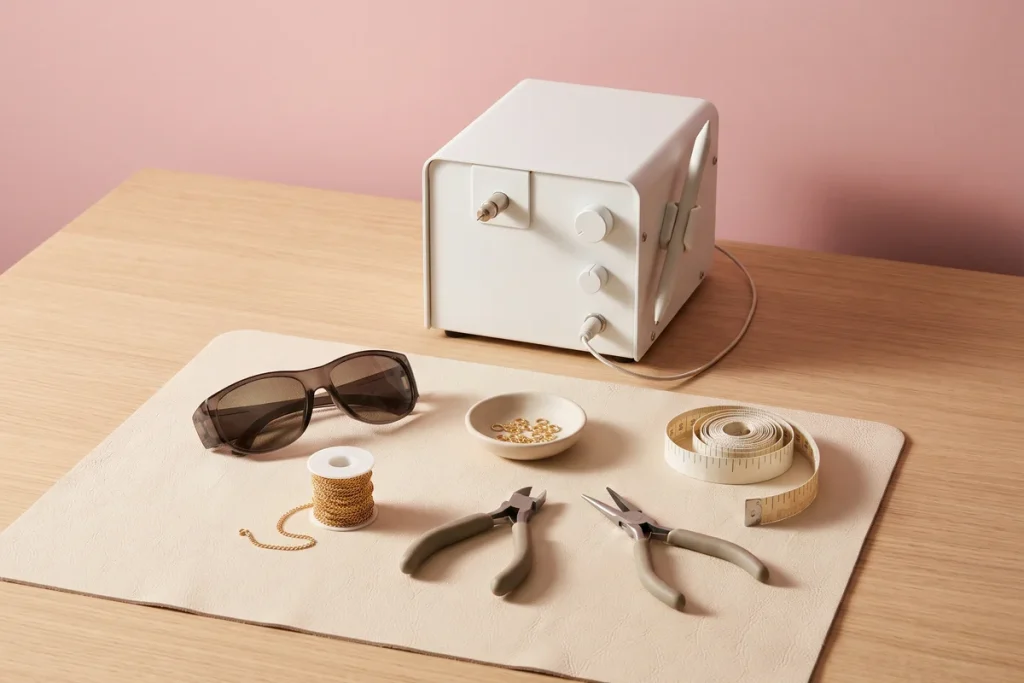
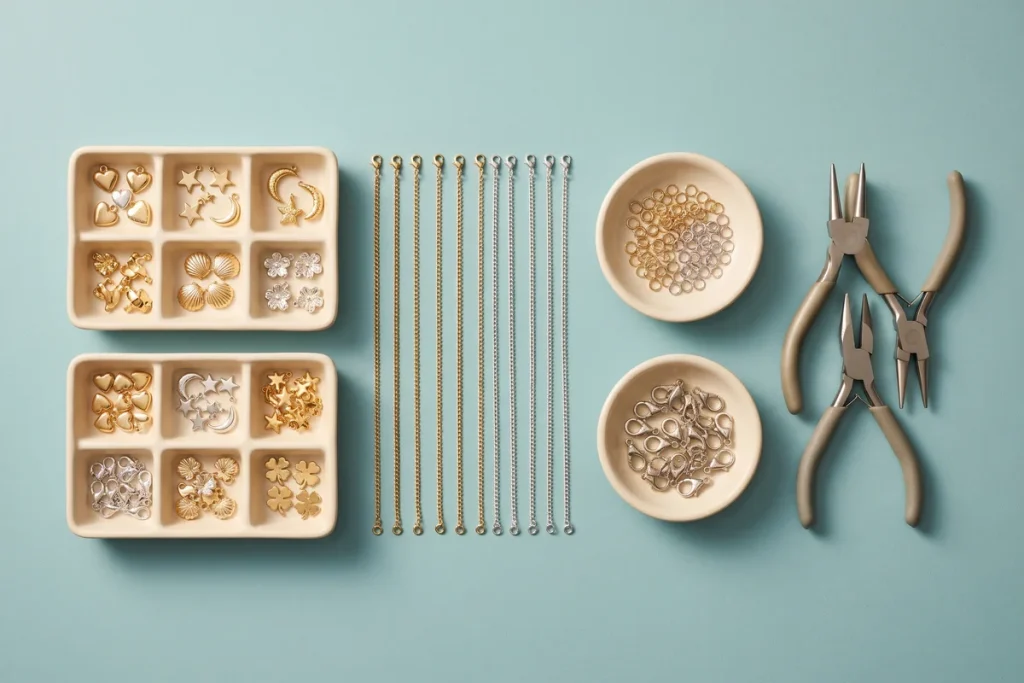
Permanent jewelry businesses need a jewelry-specific welder, protective accessories, compatible components, and appropriate training. Charm bars typically need pliers, cutters, measuring tools, display trays, and jewelry findings.
You’ll also need to account for expenses such as business registration, insurance, packaging, payment processing, and event fees.
Get supplier quotes before setting your budget. Equipment choices, inventory quantities, and local requirements can significantly affect your total investment.
Keep your first inventory order manageable
You don’t need dozens of chain styles or hundreds of charms to launch. Start with a few versatile chains, a coordinated selection of decorative pieces, and enough findings to assemble your initial designs.
Everful’s wholesale craft supplies for makers can help you explore merchandise for your business without committing to an unnecessarily large assortment.
The supplies you’ll need for permanent jewelry and charm bars
The right inventory depends on whether you’re welding chains or assembling removable jewelry.
Permanent jewelry equipment and chains
Permanent jewelry requires a pulse-arc welder intended for jewelry applications, manufacturer-required protective equipment, measuring tools, and compatible chains and connectors. Gold-filled and sterling silver chains are common materials to evaluate, but not every chain or finding is suitable for welding.
Confirm metal composition and equipment compatibility before purchasing. Complete appropriate hands-on training and follow manufacturer safety procedures before offering services to customers.
Charms, chains, and findings for a charm bar
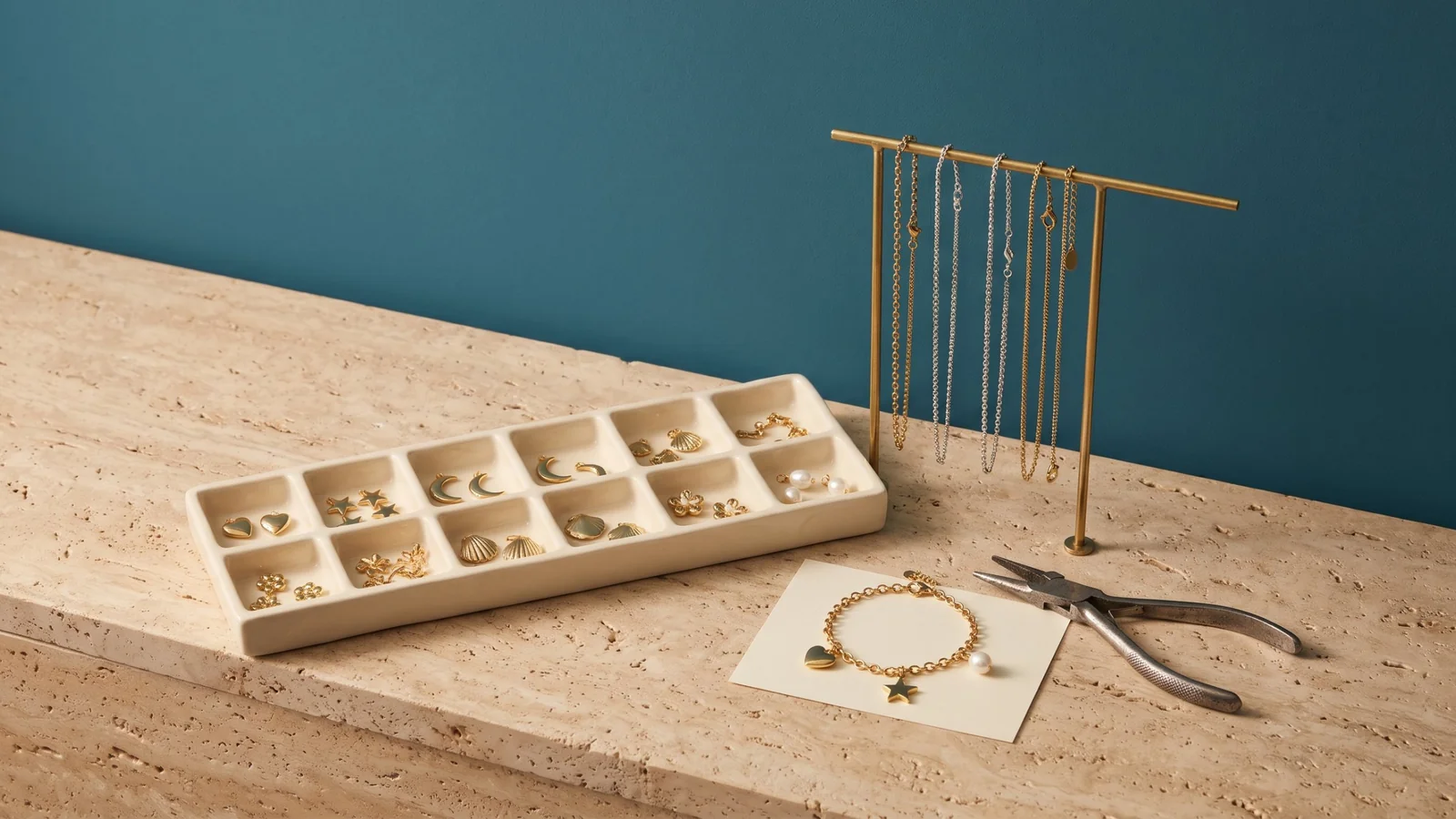
A charm bar needs bracelet and necklace chains, clasps, jump rings, decorative charms, and assembly tools. Letter charms, hearts, stars, and other personalized designs give customers different ways to create meaningful pieces. Mix everyday styles with a few distinctive options rather than stocking every available design.
Browse Everful’s wholesale charms to explore decorative options, and consider jump rings when planning your assembly supplies.
Check that your components work together. Connector size, metal finish, and construction affect how securely the finished jewelry holds up.
A good display makes customization easier
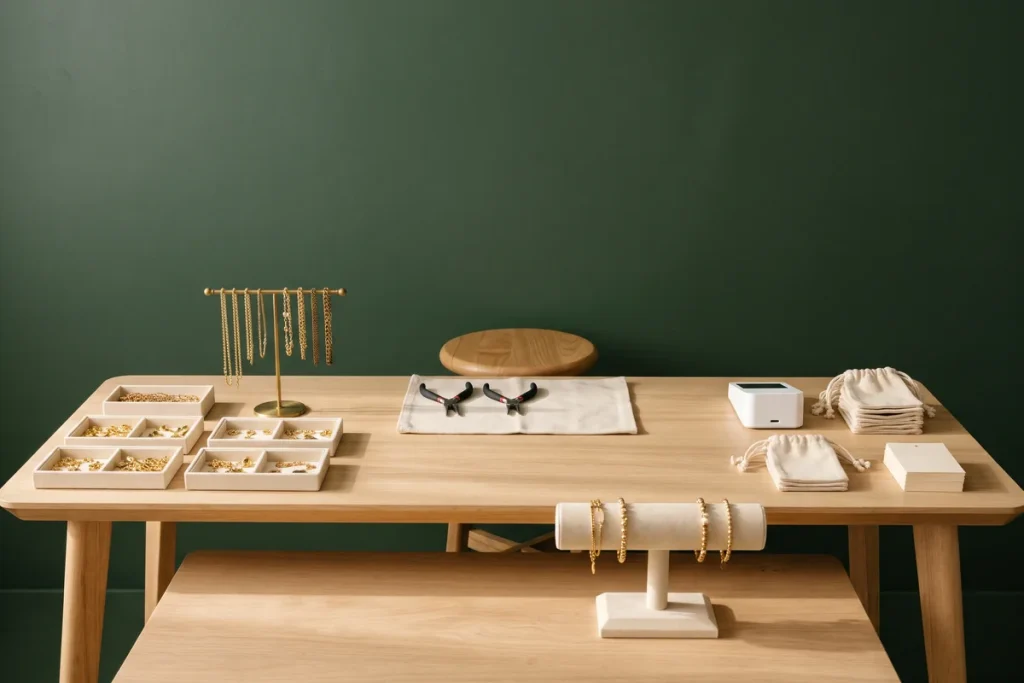
Organize charms in labeled trays and display chains separately so customers can compare options. A few finished bracelets and necklaces can help shoppers visualize combinations without needing to sort through every available component. Keep assembly tools behind the display and make pricing visible before customers begin selecting charms.
Pricing custom jewelry for a profitable business
Your prices need to cover the complete service, not just the jewelry materials. For each bracelet or necklace, calculate the cost of the chain, charms, connectors, packaging, and any materials lost during assembly. Then account for your time, payment processing, and operating expenses.
For example, a charm bracelet might have the following costs:
These figures are hypothetical examples, not verified wholesale prices or recommended retail prices.
A simple pricing structure also improves the customer experience. Consider offering a base bracelet price with added charges for extra charms or premium designs. For permanent jewelry, prices may vary by chain material, length, and decorative additions.
Whatever approach you choose, customers should understand the price before assembly begins.
Your first pop-up: Make the experience easy to shop
Markets, private parties, and pop-up events can help you introduce your business without opening a permanent retail location. The key is creating a setup that supports both browsing and assembly.
Give customers a clear path from selection to checkout
Separate your charm display, assembly tools, and checkout area where space allows. A simple process works well:
For permanent jewelry, use a dedicated workstation that meets your equipment manufacturer’s safety requirements. Keep welding operations separate from general browsing.
Before booking an event, confirm available space, electrical access, insurance requirements, and any restrictions on welding equipment.
Use early events to learn what sells
Photograph sample designs and share your event schedule through your business’s social channels. Show the customization process so customers understand what makes the experience different from purchasing finished jewelry.
After each event, review which chains, charms, and price points performed well. Reorder popular styles before expanding into new themes. This helps you build an assortment around actual demand rather than assumptions.
Find wholesale charm bar supplies with Everful
A successful charm bar doesn’t need the largest selection. It needs products customers enjoy combining, reliable assembly components, and enough flexibility to test new styles.
Everful offers wholesale merchandise that makers can explore when building a jewelry assortment. Browse jewelry-making charms and charm jewelry for decorative options and design inspiration.
With no minimum orders on most products, Everful lets makers start with a single piece, where eligible. That flexibility can make it easier to test charm styles before placing larger orders.
For permanent jewelry, always verify that chains and findings are compatible with your welding equipment. Don’t assume general jewelry-making supplies are suitable for welded applications.
Start with a focused assortment and expand around what customers love. Explore Everful’s jewelry-making supplies to begin planning your charm bar business.
Common questions about starting a jewelry or charm bar business
How much does it cost to start a permanent jewelry business?
Startup costs depend on your welding equipment, training, inventory, insurance, and event setup. Request quotes and build a budget around the services you plan to offer.
Do you need training to offer permanent jewelry?
Appropriate hands-on training is strongly recommended before offering welded permanent jewelry services. Follow manufacturer safety instructions and check applicable local requirements.
What supplies do you need for a charm bracelet bar?
You’ll typically need bracelet chains, clasps, charms, jump rings, pliers, cutters, measuring tools, display trays, and packaging.
Can you start a charm bar business from home?
A home-based charm bar may be possible, depending on local business regulations and insurance requirements. You can also operate through pop-ups, private events, or an existing retail location.
How much should you charge for permanent jewelry or charm bracelets?
Base your prices on material costs, labor, packaging, payment processing, and operating expenses. Consider your target customers and the level of customization you’re offering.
Where can you buy wholesale charms for a charm bar?
Look for suppliers that offer varied charm designs, clear product specifications, compatible findings, and manageable order quantities. Everful’s wholesale charm collections can help you explore options for your initial assortment.