Load up on maximalist decor and fashion for your shop
More color, more pattern, more personality, as long as shoppers can still find what they came for. Here’s how to give a maximalist assortment a point of view, carry it from decor into fashion, and build displays that stay easy to shop.
- Maximalism works best with a point of view. Pick a direction, like playful, bohemian or moody, and use it as a filter when you buy.
- Repeat a palette or motif across categories so shoppers can see which products belong together, without making everything match.
- Mix large focal decor pieces with smaller shelf accents customers can collect and combine at home.
- Carry the same colors and motifs into fashion through printed clothing, statement jewelry and colorful accessories.
- Give every display a focal piece, mix pattern scales, and keep prices visible and products easy to pick up.
- Start with a focused buy, track which colors and motifs earn reorders, and grow from there. With no minimums on most products, you can test a single piece at a time.
Maximalist style gives you permission to work with more: more color, more pattern, more texture, and more distinctive shapes. For a boutique, though, more products don’t automatically create a stronger maximalist assortment. The difference is intention.
A useful maximalist mix gives shoppers visual connections to follow. A color from a printed dress might reappear in a statement necklace. A sculptural vase might pick up the shape or finish of a nearby tray. A patterned textile can introduce several colors that repeat across smaller accessories.
Start with a point of view, then build outward. That lets you create a shop that feels expressive without making individual products difficult to see, compare, or buy.
Give your maximalist assortment a point of view
Maximalism doesn’t require you to use every color, pattern, and decorative idea at once. A boutique can build a maximalist assortment around jewel tones and ornate details, warm bohemian textures, saturated brights, or darker colors with dramatic metallic accents. Each direction can feel abundant while still having boundaries.
Those boundaries make buying easier. Instead of asking whether an individual product is bold enough, ask whether it contributes to the visual story you’ve chosen.
Choose a recurring palette or motif
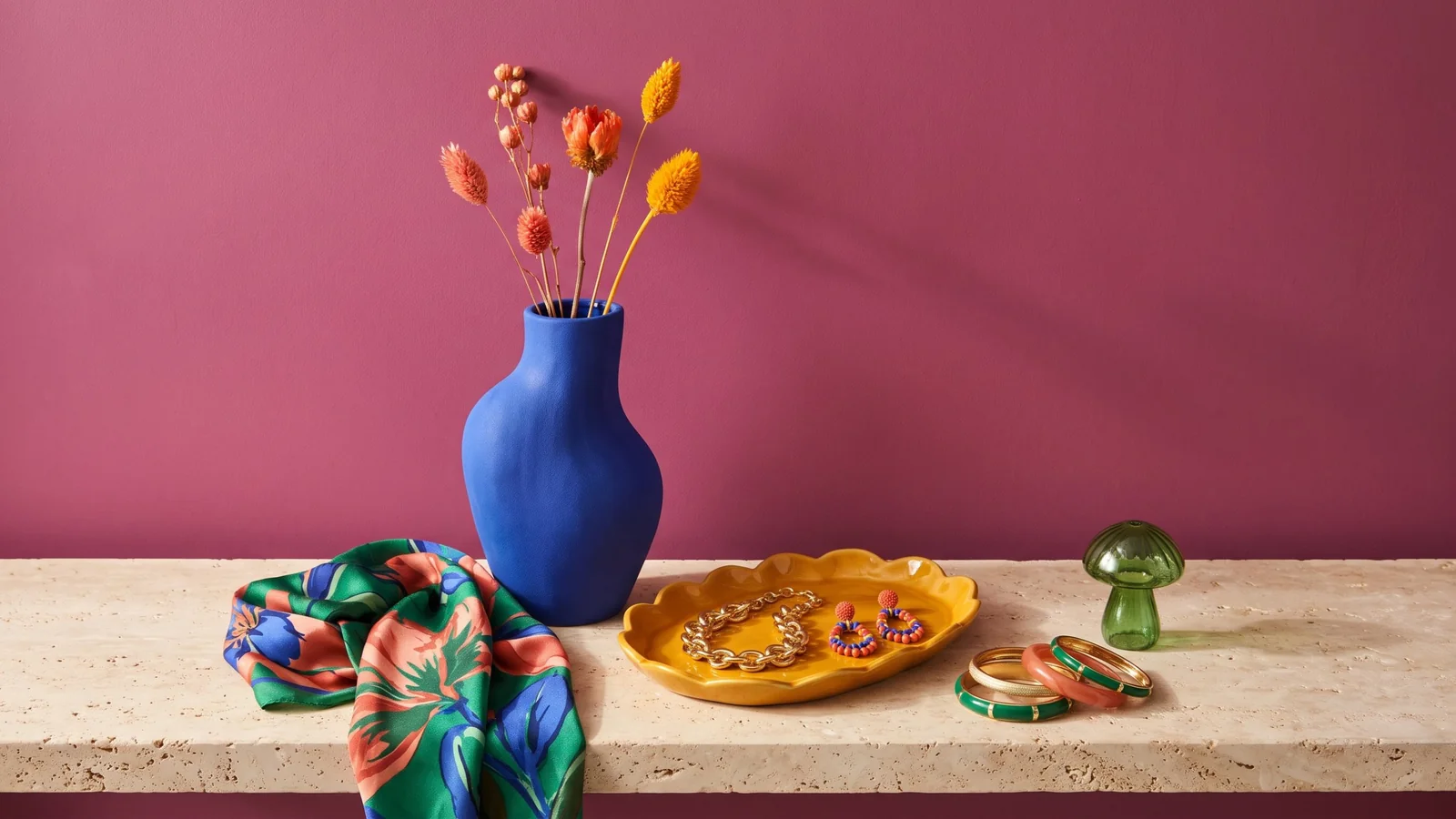
Begin with something you can repeat. Color is one option. Choose several core colors and allow individual products to introduce variations around them. A cobalt blue vase, for example, can connect visually with blue details in a printed garment or a colorful accessory without requiring an exact match.
Motifs can do the same work. Florals, celestial details, animals, hearts, geometric shapes, or organic forms can recur across categories.
The repetition should be noticeable without becoming literal. You don’t need a floral print on every product simply because flowers are part of the assortment. A flower-shaped earring, botanical textile, and vase with an organic silhouette can create a connection without looking like a matching set.
Build around playful, bohemian, or moody combinations
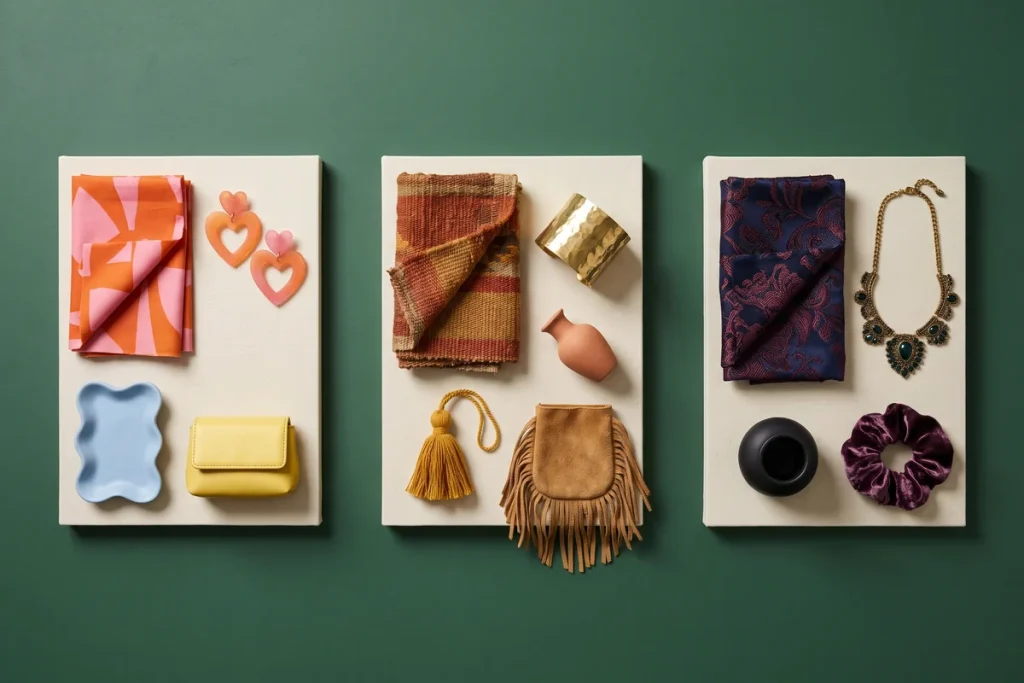
Defining the mood gives you another filter for buying. A playful maximalist assortment might combine saturated colors, novelty shapes, graphic patterns, and unexpected accessories. A bohemian direction could lean into warm tones, layered textiles, natural textures, decorative metalwork, and handcrafted-looking details.
A moody assortment can be maximalist too. Deep green, burgundy, navy, black, antique-looking finishes, rich textures, and dramatic patterns can create visual abundance without relying on bright colors.
So don’t ask whether a product meets a universal definition of maximalism. Ask whether it strengthens the version your boutique has chosen.
Everful’s boutique sourcing can help you compare products across categories while keeping that broader assortment point of view in mind.
Stock decor that brings personality to everyday spaces
Maximalist home decor gives you room to introduce unusual forms and expressive details that might feel too dominant in a more restrained assortment. Not every object needs to be a statement piece, though. Mix larger focal products with smaller accents customers can combine in their own spaces.
Sculptural vases, decorative objects, and expressive trays
Start with pieces that can establish shape and height. A sculptural vase can anchor a shelf. A decorative object can create an unexpected focal point. An expressive tray can add both color and function while giving smaller products a defined place in the display.
When sourcing home and kitchen products, compare dimensions as carefully as colors and patterns. Product photography can make a small decorative object appear substantial or make a large vase difficult to judge without measurements. Knowing the scale before you order also helps you plan the shelf around it.
Patterned textiles and richly textured accents
Textiles introduce pattern without requiring every hard surface to carry one. Depending on your assortment, that could include printed or textured pieces that bring color, softness, or tactile contrast to nearby ceramics and decorative objects.
Use pattern scale deliberately. A large botanical or geometric pattern can sit beside a smaller repeated motif more comfortably than two equally dense patterns competing for attention. If both patterns contain one recurring color, that color can provide the visual link.
Texture works similarly. Smooth ceramic, woven surfaces, embroidery, polished metal, and soft fabrics can create layers even when several products share the same color family.
Small shelf pieces that customers can mix and collect
Not every maximalist purchase needs to transform a room. Small decorative pieces can give customers a lower-commitment way to add personality to a shelf, desk, entryway, or bedside table. They also give you more flexibility when building product groupings around larger focal items.
Think in families rather than identical sets. Several small objects might share a color, material, or motif while remaining distinct enough that customers can choose one or combine several. That makes the display feel collected rather than duplicated.
Carry the same visual character into fashion
Your decor and fashion categories don’t need to match, but they can speak the same visual language. If the home assortment uses saturated jewel tones and organic motifs, those ideas can reappear in printed clothing, statement jewelry, or accessories. The repetition helps separate a purposeful maximalist assortment from a group of unrelated bold products.
Printed clothing and textured layers
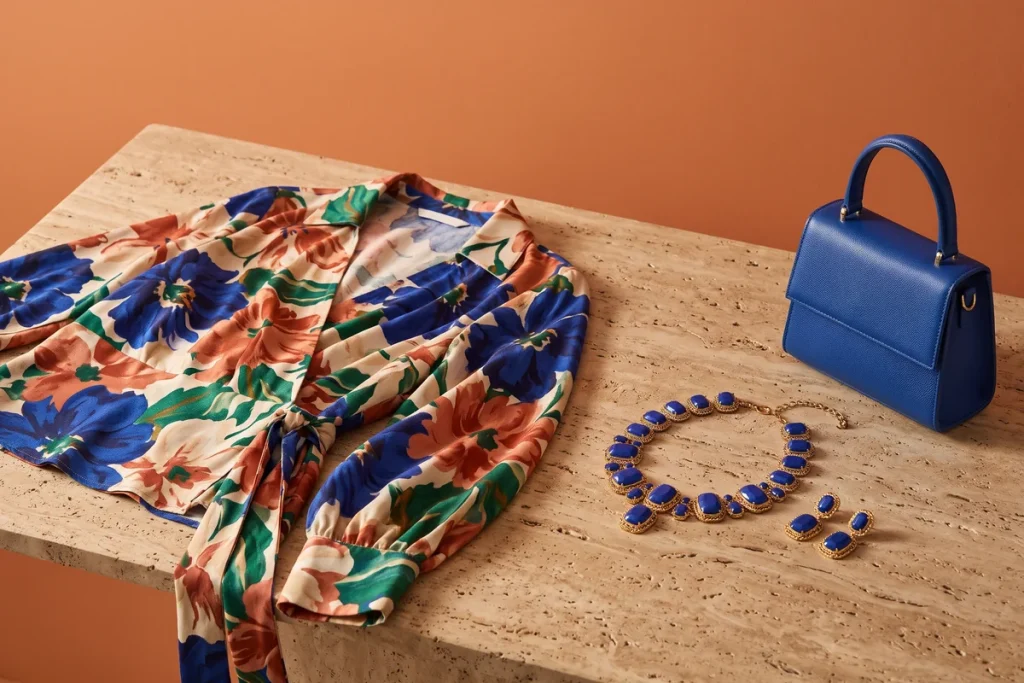
A printed garment can become a strong starting point because it already contains a palette. Choose one or two colors from the print and repeat them elsewhere in the display. That could mean jewelry in a related tone, a contrasting bag that picks up a smaller accent color, or nearby decor that echoes the garment’s dominant shade.
When comparing women’s clothing, look beyond the print itself. Consider silhouette, fabric texture, scale of pattern, and how much visual weight the garment will carry when displayed. A large, multicolor print may need quieter supporting products. A smaller repeated pattern can leave more room for expressive jewelry or accessories.
Statement necklaces, earrings, and stacked bracelets
Jewelry gives shoppers a way to introduce maximalist style without building an entire outfit around it. A larger necklace, sculptural earring, colorful stone, layered chain, or group of bracelets can provide the focal point against a simpler garment. Statement jewelry can also reinforce colors already present in a print.
Everful’s statement necklace collection gives boutiques a focused place to compare more visually prominent necklace styles.
Scale matters here too. If a garment has a high-contrast print near the neckline, adding an equally detailed necklace can make both pieces harder to read. Move the emphasis to earrings or bracelets instead, or choose a necklace with a stronger shape and simpler internal detail.
Colorful bags, scarves, and playful finishing touches
Accessories can bridge the gap between an everyday wardrobe and a more expressive look. A colorful bag can repeat one shade from a printed garment. A scarf can introduce pattern to a solid outfit. A playful accessory can provide a single unexpected detail without asking the shopper to change everything else they wear.
This makes smaller accessories particularly useful when your existing boutique assortment isn’t already maximalist. You can introduce a handful of bolder pieces beside familiar products and show customers where the connection lies.
Build displays customers can understand at a glance
A maximalist display can contain many visual elements without becoming difficult to shop. The key is hierarchy. Shoppers should be able to see what leads the display, which products belong together, and where they can find the price or pick up the item they want.
Give each grouping a focal piece
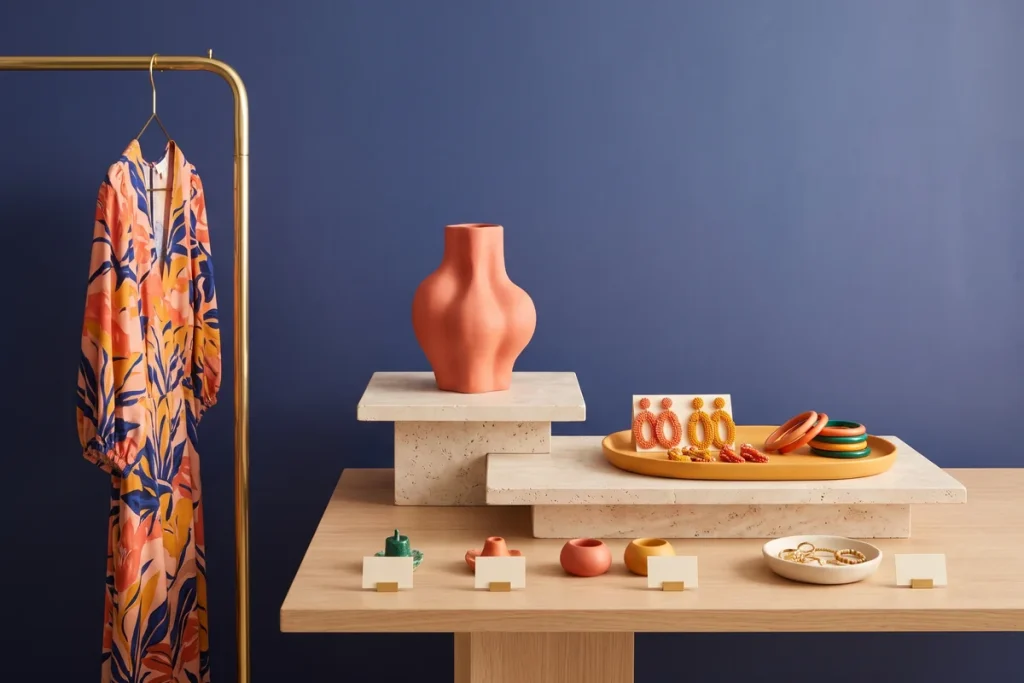
Choose one product to attract attention first. It might be a printed garment, a sculptural vase, a large necklace, or an unusual decorative object. Place supporting products around it rather than asking every item in the group to compete equally.
The focal piece doesn’t have to be the most expensive product. Its job is visual. Once you choose it, use the surrounding products to repeat one or two of its colors, shapes, materials, or motifs. That creates a path through the display.
Mix pattern scales and repeat colors across categories
Pattern mixing becomes easier when the patterns are doing different jobs. Pair a large-scale print with a smaller motif. Put a dense pattern beside a product with more open space. If two patterns are both visually strong, use a repeated color to help connect them.
The same approach works across categories. A color from a dress can reappear in a vase. A metallic finish from jewelry can show up in a decorative object. A geometric motif can move from a textile to an accessory without requiring the products to match exactly. Repetition creates cohesion, and variation keeps the display maximalist.
Keep prices visible and products easy to pick up
Visual abundance shouldn’t interfere with shopping. Don’t bury price tags behind display objects or place small products where customers have to move several fragile pieces to reach them. Keep enough room around jewelry, accessories, and small decor for customers to pick them up and return them safely.
Consider the physical path through the display too. Tall objects shouldn’t block products behind them. Hanging garments shouldn’t cover shelf merchandise. Small jewelry should sit where its details remain visible against the surrounding colors and patterns.
Balance standout pieces with everyday purchases
A maximalist assortment doesn’t have to consist entirely of visually dominant or higher-priced products. A useful mix gives customers different ways to participate in the aesthetic.
Offer smaller accents alongside higher-priced statement items
Use large or distinctive products to establish the point of view, then surround them with smaller pieces that carry part of the same idea. A sculptural vase might sit with several smaller decorative accents. A printed garment can be paired with earrings or an accessory that repeats one of its colors. A statement necklace can lead a jewelry grouping that also includes smaller complementary pieces.
This creates different entry points into the assortment without turning the display into separate aesthetic tiers.
When planning the first buy, Everful’s factory-direct sourcing lets you evaluate products closer to their manufacturing source, and the ability to start with a single piece on most products helps you test selected styles before adding more depth.
Show how one bold piece works with what customers already own
A shopper may like maximalist style without wanting an entirely maximalist wardrobe or home. Merchandising can show the middle ground.
Place a statement necklace over a relatively simple top. Pair a vivid decorative object with a neutral tray. Show a printed scarf with an otherwise straightforward outfit. These combinations make the bold product easier to imagine outside the display. The product still gets to be expressive, and the surrounding context shows it doesn’t require a complete aesthetic overhaul.
Track which combinations sell before expanding the range
Treat the first maximalist assortment as a test of specific ideas. Track individual products, but also pay attention to patterns across what earns reorders. Perhaps several successful pieces share the same color family. Maybe sculptural forms receive more repeat demand than heavily patterned products. A particular motif may work across jewelry and decor.
Those signals can guide the next buy without turning one sale into a trend prediction. If a product works, consider replenishing it before introducing several close variations. If a color or motif appears to connect several proven pieces, test another product that carries the same idea.
That way the assortment grows richer through evidence, and not simply larger.
Common questions about stocking maximalist decor and fashion
What is maximalist decor?
Maximalist decor uses layers of color, pattern, texture, objects, and personal details to create an expressive space. It doesn’t require every surface to be filled. A cohesive maximalist look usually repeats selected colors, motifs, materials, or shapes so the layers feel connected.
What is maximalist fashion?
Maximalist fashion uses expressive combinations of color, print, texture, silhouette, jewelry, and accessories. It can include statement pieces, pattern mixing, layered jewelry, colorful accessories, or unusual shapes. A maximalist outfit can also begin with one bold piece rather than combining every element at once.
Does maximalist style have to use bright colors?
No. Bright color is one approach, but maximalist style can also use deep, moody palettes, warm earth tones, metallic finishes, or a limited group of saturated colors. Pattern, texture, layering, and distinctive forms can create visual richness even when the palette is darker or more restrained.
How can a shop mix patterns without making displays confusing?
Use patterns at different scales and give the display a recurring color or motif. A large print can sit beside a smaller repeated pattern more comfortably than two equally dominant designs. Keep a clear focal piece and use surrounding products to support it rather than making every item compete for attention.
What small accessories help customers try maximalist style?
Statement earrings, bracelets, scarves, colorful bags, small decorative objects, and other expressive accessories can introduce color, pattern, or unusual shapes without requiring a larger wardrobe or decor change. Choose pieces that connect naturally with the rest of your assortment rather than adding novelty for its own sake.
How can retailers display lots of products while keeping them easy to shop?
Organize products into clear groupings with one focal piece, repeat colors or motifs to show which items belong together, and vary display height without blocking merchandise. Keep prices visible and leave enough physical access for customers to pick up products without moving several other items first. The same approach scales up for department stores carrying several categories.