How to build groomsmen gift boxes and sets
Groomsmen gifts are the rare wedding purchase a groom makes four, six, or eight times over. That turns the job from choosing one perfect gift into building one repeatable set at a cost that holds across the whole party. Here is what goes in the box, and where to source every part of it.
Key takeaways
- A groomsmen box has three parts: one anchor gift, one or two everyday-carry pieces, and packaging that holds it together.
- The reliable anchors are accessories the recipient uses weekly. A wallet, a signet ring, a leather cardholder, or a quality keychain all work.
- Match components in complementary metals and finishes rather than one rigid look, so a group with mixed tastes still reads as coordinated.
- Presentation is the lever most grooms skip. A rigid box, filler, and a printed card turn assorted items into a gift, so buy the packaging in a neutral palette and in counts that divide into your party sizes.
- Personalize one element per set, not all of them. Logo engraving on the ring, the wallet, or the box lid makes an identical item feel specific to each recipient.
- Decide the price tier before you choose the pieces, then source factory-direct with no minimums so you buy the exact count the party needs.
Groomsmen gifts are one of the few wedding purchases where a groom buys the same set several times. That means you are not choosing one perfect gift, but instead building a repeatable set that works for four, six, or eight people at a cost that stays reasonable across the whole group.
This guide covers what goes into a good box, how to choose components that photograph well and get used, and how to source everything without committing to a case pack of one item.
What goes into a groomsmen gift box
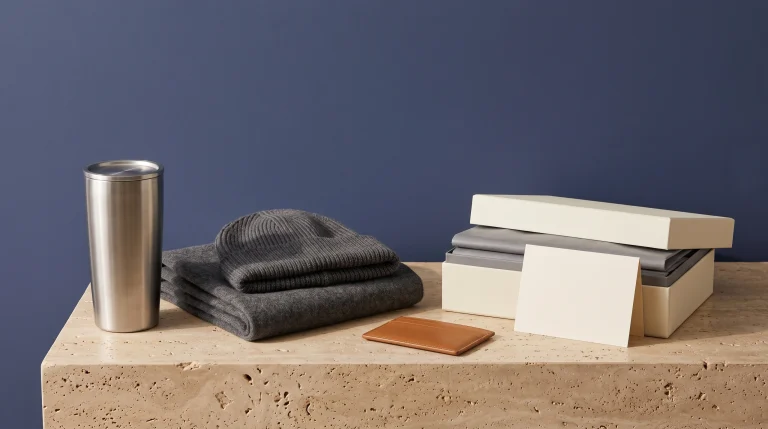
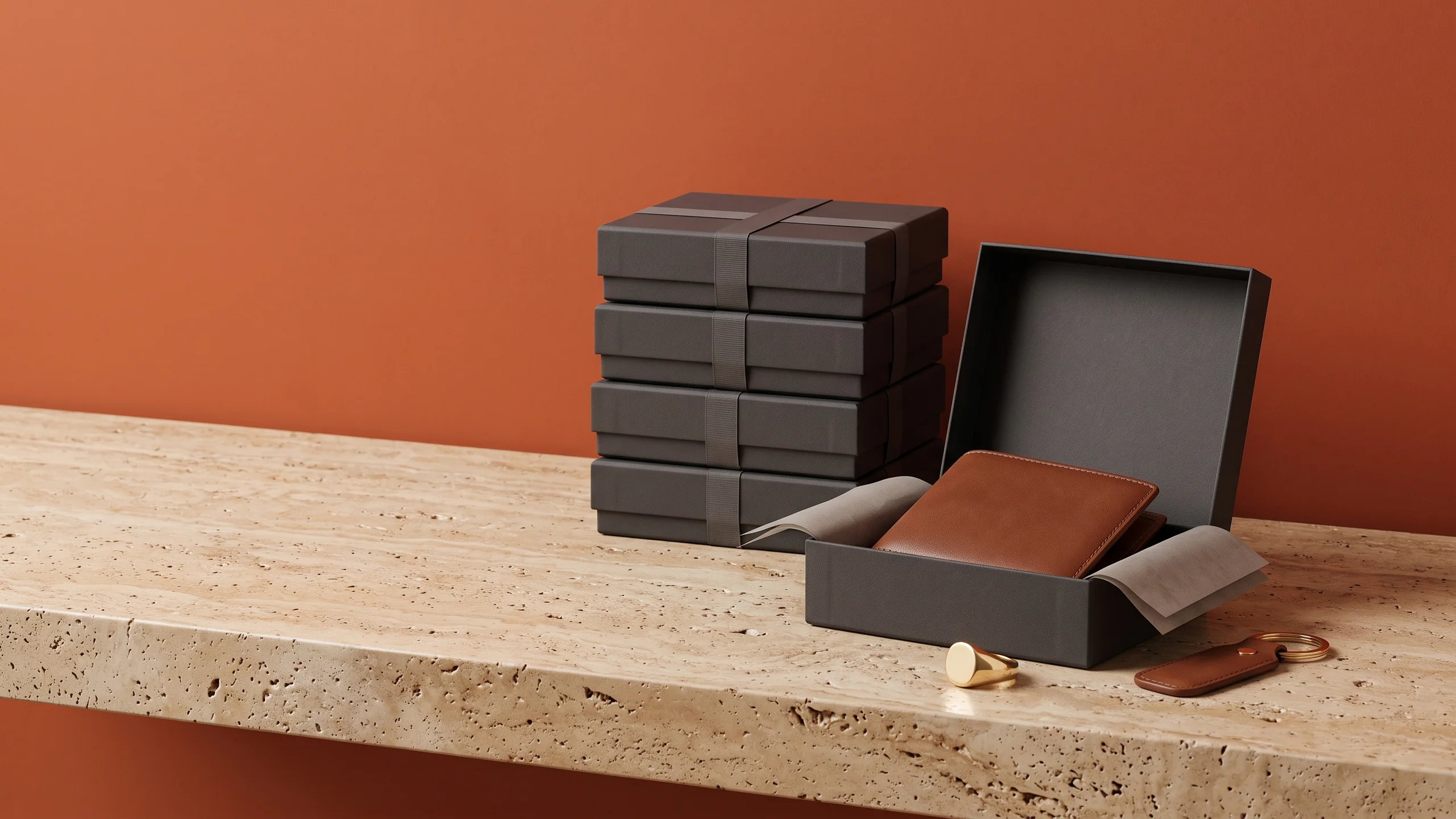
A strong groomsmen box follows a simple structure: one anchor gift the recipient will actually use, one or two smaller everyday-carry pieces, and packaging that holds it together. Grooms who try to make every item a statement piece end up over budget, while a single well-chosen anchor surrounded by practical extras reads as considered rather than expensive.
The most reliable anchors are everyday men’s accessories: a wallet, a signet ring, a leather cardholder, or a quality keychain. Around that, add small items the recipient reaches for without thinking, then finish with a box, filler, and a card. The proposal, also known as the “will-you-be-my-groomsman” moment, is worth building the box around when the timing is early enough in the wedding planning.
Choosing groomsmen gift components
Build outward from the anchor. Pick one component the recipient will use weekly, let it set the tone, and match the rest. A group of groomsmen with different styles is easier to gift when the components come in complementary metals and finishes rather than one rigid look.
Signet rings and men’s rings
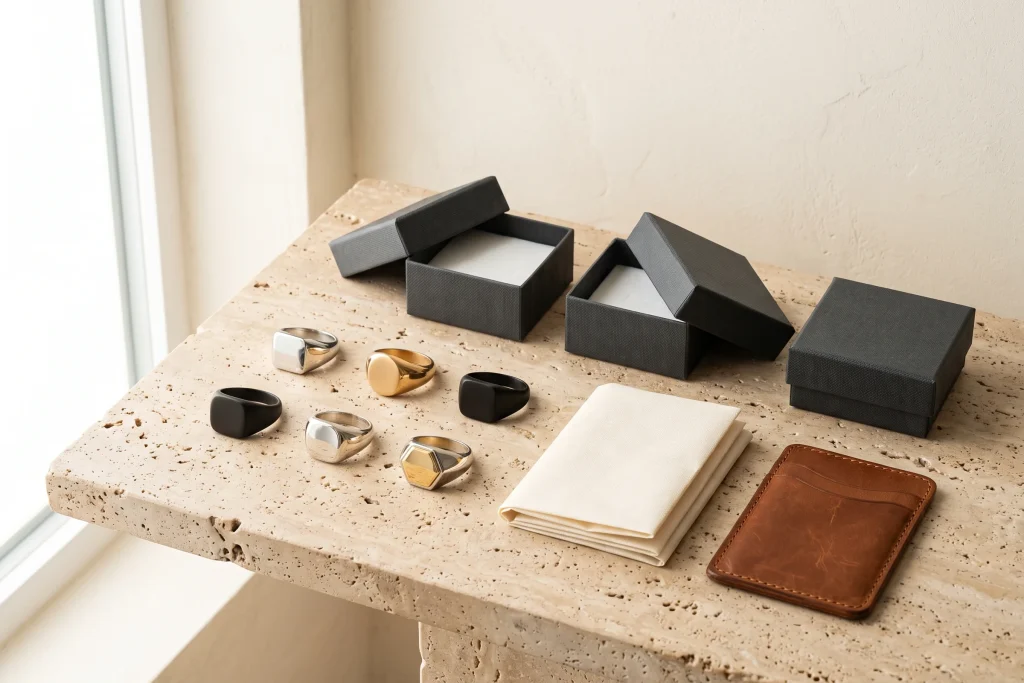
Signet rings are the highest-intent men’s jewelry piece for a groomsmen box, and the range is wide enough to hit several price points without changing suppliers. Look for stainless steel and plated pieces in gold, silver, and black tones so you can match each groomsman without special orders. Browse wholesale men’s rings and signet rings to build the core of this section.
Leather wallets and cardholders
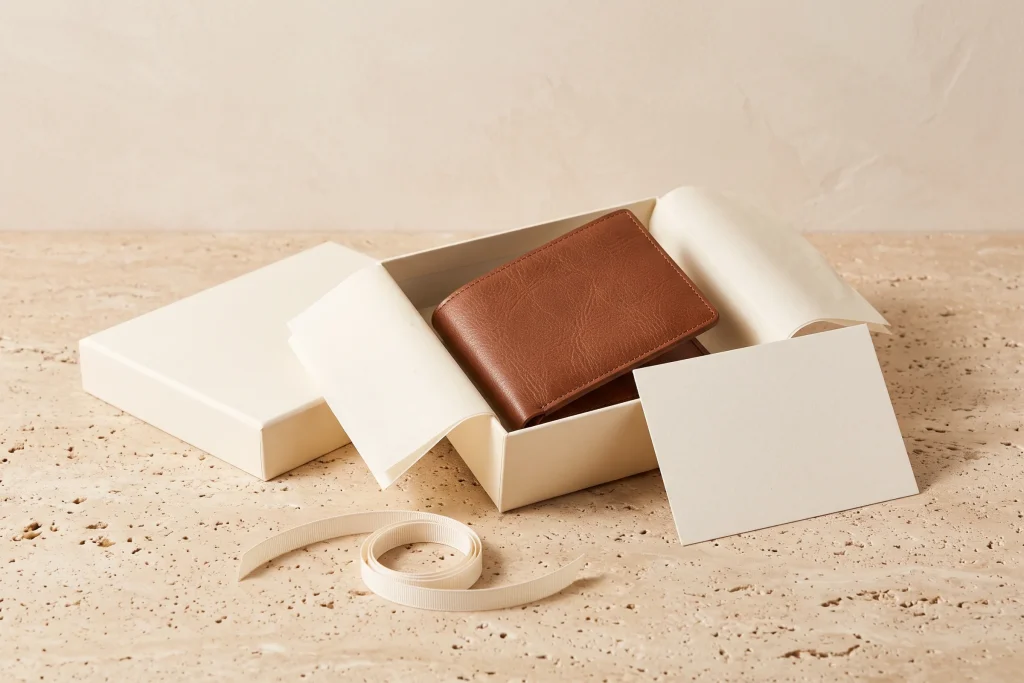
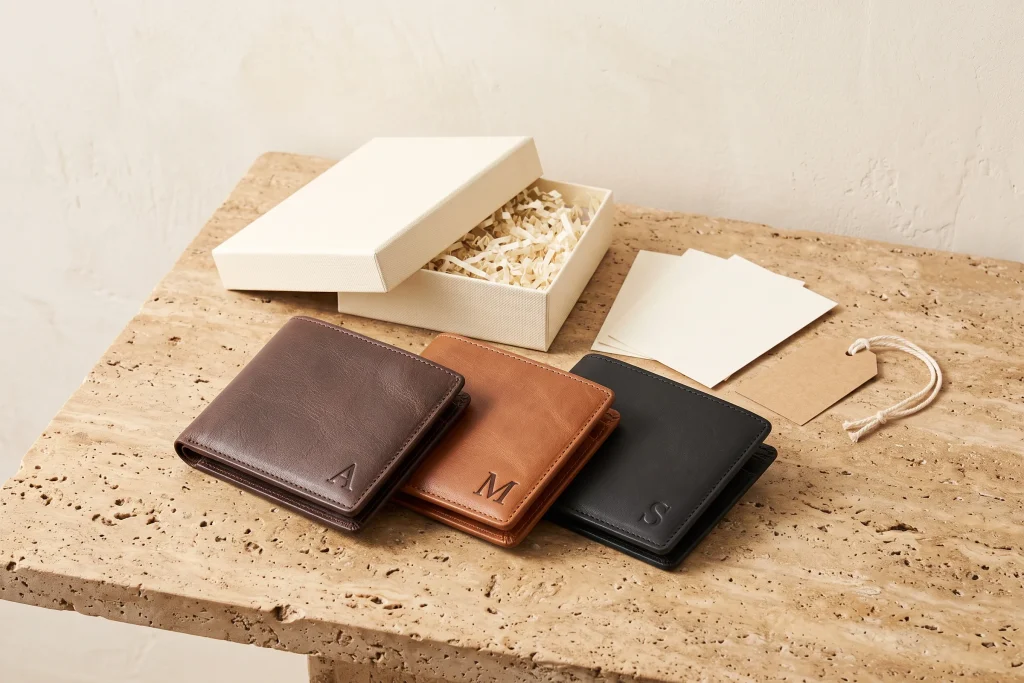
A wallet or slim cardholder is the safest anchor for a groom who is not sure about jewelry. It photographs well, it gets used immediately, and it suits every recipient regardless of style. Look for bifold wallets and minimalist cardholders in brown and black leather, and add at least one option that takes engraving cleanly for the recipients you want to personalize.
Keychains and everyday carry
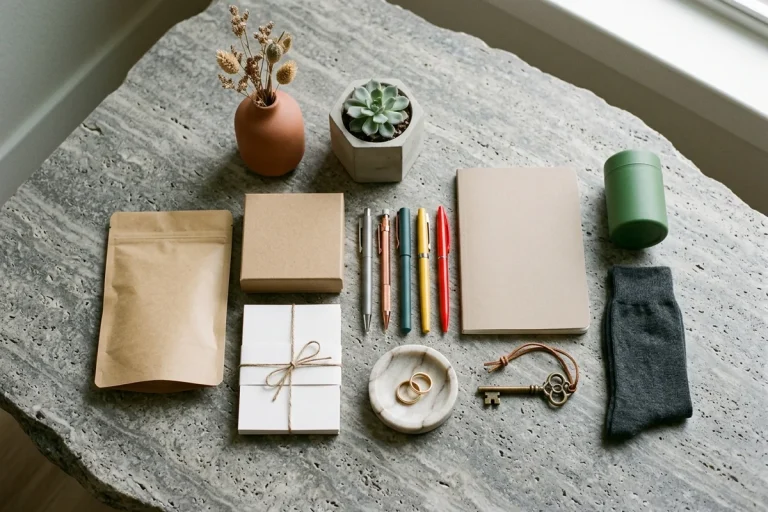
Keychains, bottle openers, and small multi-tools fill the everyday-carry tier. These live in a pocket or on a keyring and get used long after the wedding, so they are worth including at a low price point. An inexpensive item in a proper box still reads as thoughtful, while the same item loose in a shipping bag does not, so budget for the presentation.
Men’s bracelets, chains, and leather cuffs
For groomsmen who wear jewelry, a beaded bracelet, a leather cuff, or a simple chain adds a second wearable piece without competing with the ring. Keep these understated and neutral so they work across a group with mixed tastes. Two or three styles in complementary tones will cover most of the demand and keep the sets looking coordinated in photos.
Boxes, bags, and presentation
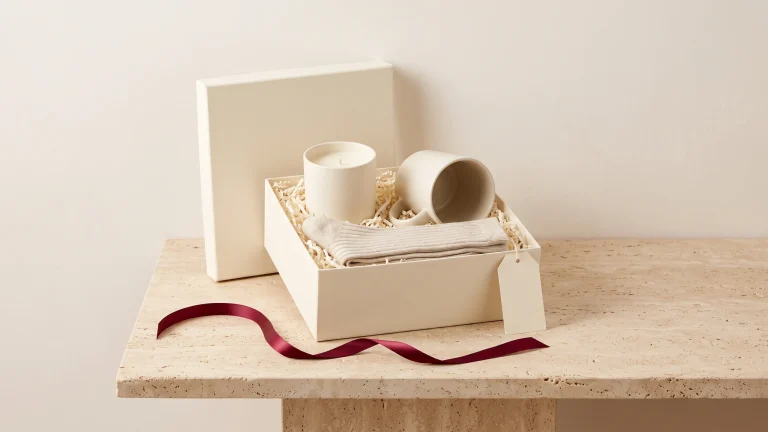
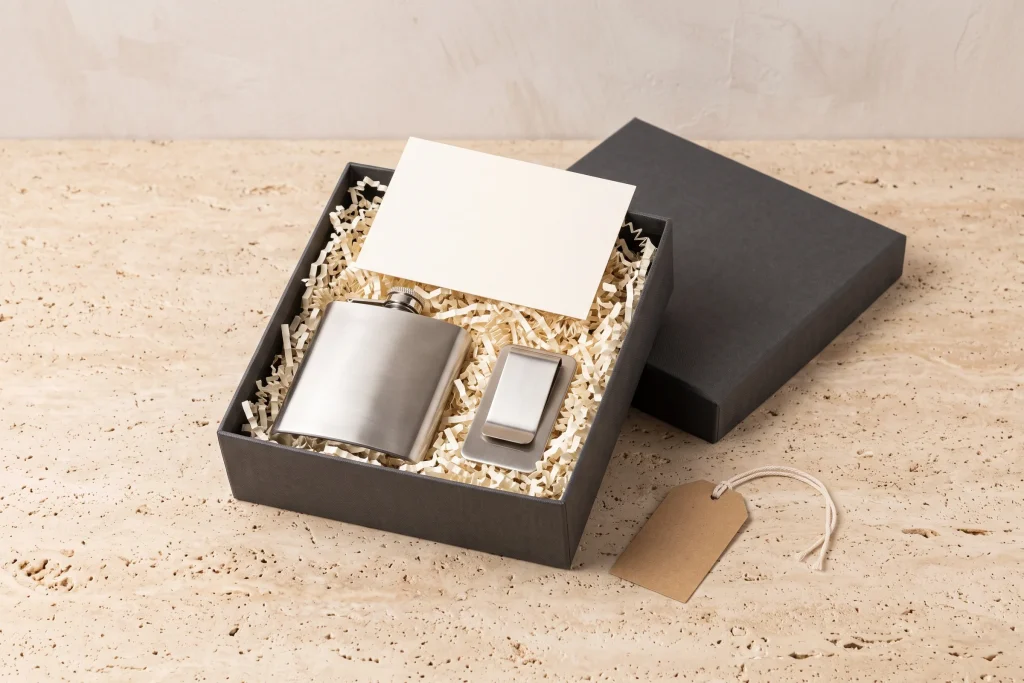
Presentation is the lowest-cost, most-skipped lever available. A rigid box, crinkle filler, and a printed card turn assorted items into a gift. Buy the boxes, bags, and filler in a neutral palette so the same stock works for every groomsman and across other occasions in the year. Buy it in counts that divide cleanly into the party sizes you are building for, so a lid or a length of ribbon is never the thing holding up an otherwise finished set. For the proposal moment, a box with a printed lid or an inside-lid message does the heavy lifting and costs very little relative to the impression it makes.
Building a set of four, six, or eight
A set is more effective than a single item at the same total cost, because it gives each groomsman more than one thing to use and reads as assembled rather than ordered. Build every set from the same three parts, then scale the quantity to the wedding party size. The advantage of sourcing with no minimum, starting with a single piece on most products, is that you order exactly the count you need, four, six, or eight, rather than a case pack you will not use.
Order one spare set beyond the party count. A damaged lid, a lost box, or a late addition to the wedding party costs far less to cover inside the original order than as a second shipment weeks later.
If you are building the other half of the wedding party as well, our guide to bridesmaid gift sets follows the same three-part structure and the same counts.
When to order groomsmen gifts
The category has two buying moments and they sit months apart. The proposal box is bought early, when the groom asks his party, often the better part of a year before the wedding. The finished wedding-day gift is bought close to the date and is usually the larger of the two. Deciding which one you are building changes what goes in it: a proposal box is lighter and leans on the packaging, while a wedding-day set carries the anchor gift.
Order back from the date you want the boxes assembled rather than from the wedding itself. Components have to arrive, be engraved if you are personalizing, and be packed, and a set is only finished once every part of it is in stock, so the slowest component sets your timeline.
Cost per groomsman by price tier
When considering your budget, work backward from a per-groomsman number.
- What is in it
- A wallet or keychain, a box with filler, and a card
- Who buys it
- Larger wedding parties, where the per-person budget is thinnest
- Its job
- Complete and practical, so nothing about it reads as an afterthought
- What is in it
- A signet ring or leather piece as the anchor, one everyday-carry extra, and a rigid box
- Who buys it
- Most grooms
- Its job
- Where most sets land, and the tier to build first
- What is in it
- A premium ring or leather wallet, engraved, in a rigid box
- Who buys it
- Smaller, closer groups, and a best man gift
- Its job
- Reads as a bigger gift without changing the structure of the set
Deciding the tier first keeps the whole set consistent and prevents one expensive item from blowing the budget for the rest.
Adding engraving and monogramming
Personalization is where a groomsmen set earns its impression at almost no added cost. An initial or a name on one element of the set, the ring, the wallet, or the box lid, lifts perceived value more than adding another item would. Logo engraving puts the mark on the product itself, which is the version that stays with the piece once the box is gone.
Keep the branding restrained: one engraved piece per set reads as personal, while engraving every component reads as busy. Personalization also solves the mixed-group problem, since an initial makes an identical item feel specific to each recipient.
If you would rather not manage components arriving from several suppliers, in-house repackaging consolidates them into one protected shipment, hand-checked and barcoded, so the parts of a set arrive together rather than in pieces across three deliveries.
Where to source groomsmen gifts with no minimum order
Most gifting suppliers set order minimums, which forces a decision before you have any evidence. You commit to one item, in one quantity, for everyone, and if it does not land, you find out after the invoice.
Everful is factory-direct with no minimum order, so you can start with a single piece on most products, which changes the sequence. You can order samples across several options, pick what works for your group, and buy the exact count you need at a unit cost that leaves room for packaging.
Common questions about groomsmen gifts
What to put in a groomsmen gift box?
Lead with one anchor the recipient will use daily: a wallet, signet ring, cardholder, or quality keychain. Add one or two everyday-carry pieces such as a bottle opener or bracelet, then finish with a box, filler, and a card. Practical pieces get used and remembered long after the wedding, so skip novelty items.
How do I make a DIY gift box step-by-step?
Choose the anchor gift first and set your per-groomsman budget. Add one or two supporting items in complementary tones, then order a rigid box, crinkle filler, and a printed card. Personalize one element per box with an initial or name. Assemble each box the same way to keep the sets consistent, and order the exact count you need rather than a case pack. Custom-branded gift sets covers what it takes to sell those sets under your own name, including the lead time branding adds.
What to put in a groomsman gift bag?
A gift bag works for a lighter, more portable version of the box. Use small, flat, useful items that travel well: a cardholder, a keychain, a bottle opener, and a card. Add crinkle filler and a neutral-colored bag so the same stock works for every groomsman.
What do groomsmen typically want?
Practical items they would otherwise buy themselves, and some element of choice. Everyday-carry pieces such as wallets, rings, and keychains consistently outperform novelty gifts because they get used. A personalized element, an initial or name, lifts perceived value more than a heavier or flashier item at the same cost.
How much do people usually spend on groomsmen gifts?
Grooms typically work from a per-groomsman budget rather than a total, then scale it across the party. Entry sets built around a keychain or wallet sit at the lower end, mid sets anchored by a signet ring land in the middle, and statement sets with a premium ring or leather piece run higher for smaller, closer groups. Deciding the tier first keeps the cost consistent across every groomsman.