How to stock a baby boutique with products that sell
A baby boutique sells to parents and to shower guests, and each one shops differently. Here’s how to plan your product mix and price tiers, which products to stock, the safety checks to make before anything reaches the shelf and how to display by age.
- A baby boutique sells to parents and to gift buyers, so balance clothing with ready-to-give accessories, plush and gift sets.
- A new boutique can start with newborn through 12 months, since shower guests usually buy for the first months.
- Check the age label on every product, and keep anything with small, detachable parts out of infant gift sets.
- Request Children’s Product Certificates and testing documents before stocking, and confirm who the importer of record is.
- Display by age zone and group outfits with matching accessories so shoppers find sizes fast and add on easily.
- Test new prints in small quantities across a few sizes, and track sell-through by size before reordering.
A baby boutique sells to two shoppers at once: parents buying for their own child and guests buying for a baby shower or new arrival. Stocking for both means balancing baby and kids essentials with giftable items, carrying the right range of sizes, and checking safety requirements before anything reaches the shelf.
This guide covers how to plan your product mix, which products to stock, the safety basics to confirm, how to display by age, and how to test new products without overbuying.
This article is general information, not legal or compliance advice. Children’s product requirements vary by product and market, so confirm current rules with the relevant regulator or a compliance professional.
How to plan your baby boutique product mix
Balance clothing, accessories, toys and gifts
Clothing usually takes the most space and drives repeat visits from parents. Accessories, toys and gift sets lift the value of gift purchases. A shop heavy on clothing alone can miss the shower guest who wants something ready to give.
Choose the size and age range to carry
Baby clothing typically runs in newborn, 0 to 3 months, 3 to 6 months, 6 to 12 months and toddler sizes. A new boutique can start with newborn through 12 months, since shower guests usually buy for the first months, then add toddler sizes as customers ask for them.
Set entry, midrange and premium price tiers
Entry items, such as bibs, socks and bows, work as add-ons. Midrange items, such as outfits and plush toys, cover most gift purchases. Premium items, such as boxed gift sets and coordinated outfits, suit close family and group gifts.
Illustrative example. Set your own mix from your sales history and customer base.
Baby boutique products that sell
Baby clothes and layette basics
Layette basics such as bodysuits, sleepers, footed pajamas and swaddles sell to parents stocking up and to guests buying practical gifts. Baby clothes in soft, neutral colors suit gifts when the guest doesn’t know the baby’s sex, while seasonal prints refresh the assortment for regulars.
Hair bows, headbands and accessories
Bows, soft headbands and bonnets are small, colorful and easy to add to a gift. Choose soft, stretchy headbands for infants. Check that bows and clips carry the right age labeling, since small detachable parts are a concern for young children.
Plush toys and stuffed animals
Plush toys are an easy gift because they need no size choice. When you stock stuffed animals and plush toys for infants, favor embroidered eyes over hard plastic ones and seams that hold up to a firm pull.
Teethers and soft toys
Teethers solve a real problem for parents and make a thoughtful add-on for guests. Look for food-grade silicone or similar materials, one-piece construction and clear age labeling.
Baby shower gift sets
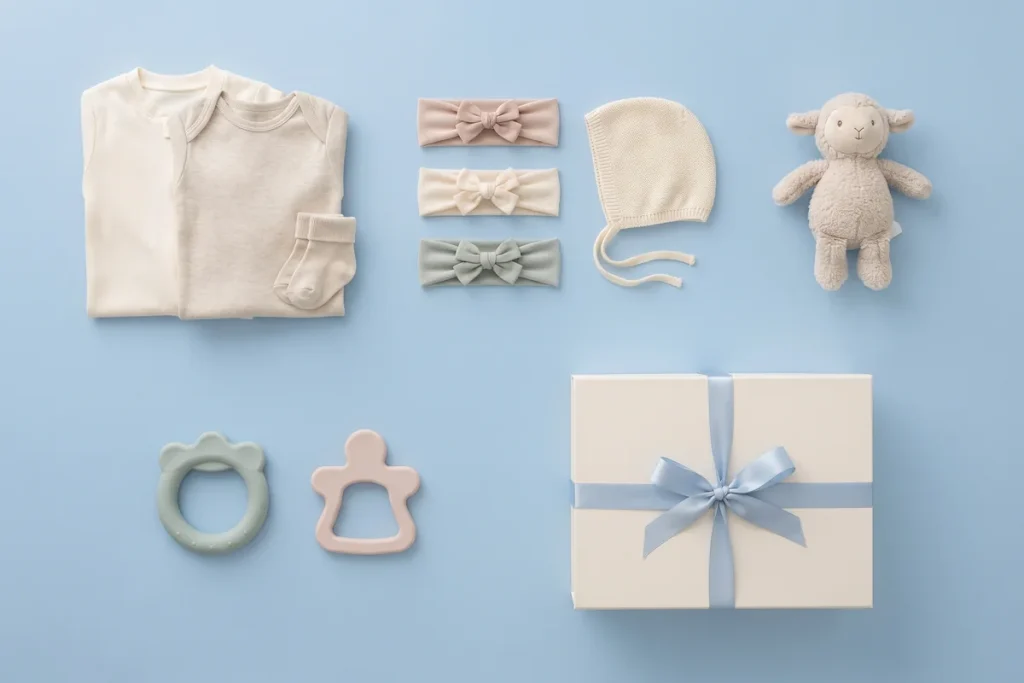
Boxed gift sets give shower guests a finished present. Combine an outfit, a plush toy and a teether or bib in a gift box, and offer sets at two or three price points.
Safety basics for baby boutique products
Check age grading and small-parts warnings
Every product for babies should be labeled with the age it’s intended for. Check that items meant for children under three have no small parts that could detach, and keep anything with small parts out of infant gift sets.
Review applicable product labeling and safety standards
In the U.S., children’s products must meet Consumer Product Safety Commission rules, and the specific requirements vary by product type. Rules can cover materials, construction, labeling and permanent tracking labels. Requirements in other markets differ, so check the rules where you sell.
Request appropriate testing and compliance documents from suppliers
Ask for documentation before stocking children’s products. Under CPSC guidance, manufacturers and importers must issue a Children’s Product Certificate based on third-party testing and furnish it to the retailers and distributors they sell to. If you import products yourself, that responsibility may fall to you, so confirm who the importer of record is before you order.
- Age label: the product states the age it’s intended for.
- Small parts: nothing for children under three has parts that could detach.
- Materials: material information is available, such as food-grade silicone for teethers.
- Tracking label: the product and packaging carry permanent tracking information where practicable.
- Certificate: you have the Children’s Product Certificate and third-party test results.
- Importer of record: you know who is responsible for certification.
Requirements vary by product and market.
How to display a baby boutique by age
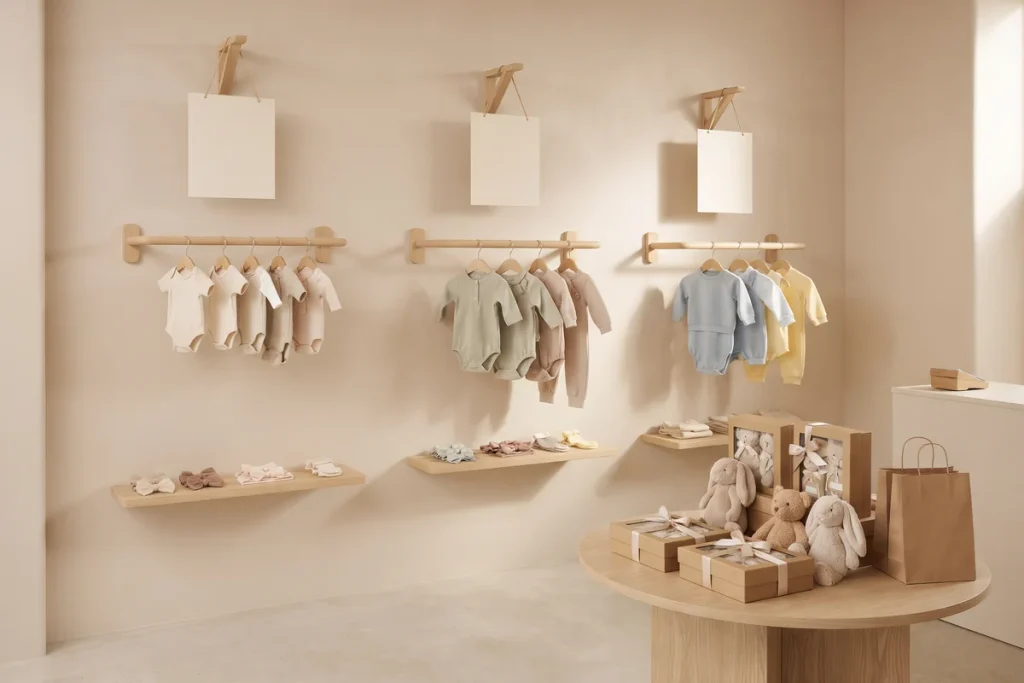
Organize displays by newborn, infant and toddler
Separate the floor into age zones so parents can go straight to their child’s size and guests can find the right age quickly. Clear signage for each zone saves staff from answering the same question all day.
Group outfits with matching accessories
Display outfits beside the bows, headbands and socks that match them. Shoppers who see a complete look often buy the accessories along with the outfit.
Create a gift corner for baby shower shoppers
Set aside a gift corner with boxed sets, plush toys and gift bags near the register. Shower guests can shop in one spot, and the location makes add-ons easy.
How to build baby shower gift bundles
Start with an outfit or plush toy
Choose one main item to set the theme, such as a gender-neutral outfit or a plush animal. That item sets the color palette for the rest of the bundle.
Add bows, teethers and small extras
Add one or two small items that complement the main piece, such as a teether, a bib or socks. Keep every item age-appropriate for the same size range.
Finish with gift boxes and packaging
A gift box with tissue and a ribbon turns the bundle into a finished present. Offer gift wrapping at checkout so guests leave ready for the party.
How to test new baby products without overbuying
Order small quantities of new styles
Introduce new prints and products in small quantities across a few sizes rather than deep in one. Small tests show whether a style fits your customers before you commit cash to it.
Track sell-through by age and category
Track sales by size and category, since a print may sell in newborn sizes and stall in toddler sizes. Use those sell-through numbers to adjust size runs on reorders.
Reorder fast sellers before peak gifting seasons
Reorder proven styles ahead of the holidays and any other periods your sales history shows as busy. Early reorders keep fast sellers in stock when demand is highest.
Stock your baby boutique with Everful
Source baby clothing, plush and accessories factory-direct
Everful connects boutiques directly with vetted factories, so you can source baby clothing, plush toys, teethers, bows and gift packaging on one account. Everful adds 10K+ new products every day.
Review quality control before you order
Everful inspects every order by hand at its own facilities near the factories that produce the goods, before it ships. Inspection catches defects before products reach your shelves, but it doesn’t replace your own compliance review, so request the safety documentation each product needs.
Start with smaller orders on most products
Everful has no minimums, so you can start with a single piece on most products and test new styles before reordering. Live chat, WhatsApp and email support are available 24/7 for product questions before you buy. Start with a focused newborn assortment and grow into the sizes your customers ask for.
Common questions about stocking a baby boutique
Are baby boutiques profitable?
A baby boutique can be profitable when it balances repeat clothing sales with higher-value gift purchases and keeps inventory lean. Pricing each product for a healthy margin and testing new styles in small quantities protects cash flow. Stocking baby and kids products with clear gift appeal also raises the value of each sale.
Where do baby boutiques get their inventory?
Baby boutiques source inventory from wholesale suppliers, brand wholesale programs, trade shows and factory-direct marketplaces. Whichever source you choose, confirm product quality and request safety documentation before stocking children’s products. Suppliers with quality control built into fulfillment reduce the risk of defects reaching your shelves.
What baby products sell the most?
Clothing, plush toys, teethers, hair bows and boxed gift sets sell steadily because they suit both parents and gift buyers. Track sell-through in your own shop by size and category, since your customer base shapes what moves fastest.
Where do baby boutiques get their clothes?
Baby boutiques buy clothing from wholesale suppliers, apparel brands and factory-direct sources. Compare fabric quality, size range and safety documentation, and start with small quantities across a few sizes before reordering the baby clothes that sell.