How to build Valentine’s Day gift sets for your boutique
Valentine’s Day is one of the few gifting moments where a small boutique can outsell a big-box retailer. Shoppers are not looking for the cheapest option, they are looking for something that feels chosen. That plays to your strengths, but only if your assortment is on the shelf by late January.
This guide covers what actually sells, how to build an assortment around it, and when to place your order.
Key takeaways
- Jewelry is the highest-value Valentine’s category by a distance, and heart pendants are the highest-intent piece a boutique can stock.
- Build outward from one strong jewelry story, then layer packaging and impulse around it. 30 well-chosen items beat a scattered 100.
- Jewelry sets make the decision for the customer and lift the transaction at the same time.
- Presentation is where boutiques win outright, and packaging carries almost no markdown risk because it moves again at every gifting occasion in the year.
- Skip candy, card packs, and classroom kits. High participation, low value, and a grocery aisle does it better.
- Order eight to ten weeks out starting in November or December, and hold budget for one reorder in the third week of January. It is almost always heart pendants.
What sells most on Valentine’s Day
Jewelry leads, and heart motifs lead within jewelry. Consumers plan to spend $7 billion on Valentine’s jewelry, according to the National Retail Federation’s most recent survey, more by value than any other gift category, even though only a quarter of shoppers buy it. Fewer buyers spending more each is exactly what makes jewelry the most reliable seasonal category a boutique can carry. Buyers arrive knowing roughly what they want, a necklace or a small set, and decide on the spot based on presentation and price.
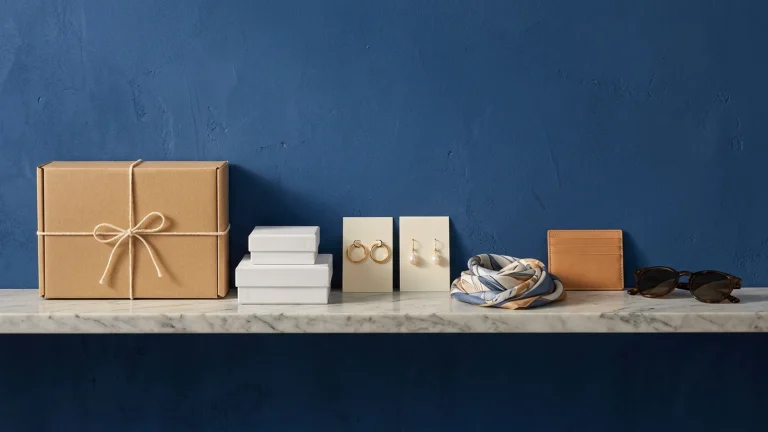
Behind jewelry, three categories consistently move: gift boxes and packaging, small home and decor pieces such as artificial roses and soap flowers, and impulse items priced low enough to add at the register. Balloons, greeting cards, and keychains fill that last tier.
What doesn’t sell well through boutiques is the classroom and party category. Candy is the category most shoppers buy, at 56 percent, and it is also the one where a boutique has least to offer against a grocery aisle. Wholesale candy, Valentine card packs, and kids’ exchange kits belong to mass retailers and party supply chains. Leaving those out is not a gap in your assortment, it is a decision that keeps your margins intact.
How to build a Valentine’s assortment for your store
Build outward from one strong jewelry story, then layer in packaging and impulse pieces around it. A focused assortment of 30 well-chosen items outperforms a scattered 100.
Heart pendants and necklaces
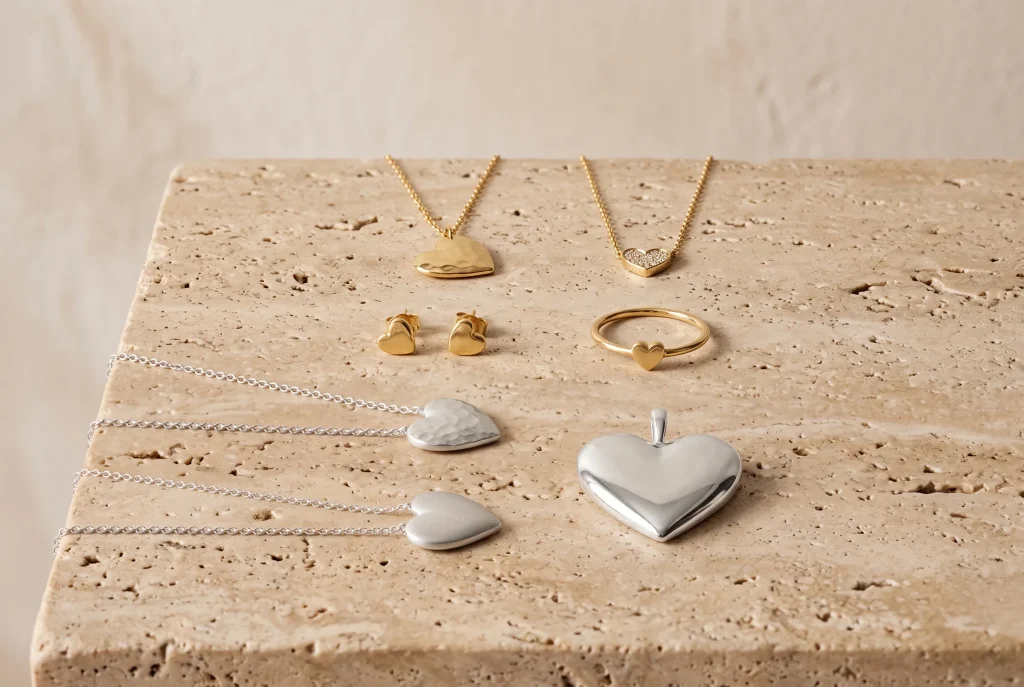
Start here. Heart pendants are the single highest-intent Valentine’s product a boutique can stock, and the range is wide enough to hit several price points without changing suppliers. Look for stainless steel and plated pieces in gold and silver tones, plus at least one pavé or rhinestone option for customers who want something that reads as a bigger gift. Browse wholesale necklaces and pendants to build the core of this section.
Jewelry sets and matching pieces
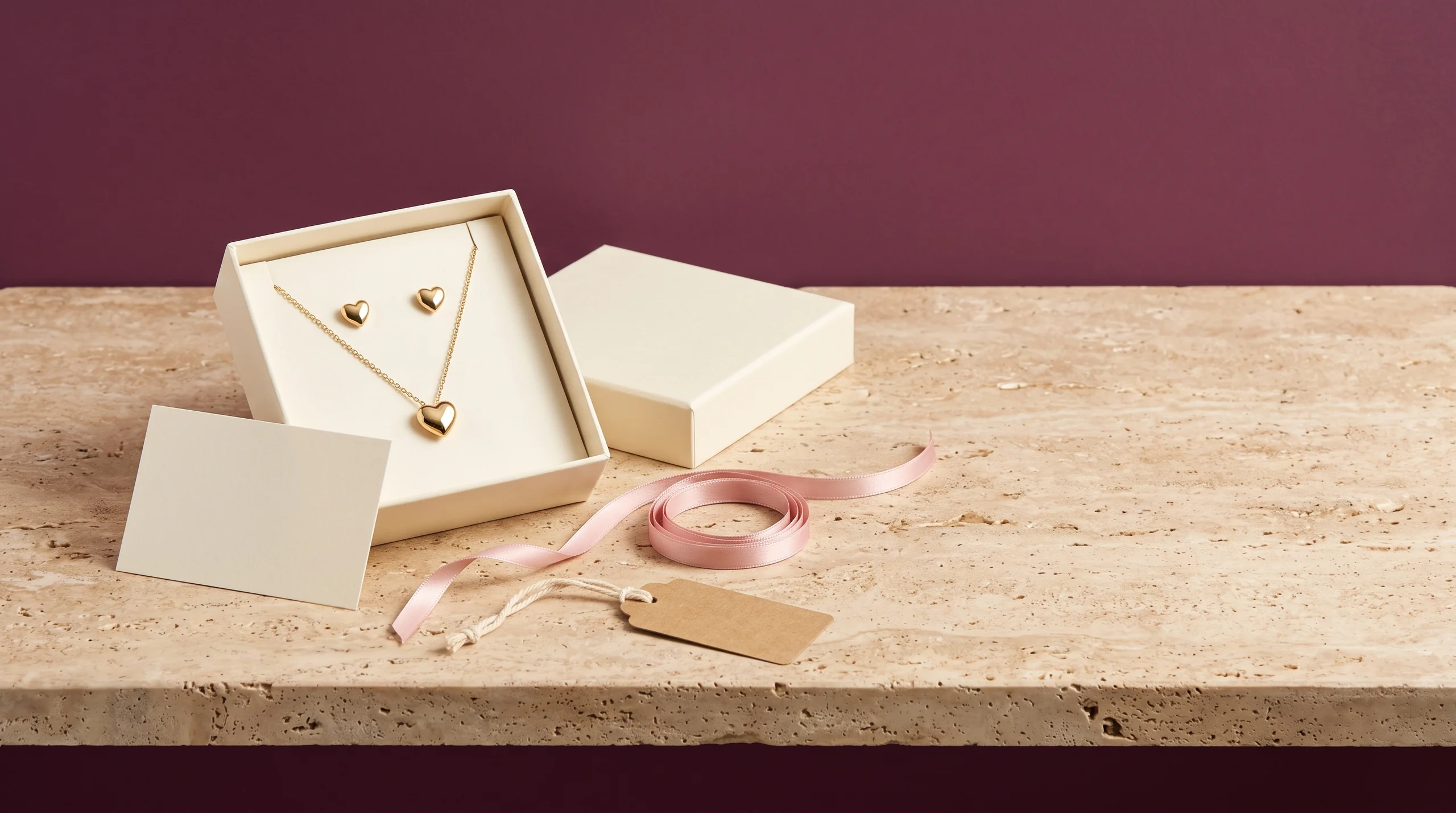
Sets solve a real problem for the customer, which is deciding. A necklace and earring pair at a single price removes the guesswork and lifts your average transaction at the same time. Two or three jewelry sets in complementary metals will cover most of the demand. Matching pieces also photograph well, which matters if you are running social content in the two weeks before the holiday. Building and pricing the set itself is a separate exercise, covered in our guide to holiday gift sets.
Gift boxes, bags, and presentation
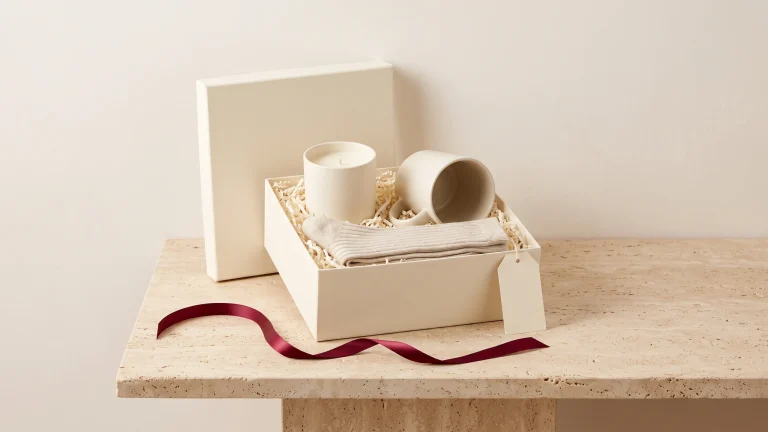
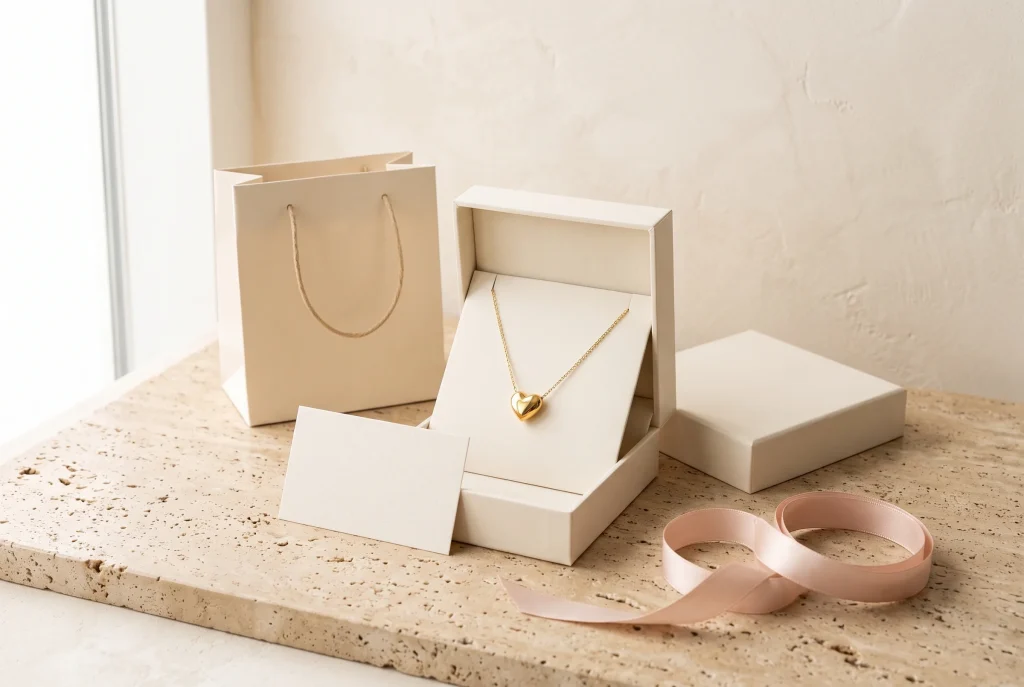
Presentation is where boutiques win outright. A modest piece in a well-made box outperforms a better piece handed over in tissue paper, and packaging carries almost no markdown risk because it holds value across every gifting occasion in the year. Stock jewelry boxes in at least two sizes, plus gift bags in a red, pink, and neutral palette so customers can match the recipient.
Price point mix: impulse buys to statement pieces
The Valentine’s budget is a shared one. Before a shopper reaches your counter, part of it has already gone to dinner, flowers, a card, and candy. Your assortment needs a genuine entry tier rather than a single mid-range band. A workable spread looks like this:
- Impulse tier. Keychains, balloons, greeting cards, and small decor. These live at the counter and get added to a purchase already in progress.
- Core tier. Single pendants, simple necklaces, and small gift boxes. This is where most of your units will move.
- Statement tier. Jewelry sets, pavé pieces, and boxed combinations. Fewer units, much higher ticket, and the reason someone walks in rather than ordering online.
- What it holds
- Keychains, balloons, greeting cards, small decor
- Where it lives
- At the counter
- Its job
- Gets added to a purchase already in progress
- What it holds
- Single pendants, simple necklaces, small gift boxes
- Where it lives
- The main Valentine’s display
- Its job
- Where most of your units will move
- What it holds
- Jewelry sets, pavé pieces, boxed combinations
- Where it lives
- Front of the display, or the case
- Its job
- Fewer units, much higher ticket, and the reason someone walks in rather than ordering online
When to order Valentine’s inventory
Order in November or December for February. Valentine’s shopping starts earlier than most retailers plan for, with real traffic building through the third week of January and peaking in the final five days before the holiday. Inventory that lands in late January has already missed the browsing window when customers were deciding where to shop. Valentine’s runs on a tighter calendar than Q4, which our guide to holiday inventory planning covers in full.
Working backward, place your first order 8 to 10 weeks out so you have time to receive, price, and merchandise the assortment, then hold budget for a single reorder in the third week of January on whatever is selling fastest. In-house repackaging can handle set assembly if January is already tight. Heart pendants are almost always the reorder.
Sourcing Valentine’s gifts in wholesale with no minimums
If this is your first seasonal buy, how to buy wholesale for a boutique covers the fundamentals. The usual obstacle to a seasonal assortment is the minimum order. Committing to a case pack of a single style is a real risk on a holiday that lasts three weeks, and it is why so many small retailers under-buy and sell out early on the wrong things.
Everful is factory-direct with no minimums, so you can test a wide range of styles in small counts instead of betting a season on a few. That matters most in jewelry, where the difference between a gold-tone and silver-tone pendant selling through is impossible to predict from a catalog photo. Order both, see which moves, reorder the winner in January.
The full seasonal range, including heart pendants, artificial roses, soap flowers, gift boxes, and packaging, sits in the Valentine’s Day collection.
Browse the Valentine’s Day collection for factory-direct pricing and no minimums, and eligible items fly free. New products are added daily, and every order is hand-inspected before it ships.
Common questions about stocking Valentine’s Day gifts
What should boutiques stock for Valentine’s Day?
Lead with heart pendants and necklaces, then add one or two jewelry sets, gift boxes and bags in two sizes, and a small impulse tier of keychains, balloons, and cards. Skip classroom and wholesale candy categories, which belong to mass retail.
What are good products to sell for Valentine’s Day?
Jewelry is the strongest category, particularly heart motifs in stainless steel and plated finishes. Artificial roses, soap flower bouquets, and gift packaging also sell reliably and carry less markdown risk than apparel or perishables.
What are the current fashion trends for Valentine’s Day?
Heart motifs remain the constant, with demand concentrated in delicate pendants and layered necklaces rather than statement pieces. Personalized and initial pieces attract buyers looking for something that feels specific. On finish, carry both gold and silver tones rather than betting on one, since which moves faster varies by store and cannot be predicted from a catalog photo.
Where do gift shops buy Valentine’s gifts wholesale?
Buying factory-direct removes the middleman markup, and suppliers without minimum order quantities let a smaller shop test several styles rather than committing to case packs.
When should I order Valentine’s inventory?
Place your main order in November or December, eight to ten weeks ahead, so you have time to receive and merchandise it before traffic builds in the third week of January. Hold budget for one reorder in that same week on your fastest sellers.