Best-selling stocking stuffers to stock this season
Two-thirds of holiday shoppers still have significant buying left after Thanksgiving weekend, and most of what closes that gap is small enough to fit in a stocking. Here is what to stock across jewelry, accessories, beauty, and cozy winter essentials, how to build depth across three price tiers, and how to merchandise the whole wall at the register.
Key takeaways
- The season does not end on Black Friday weekend. ICSC found 65% of shoppers still had significant holiday buying left after it, and small-format gifts are what closes that gap.
- Stocking stuffers convert on low commitment, last-minute urgency, and emotional specificity, not on price alone. They are also light and compact, so a full assortment lands on a fraction of the freight.
- Jewelry and accessories carry the widest margin at this size. NRF found clothing and accessories the second most-wanted gift at 46%, behind only gift cards.
- Beauty is the most universal category on the wall. Circana put US prestige beauty at $36 billion in 2025, up 4%, with makeup sets and lip oils leading prestige makeup growth.
- Build three price tiers rather than one. An entry tier carries volume, a core tier holds the margin, and an anchor tier lifts the average basket. Put depth into whichever tier actually moves.
- With no minimums you can order one each of fifteen pieces instead of a hundred of one, test for three or four weeks, then place the real buy. Plan the wider calendar with holiday inventory planning.
As a retailer, you already know the holidays carry the year. In the 1980s, Black Friday came to mean the day retailers went from operating in the red to operating in the black, and the name stuck because the math was real. But the day is only the opening. The whole season is a conversion opportunity, and conversion means getting a shopper who is already in front of you to complete a purchase instead of browsing and leaving.
The numbers say the season keeps giving. According to ICSC’s 2025 Post-Thanksgiving Weekend Survey, 206 million people, or 77% of U.S. adults, shopped over the long weekend, and 65% of them bought gifts for others. The same survey found that 65% still had a significant amount of holiday shopping left to do after that weekend was over. Two-thirds of your customers walk back through the door in December with a list in hand.
The question is what converts them once they are there. The answer sits at the counter: best-selling stocking stuffers.
Why stocking stuffers drive holiday conversion
Stocking stuffers earn their shelf space for three reasons, and none of them are about price alone.
Low commitment. A small-format gift is a low-risk decision. A shopper adds it without weighing it against a budget, because there is no budget conversation to have at that size.
Last-minute urgency. Nobody researches a stocking stuffer. It fills the gap on a list that is nearly finished, and it gets bought in the store, in the moment, usually within a few feet of the register.
Emotional value. A stocking stuffer is how a shopper says “I know you” without spending like it. A hair accessory in someone’s color, a mini of the product they already use. That specificity is what makes small gifts feel considered rather than filler.
There is a fourth reason that belongs to you rather than the shopper: stocking stuffers are light, compact, and cost little to land, so a full assortment ships in a fraction of the freight a comparable dollar value of larger goods would need. Plan the buy against the season with our guide to holiday inventory planning.
Small gifting items for POS displays
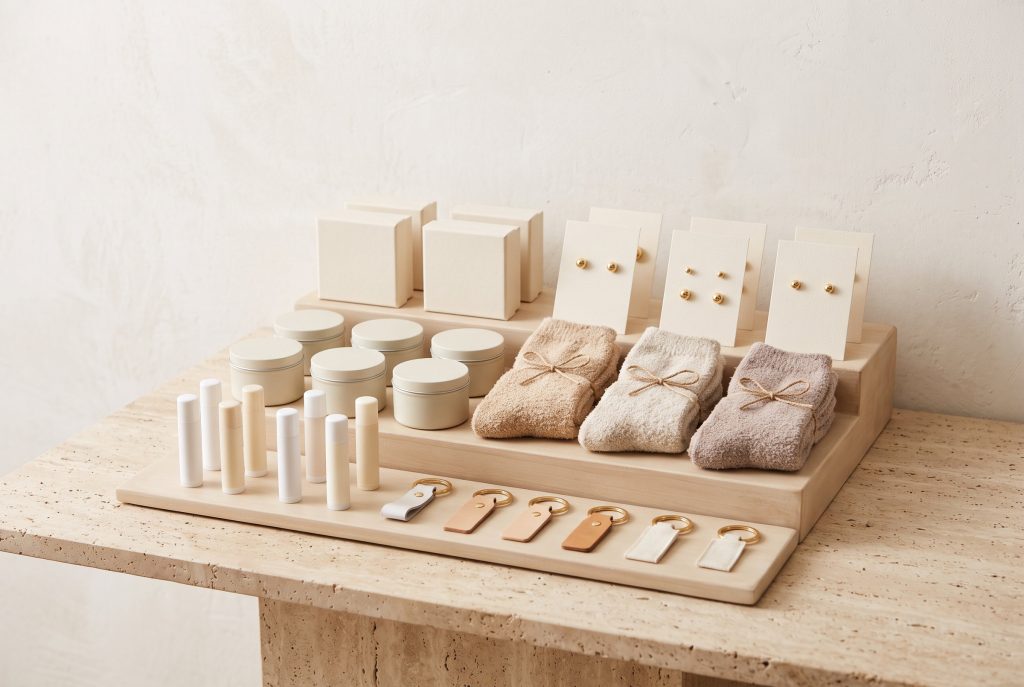
Selection is half of it. Placement is the other half. Stocking stuffers belong at the point of sale, and online they belong in the cart-add slot.
The reason is decision fatigue. By the time a customer reaches the checkout line, they have already made every hard call in the basket. A small, low-risk add-on in front of them at that moment is an easy yes precisely because it asks nothing of them. The same holds online, where a one-click add costs the shopper no new decision.
We should be straight about the evidence here: retail impulse-conversion rates are not published in a form worth citing, and the numbers that circulate come from aggregator sites rather than named research. Treat POS placement as a merchandising practice with a long track record, not a percentage.
Jewelry and accessories: small-format pieces with high margin
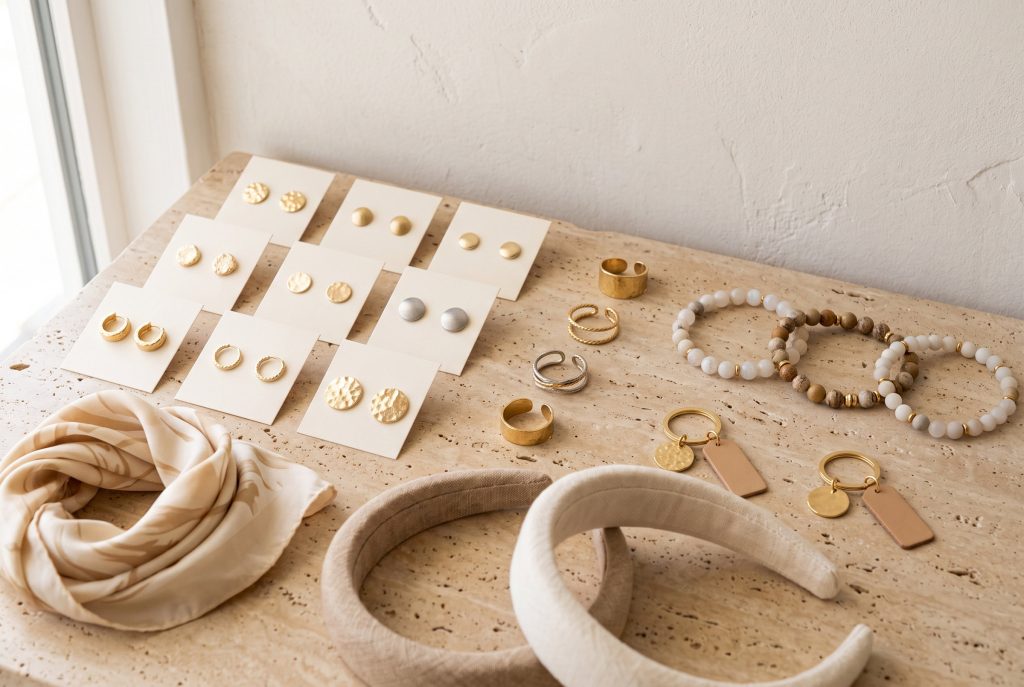
Jewelry and accessories carry the widest gap between what a piece costs to source and what it sells for, which makes them the strongest margin per square foot in a stocking stuffer assortment. Assortment, here, means the range of products you choose to stock.
Demand backs the category up. The National Retail Federation’s 2025 winter holiday survey of 8,247 consumers found clothing and accessories were the second most-wanted gift at 46%, behind only gift cards.
Impulse-friendly jewelry at entry price points
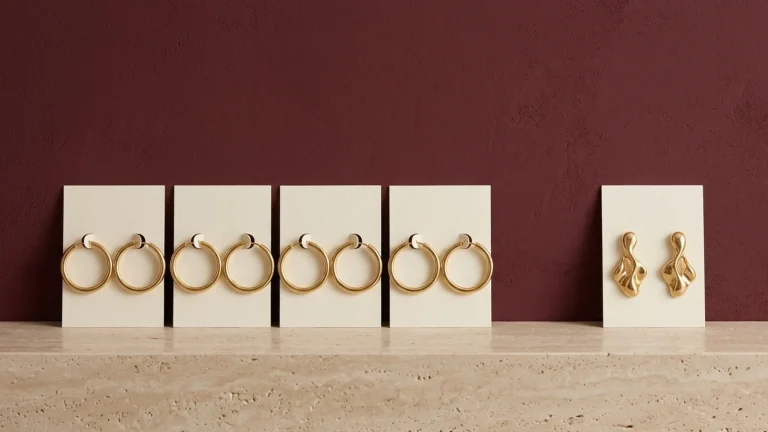
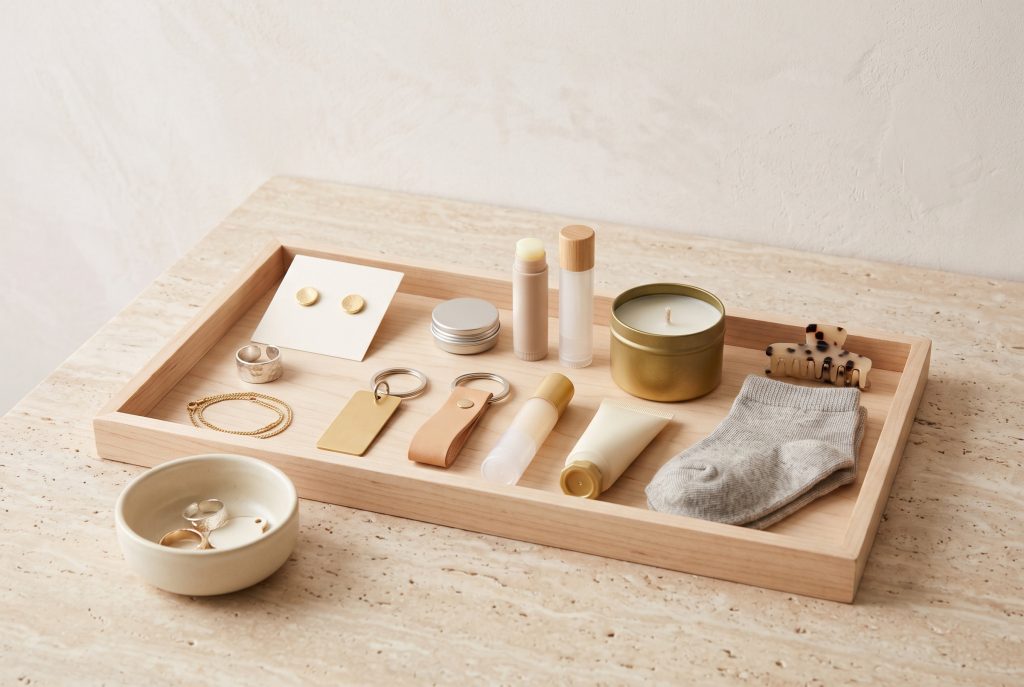
Jewelry that works at this size is jewelry that needs no sizing conversation: adjustable rings, beaded stretch bracelets, huggie hoops, and stud earrings. On the accessories side, look at keychains, bag charms and hardware, scarves, and hair pieces like claw clips and padded headbands.
Trend signals to buy into this season: mixed metals rather than a single finish, textured and hammered surfaces over high polish, and pearl and stone accents at entry price. Bag charms have moved from novelty to a standing accessory category and should be stocked as one.
Beauty and self-care: universal, gift-ready stocking stuffers
Beauty solves the hardest gifting problem, which is the recipient nobody knows how to buy for. It is close to universal, it is understood at a glance, and it is already sized for a stocking.
Beauty minis and self-care add-ons
The category is holding up. Circana reported US prestige beauty at $36 billion in 2025, up 4%, with mass beauty at $72.7 billion, up 5%. The detail that matters for a stocking stuffer buy is what led the growth: in prestige makeup, the top gaining segments were makeup sets, lip liner, and lip oils and balms. Small formats and multipacks are where the movement is.
Stock mini fragrance, lip oils and balms, sheet and hand masks, travel pouches, brush minis, and holiday scrunchie multipacks. Sets in mini sizes do double duty, reading as a complete gift at a stocking stuffer price.
Cozy lifestyle and winter essentials
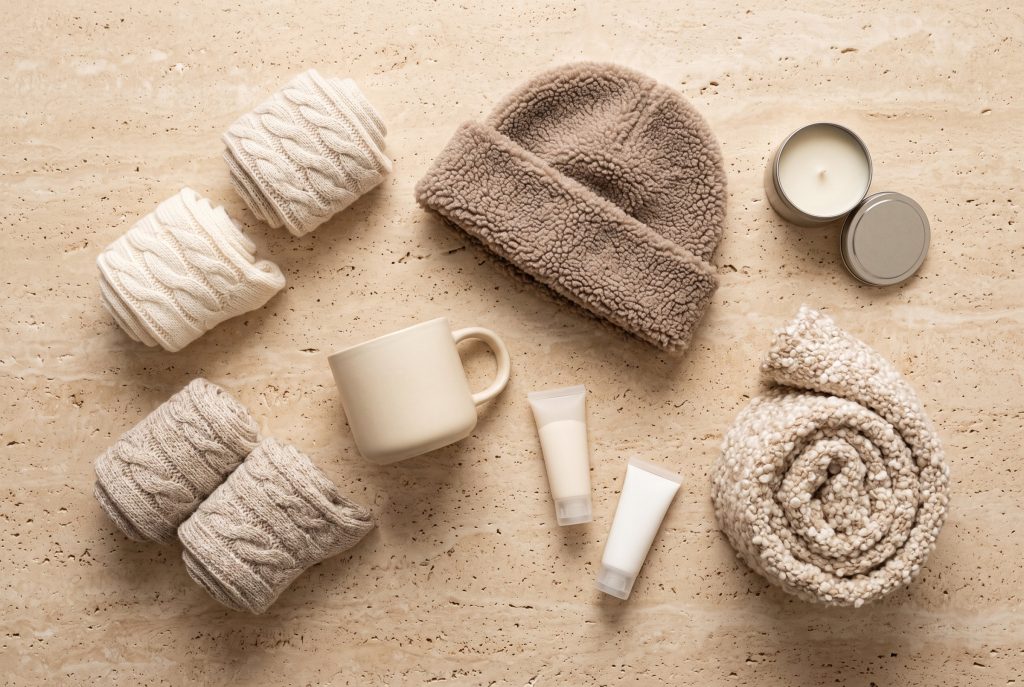
Cozy is not a want at this time of year, it is a use case. Warm socks and lip balm get used the week they are opened, which is what separates a small gift from filler.
Cozy winter accessories that sell fast
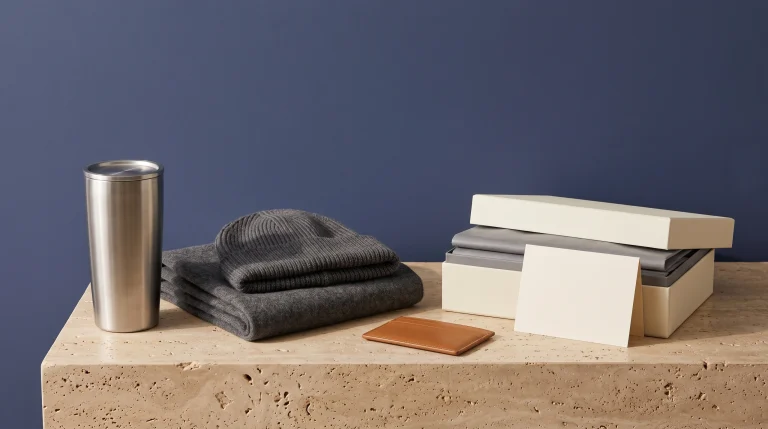
Fuzzy and cable-knit socks, beanies, mini lotions, ceramic mugs, candle minis, and slipper socks all sit at the right size and the right tier. Trend signals: sherpa and boucle textures, tonal creams and warm neutrals in place of red-and-green, and matte ceramics over glossy.
This category also has the broadest reach on a shopper’s list. It works across age and gender, which means one display serves the customer buying for six people.
Building depth across price points
A stocking stuffer wall fails when everything on it costs the same. Shoppers arrive with different people to buy for, and a flat assortment forces them to choose one and stop.
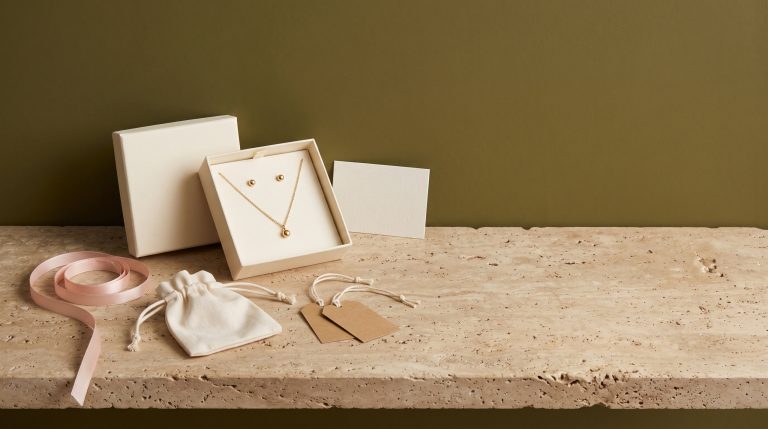
Build in three tiers. An entry tier carries the volume and the add-on impulse: keychains, lip balms, socks, single hair pieces. A core tier is where most of the margin lives: jewelry, beauty minis, small candles, mugs. An anchor tier gives the display a top end and lifts the average basket: a boxed jewelry piece, a mini set, a bundled pair.
Depth then goes into the tier that moves, not evenly across all three. The tier structure is what lets you find out which one that is.
- Its job
- Volume and the add-on impulse at the register
- What goes in it
- Keychains, lip balms, socks, single hair pieces
- How to buy it
- Widest range, shallowest depth per style
- Its job
- Where most of the margin on the wall lives
- What goes in it
- Jewelry, beauty minis, small candles, mugs
- How to buy it
- Your deepest buy once you know what moves
- Its job
- Gives the display a top end and lifts the basket
- What goes in it
- Boxed jewelry, mini sets, bundled pairs
- How to buy it
- A few styles, held as the display’s centerpiece
Packaging and presentation: how to merchandise stocking stuffers
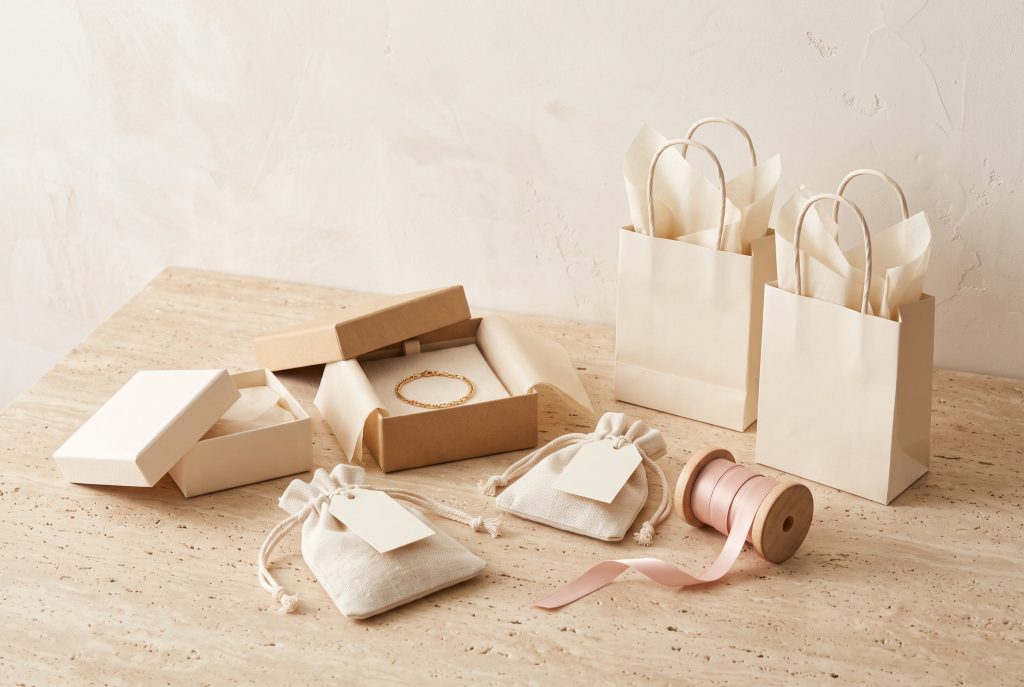
An impulse buy is a small, low-risk purchase made at the point of sale or checkout. Everything below is about removing friction from that moment.
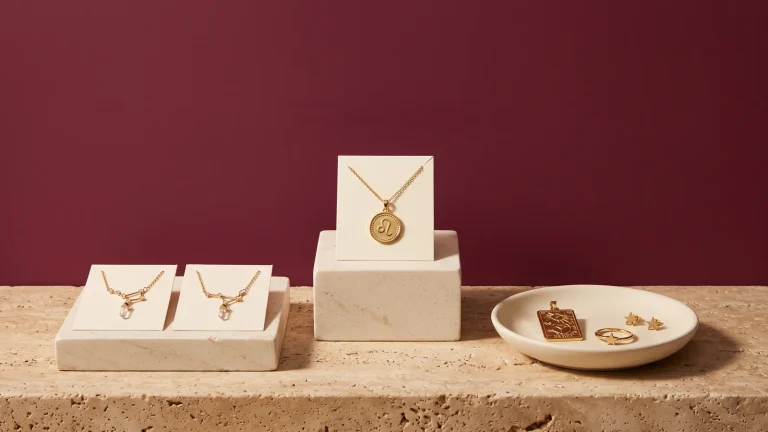
Use your high-traffic zones. Tiered tables near the entrance, bins at the register, and vertical displays at eye level down the main aisle.
Group by recipient, not by category. Put stocking stuffers for adults near the beauty counter, kids’ pieces near toys. A shopper working through a list should find everything for one person in one place rather than walking the store per name.
Bundle in-store. You do not have to buy sets pre-packaged. Pair a lip gloss with a pocket mirror, a press-on nail set with cuticle oil. You set the pairing and the price.
Label plainly. Visible price, and for a bundle, what is in it. A shopper who has to ask puts it back.
How Everful supports stocking stuffer sourcing with no minimums
Everful is factory-direct, which means you buy from vetted factories with no reseller in between and no order threshold to clear first. Every order is hand-inspected before it ships, whether it is one unit or a thousand, and it comes from a single accountable source with real human support from order through post-sale.
How to test new stocking stuffer categories
No minimums means you can order one each of fifteen pieces across five categories instead of a hundred of one. For a boutique that has never carried beauty, that is the difference between a test and a bet.
Run the test now, while there is still time to reorder. Put the pieces out, watch what moves for three or four weeks, then place the real buy with depth on the winners and nothing on the rest. You learn which tier your customers actually shop before your budget is committed, and the price and the inspection are the same on the test order as on the volume order.
Common questions about stocking stuffers for retailers
What stocking stuffers sell best during the holiday season?
The consistent performers are small-format jewelry and accessories, beauty minis, and cozy winter essentials. Jewelry and accessories carry the widest margin, and NRF’s 2025 winter holiday survey found clothing and accessories were the second most-wanted gift category at 46%. Beauty is the most universal, which makes it the safest buy for a mixed customer base.
How can retailers build a stocking stuffer assortment across price points?
Build three tiers rather than one. An entry tier carries volume and add-on impulse, a core tier holds most of the margin, and an anchor tier raises the average basket. Put your depth into whichever tier actually moves in your store rather than splitting it evenly, and let the first season’s sell-through tell you which one that is.
What categories convert best as impulse buys?
Anything a shopper understands in under two seconds and does not need to size, match, or research. Adjustable jewelry, lip products, socks, keychains, and mini fragrance all clear that bar. Categories that need a fit or a shade decision belong on the shelf, not at the register.
How early should retailers source stocking stuffers?
Early enough to test, then reorder. That means a small trial buy in late summer or early autumn, three to four weeks of real sell-through data, and the volume order placed with enough runway to land before peak. Planning the wider seasonal calendar is covered in our holiday inventory planning guide.
How can retailers test new stocking stuffer categories without overcommitting?
Source from a supplier with no minimums so a test costs one unit per style instead of a full case. Order one each of a dozen pieces across the categories you are considering, put them out, and let the sell-through decide the buy. With Everful the per-unit price and the hand inspection are identical on the test order and the volume order, so nothing about the trial is a compromise.