Types of blanket material and which ones sell best
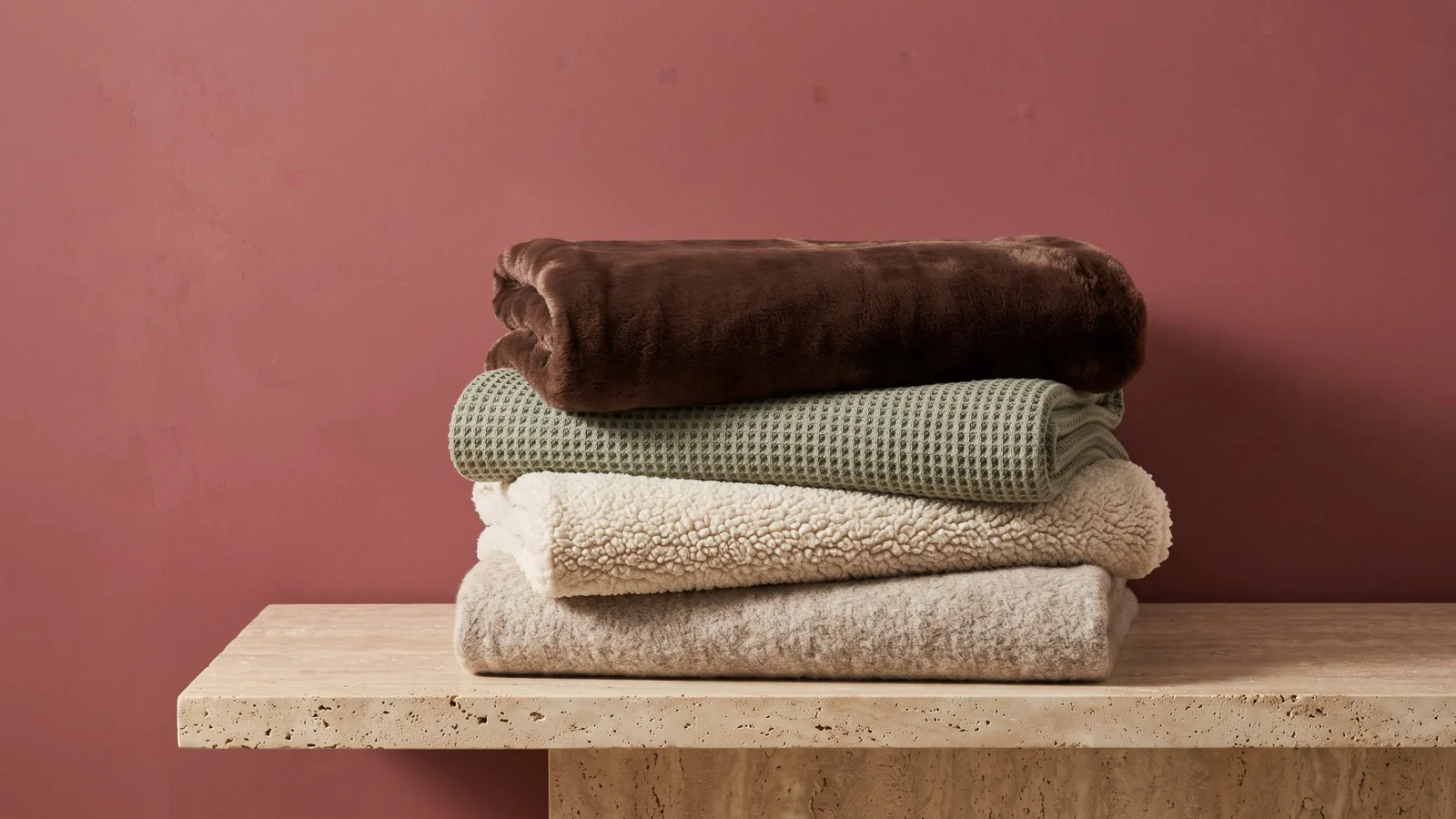
Fleece, flannel, sherpa, cotton, waffle-knit and faux mink all keep people warm, but they don’t sell to the same customers. Here’s how each material compares and how to build a blanket assortment that moves.
- Fleece is a practical everyday option. It’s generally soft, lightweight, and available in a variety of colors and patterns.
- Flannel and sherpa work well for colder-weather assortments. Their cozy textures can make them appealing seasonal gifts.
- Cotton and waffle-knit blankets offer breathable alternatives. They’re worth considering for year-round home goods collections.
- Faux mink adds a decorative touch. Its dense, plush texture can help create premium-feel gift displays.
- The best-selling material depends on your customers. Test different styles and use actual sales data to guide future purchases. Sourcing with no minimums keeps each test small.
Choosing blankets for your store sounds simple until you start comparing materials. Fleece, flannel, sherpa, cotton, waffle-knit, and faux mink all have their advantages, but they don’t necessarily appeal to the same customers.
Someone shopping for a lightweight throw might prefer breathable cotton, while a customer looking for a cozy winter gift may be drawn to plush sherpa. And a blanket that looks beautiful draped over a sofa isn’t always the most practical option for everyday use.
For retailers, understanding the different types of blanket material can help you make smarter buying decisions. The right assortment should offer a balance of comfort, style, price, and seasonal appeal without taking up more inventory space than necessary. In this guide, we’ll compare six common blanket fabric types, explain what makes each one different, and help you decide which materials deserve a place in your wholesale assortment.
What are the different types of blanket material?
Not all blankets are made the same way. Some are woven from natural fibers, while others use synthetic materials designed to create a soft, plush texture. The fabric’s construction also affects how warm, heavy, and breathable the finished blanket feels.
One important distinction is the difference between fiber content and fabric construction. Fiber content refers to what the blanket is made from, such as cotton or polyester. Fabric construction refers to how those fibers are woven, knitted, or processed.
For example, fleece is commonly made from polyester, while flannel can be made from cotton, polyester, or blended fibers. Waffle-knit describes a textured construction rather than one specific material. This matters when purchasing wholesale blankets because two products with similar appearances may have different care requirements, weights, and price points.
Blanket material comparison
These are general characteristics. Actual performance depends on the product’s fiber content, thickness, and construction.
When comparing blankets, consider how customers will use them. A lightweight throw for summer evenings serves a different purpose from a thick blanket intended for winter.
Fleece blankets: A practical everyday option
Fleece is one of the most recognizable blanket materials, and it’s easy to understand why. It’s soft, flexible, and available in a wide range of weights, colors, and patterns.
Most fleece blankets are made from polyester fibers that have been processed to create a brushed surface. This construction helps trap air, providing warmth without necessarily making the blanket heavy. For retailers, fleece can be a useful starting point when building an affordable throw blanket assortment.
Why customers choose fleece
Fleece blankets are often selected for casual, everyday use. They work well on sofas, beds, and chairs, and many styles are relatively easy to maintain. However, care instructions vary, so retailers should always check the manufacturer’s label.
Fleece is also available in different thicknesses. A lightweight fleece throw may appeal to shoppers looking for an extra layer, while a thicker design may be more suitable for colder weather.
What to check before buying fleece wholesale
Not every fleece blanket has the same quality. Compare the fabric’s thickness, softness, stitching, and finishing. Some fleece materials may develop pilling after repeated use or washing.
If possible, request samples before purchasing larger quantities. Retailers can also consider offering neutral fleece throws throughout the year and introducing seasonal patterns for fall and winter gifting. Explore Everful’s fleece blanket collection to compare available styles.
Flannel blankets: A cozy seasonal favorite
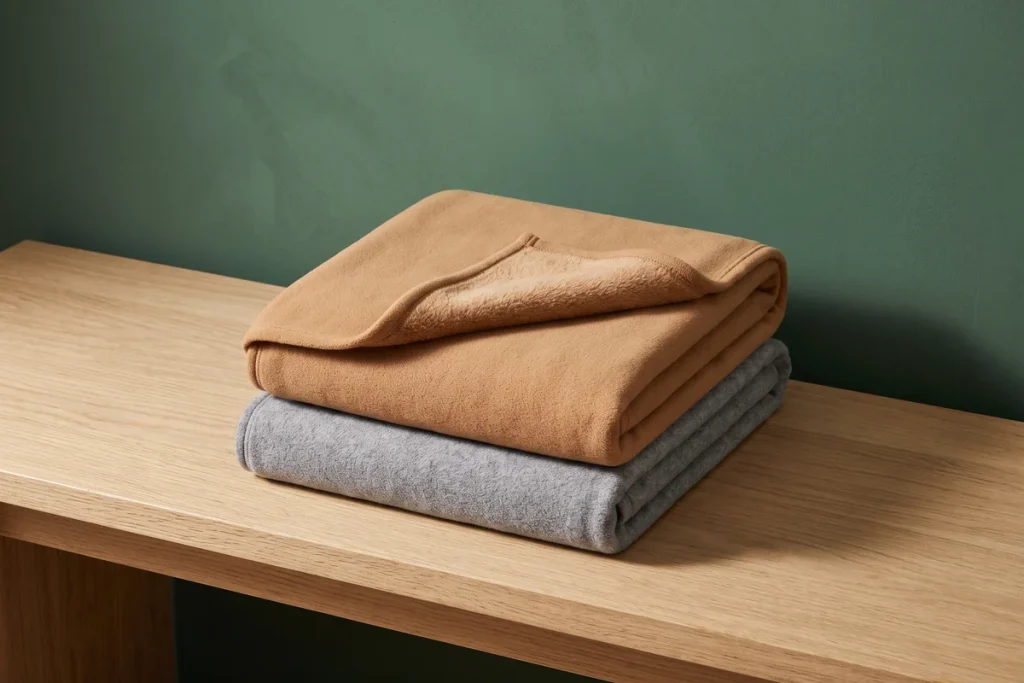
Flannel is often associated with fall and winter, particularly when it features traditional plaid patterns or warm seasonal colors. Its soft texture comes from a brushing process that raises fibers on the surface of the fabric. Unlike fleece, which is commonly synthetic, flannel can be made from cotton, polyester, or blended materials. That means two flannel blankets may look similar but have different washing requirements and performance characteristics.
When to stock flannel blankets
Flannel can be a good fit for retailers building seasonal home goods or gift assortments. Plaid blankets, neutral checks, and classic patterns can complement fall and winter displays. For example, a gift shop might pair flannel throws with mugs, candles, or decorative pillows to create a coordinated seasonal presentation.
The goal isn’t necessarily to stock every pattern. A smaller selection of colors that complement your existing merchandise may be easier to display and manage.
Check materials and care instructions
Before ordering flannel blankets, review the fiber composition, fabric weight, and washing instructions. Cotton flannel may behave differently from polyester flannel, particularly when it comes to shrinkage and drying. Check product specifications so you can accurately describe the blanket to customers.
Sherpa blankets: Plush comfort for colder weather
Sherpa blankets stand out because of their thick, fluffy texture. The material is designed to resemble the appearance of wool and is commonly made from synthetic fibers such as polyester. Compared with traditional fleece, sherpa usually has a deeper, more textured pile. That makes it particularly appealing for cozy home displays.
Sherpa vs. fleece: What’s the difference?
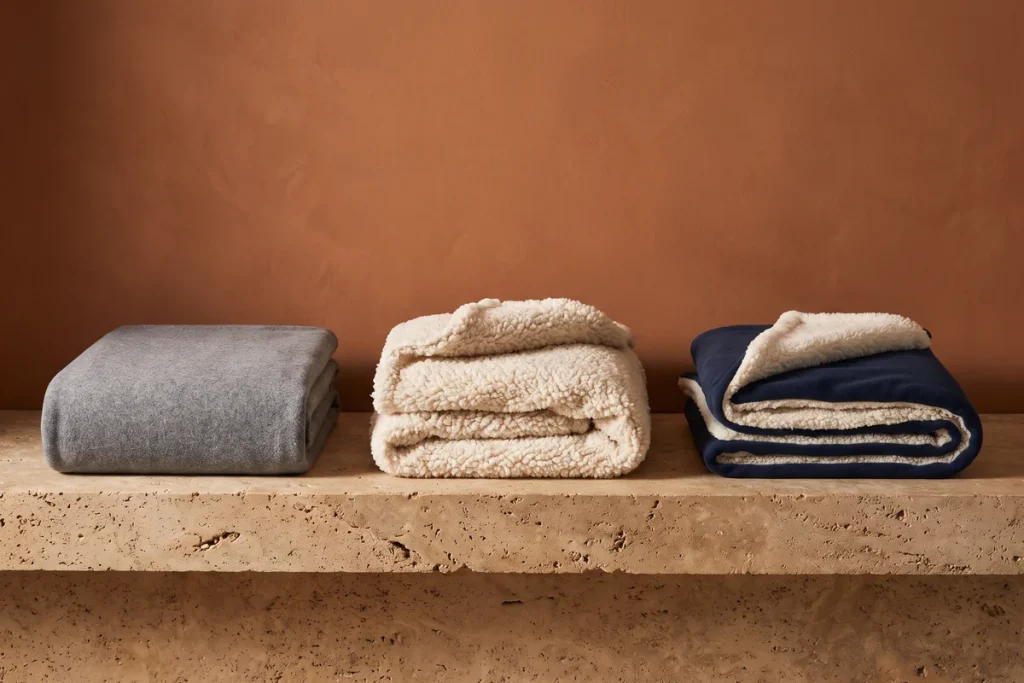
Both sherpa and fleece can provide warmth, but they look and feel different. Fleece typically has a shorter, brushed surface. Sherpa has a fluffier texture that resembles curled wool.
Sherpa may feel bulkier, although the actual weight and warmth depend on the blanket’s construction. Some products combine the two materials, featuring smooth fleece on one side and sherpa on the other. These reversible designs can give customers different textures in a single blanket.
How to merchandise sherpa blankets
Sherpa blankets can work well in winter gift displays, especially when paired with other cozy home accessories. Neutral colors are useful for customers who prefer understated decor, while seasonal shades can add variety during the holidays. When buying wholesale, remember that thicker blankets may require more storage space and cost more to ship. Compare dimensions and packaging before placing an order.
Cotton and waffle-knit blankets: Lightweight, versatile options
Not every customer wants a thick, plush blanket. Some shoppers prefer lighter materials that work well with layered bedding or everyday home decor. That’s where cotton and waffle-knit blankets can be useful.
Why cotton blankets work year-round
Cotton is a natural fiber commonly used in bedding and home textiles. Depending on the weave and thickness, cotton blankets can offer a breathable feel that makes them suitable for different seasons. Lightweight cotton throws may appeal to shoppers looking for an extra layer during warmer months.
Heavier woven cotton blankets can provide additional coverage without relying on a plush synthetic surface. For retailers, cotton can help balance an assortment that otherwise focuses on fleece and sherpa.
What makes waffle-knit different?
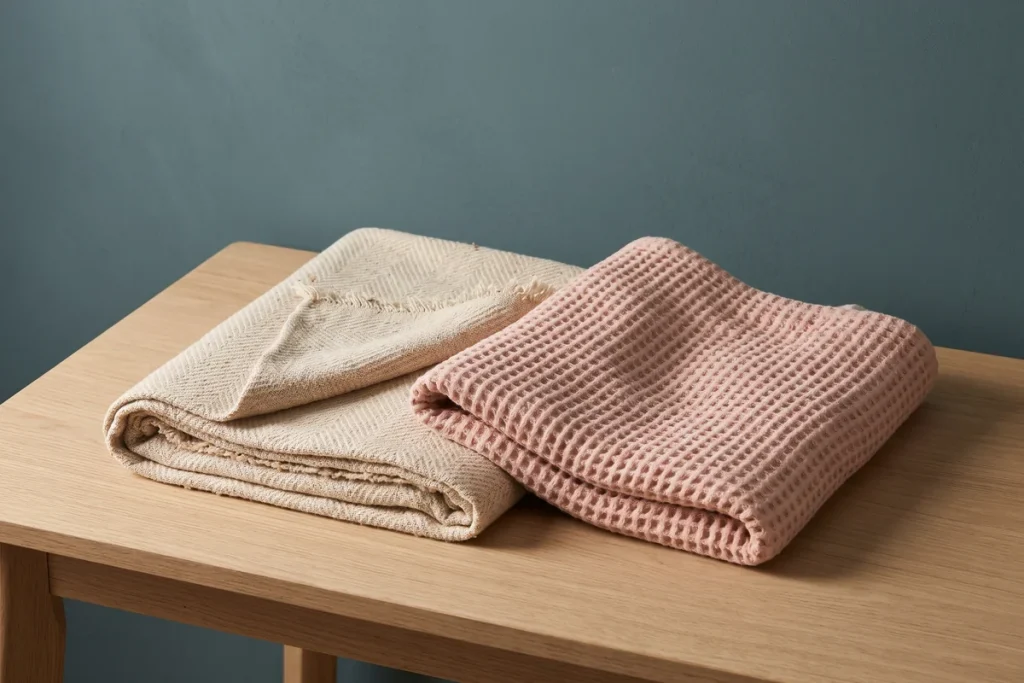
Waffle-knit blankets have a raised grid pattern that creates a recognizable textured appearance. The construction can give the fabric a relatively airy feel, depending on its fiber content and weight.
Waffle-knit doesn’t necessarily mean cotton. These blankets can be made from natural fibers, synthetic materials, or blends. Their textured surface makes them useful for decorative displays, particularly in stores that sell neutral or minimalist home accessories.
Choosing between cotton and waffle-knit
If customers prioritize a particular fiber, focus on the blanket’s material composition. If they’re more interested in texture and appearance, waffle-knit styles may be worth considering.
Because waffle-knit describes a construction rather than a fiber, the categories can overlap. A blanket can be both cotton and waffle-knit. Review product dimensions, weight, and care instructions before ordering.
Faux mink blankets: A decorative, premium-feel option
Faux mink blankets are designed to create the appearance of smooth, dense fur without using genuine mink. They’re commonly made from synthetic fibers such as polyester and feature a soft, plush surface. For retailers, their appeal is often as much about appearance as warmth. A faux mink-style throw draped over a sofa can create a more decorative presentation than a basic everyday blanket.
What makes faux mink different?
Faux mink typically has a smooth, dense pile that gives it a plush texture. Depending on the construction, these blankets may feel heavier than lightweight fleece or cotton throws. Some designs also feature different textures on each side.
When comparing wholesale options, pay attention to pile density, stitching, fabric weight, and how the blanket drapes. These details can influence how customers perceive its quality.
When to stock faux mink throws
Faux mink-style blankets may be useful for gift shops and home decor retailers looking to offer a more luxurious appearance. Neutral colors can complement a wide range of interiors, while deeper seasonal shades may work well in holiday displays. However, a premium appearance doesn’t by itself justify a premium retail price. Compare wholesale costs, product quality, and customer preferences before deciding how to position these blankets.
Which blanket materials sell best for retailers?
Here’s the question most retailers want answered: Which blankets are actually worth stocking? The answer depends on your customers.
A gift shop preparing for the holidays may see more interest in sherpa and faux mink throws. A home goods boutique in a warmer climate may have better results with cotton or lightweight fleece. Rather than treating one material as the universal bestseller, think about how different blankets fit into your assortment.
Match blanket materials to the season
Some blanket styles are more closely associated with particular seasons.
These are illustrative assortment recommendations, not verified sales rankings.
Seasonality matters, but so does your location. Retailers in warmer climates may have year-round demand for lighter throws, while colder regions may support a broader selection of heavier blankets.
Balance different price points
A practical blanket assortment can include both affordable everyday throws and more decorative options. For example, a retailer might carry fleece blankets as an accessible entry-level product and add a smaller selection of sherpa or faux mink throws for customers looking for gifts. Cotton and waffle-knit blankets can provide alternatives for shoppers who prefer lighter materials or textured home decor. The right mix depends on your store’s pricing strategy and available space.
Consider the total cost of each blanket
Wholesale price is only one part of the purchasing decision. Blankets vary in size and weight, which can affect shipping and storage expenses.
Blanket buying checklist
Before ordering, compare:
Product dimensions and weight
Fiber content and construction
Wholesale unit cost
Minimum order quantities
Packaging and labeling
Care instructions
Shipping costs and delivery timelines
These details can help you evaluate whether a blanket fits your target retail price and expected margin.
How to merchandise and test wholesale blankets
Blankets are products customers often want to see and feel before buying. That makes presentation especially important. A well-organized display can help shoppers compare materials without requiring a large amount of floor space.
Let customers compare textures
Instead of keeping every blanket folded in its packaging, consider displaying a few samples. Group similar materials together and use clear labels to identify the fabric, dimensions, and price. For example, a display might feature a folded fleece throw, a waffle-knit blanket, and a plush sherpa option side by side.
This makes the differences easier to understand. You can also drape selected blankets over chairs or sofas to demonstrate how they look in a home setting.
Start small and track what sells
If you’re introducing blankets as a new product category, begin with a focused assortment. Choose a few materials and colors that fit your store, then monitor customer interest. Sell-through rate can help you evaluate performance:
Sell-through rate = Units sold ÷ Units available for sale × 100
For example, if you start with 20 sherpa blankets and sell 15 during a defined period, your sell-through rate is 75%. Track performance by material, color, size, and season. A blanket that sells well during winter may not perform the same way in summer, so consider timing before placing larger reorders.

Where to buy blankets wholesale
Choosing the right blanket materials is only part of building a successful assortment. Retailers also need to compare product quality, minimum order quantities, and shipping costs. Everful offers wholesale home goods collections that retailers can explore when sourcing blankets and throws.
Start with Everful’s wholesale blanket collection to compare available styles. You can also browse fleece blankets, throws and blankets, and the broader home and kitchen category. When comparing products, review the material composition, dimensions, care instructions, and packaging details.
Everful’s guides to boutique wholesale sourcing, wholesale suppliers for retailers, and factory-direct purchasing can also help you compare wholesale options. Everful has no minimums, so you can test a few blankets in each material before committing. Before ordering, confirm total costs and available wholesale shipping options.
The best blanket assortment doesn’t need to include every fabric type. It should give your customers useful choices while keeping inventory manageable and aligned with demand.
Common questions about types of blanket material
What are the most common types of blanket material?
Common blanket materials and constructions include fleece, flannel, sherpa, cotton, waffle-knit, and faux mink. Each offers different textures, warmth levels, and care requirements.
Which blanket material is the softest?
Fleece, sherpa, and faux mink are commonly chosen for their soft textures. However, softness varies depending on fabric construction, fiber quality, and finishing, so no single material is always the softest.
What is the difference between fleece and sherpa blankets?
Fleece generally has a shorter, brushed surface, while sherpa has a thicker, fluffier pile designed to resemble wool. Both are commonly made from synthetic fibers, and their warmth depends on thickness and construction.
Are cotton blankets good for year-round use?
Yes. Many cotton blankets offer a breathable feel that can make them suitable for different seasons. Lightweight cotton throws work well for warmer weather, while heavier woven cotton blankets provide additional coverage.
What blanket material is best for winter?
Sherpa, flannel, thicker fleece, and faux mink-style blankets are worth considering for winter. Actual warmth depends on the blanket’s weight, thickness, and construction.
Which blanket materials sell best for retailers?
The best-selling blanket materials vary by store, season, climate, and customer preferences. Retailers should test a focused assortment, monitor sell-through rates, and reorder products that demonstrate consistent demand.