Fall 2026 retail planning: what to stock, when to order, and how to build your assortment
The retailers who win fall aren’t the ones who chase the trend in September. They’re the ones who plan in July, launch in phases, and have product on the shelf before each demand wave arrives. Here’s what’s trending for 2026, and the calendar that turns it into sell-through.
Key takeaways
- Fall demand lifts in August. Retailers who launched before Labor Day saw 18 to 22% higher sell-through on cozy home and fragrance.
- A staggered release (early fall, then Halloween, then Thanksgiving) outperforms single-drop assortments by up to 30% in seasonal revenue.
- Lead with cozy home, candles, and transitional apparel before Labor Day. Order elevated Halloween in early September.
- Fall 2026 runs earth-driven: terracotta, sage, ochre, espresso, burgundy, and greige, in boucle, fleece, and textured ceramics.
- No minimums let you test new styles small and reorder what sells, so a summer buying decision doesn’t become a fall liability.
There’s a version of fall that happens to a store, and a version a store plans for. In the first, the cozy throws land in October when the early demand has already moved on, the Halloween ceramics arrive a week after the displays should have been up, and the season ends in markdowns. In the second, every category hits the floor just ahead of its demand wave, and the assortment sells through at full price.
The difference isn’t taste or luck. It’s the calendar. Fall demand follows a pattern that repeats year over year: it lifts in August, peaks across two holiday waves, and rewards whoever has product ready before the spike rather than chasing it after. This guide covers what’s trending for fall 2026 across home, apparel, fragrance, and décor, then maps each category to a clear ordering window so your assortment lands exactly when buyers are ready for it.
What fall 2026 looks like
Fall retail planning is the practice of ordering seasonal inventory in staggered phases: cozy home and apparel before Labor Day, Halloween in early September, and Thanksgiving in October, so product lands ahead of each demand wave. Retailers who plan in July consistently outsell those who react in September.
A handful of themes are shaping how shoppers will respond this season. They’re worth reading before you stock anything, because the products that sell are the ones sitting inside a trend buyers already recognize.
Comfort continues to lead, but with more weight on texture than it has carried in past seasons. Call it Hygge 2.0: boucle, fleece, heavyweight knits, and anything that reads soft to the touch. Neutral palettes hold, layered now with tactility rather than color novelty.
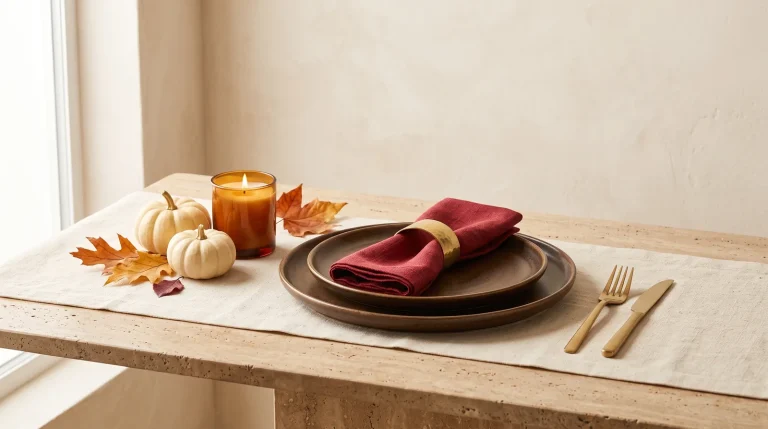
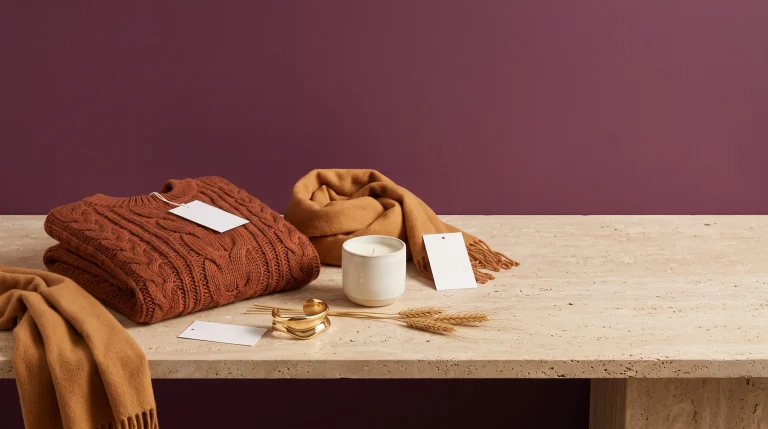
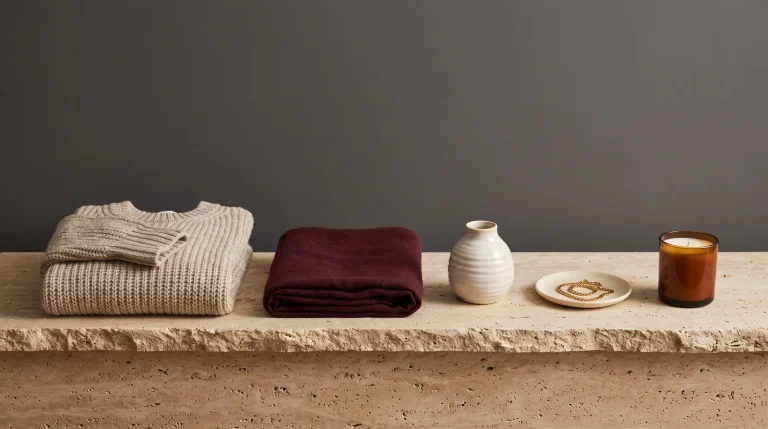
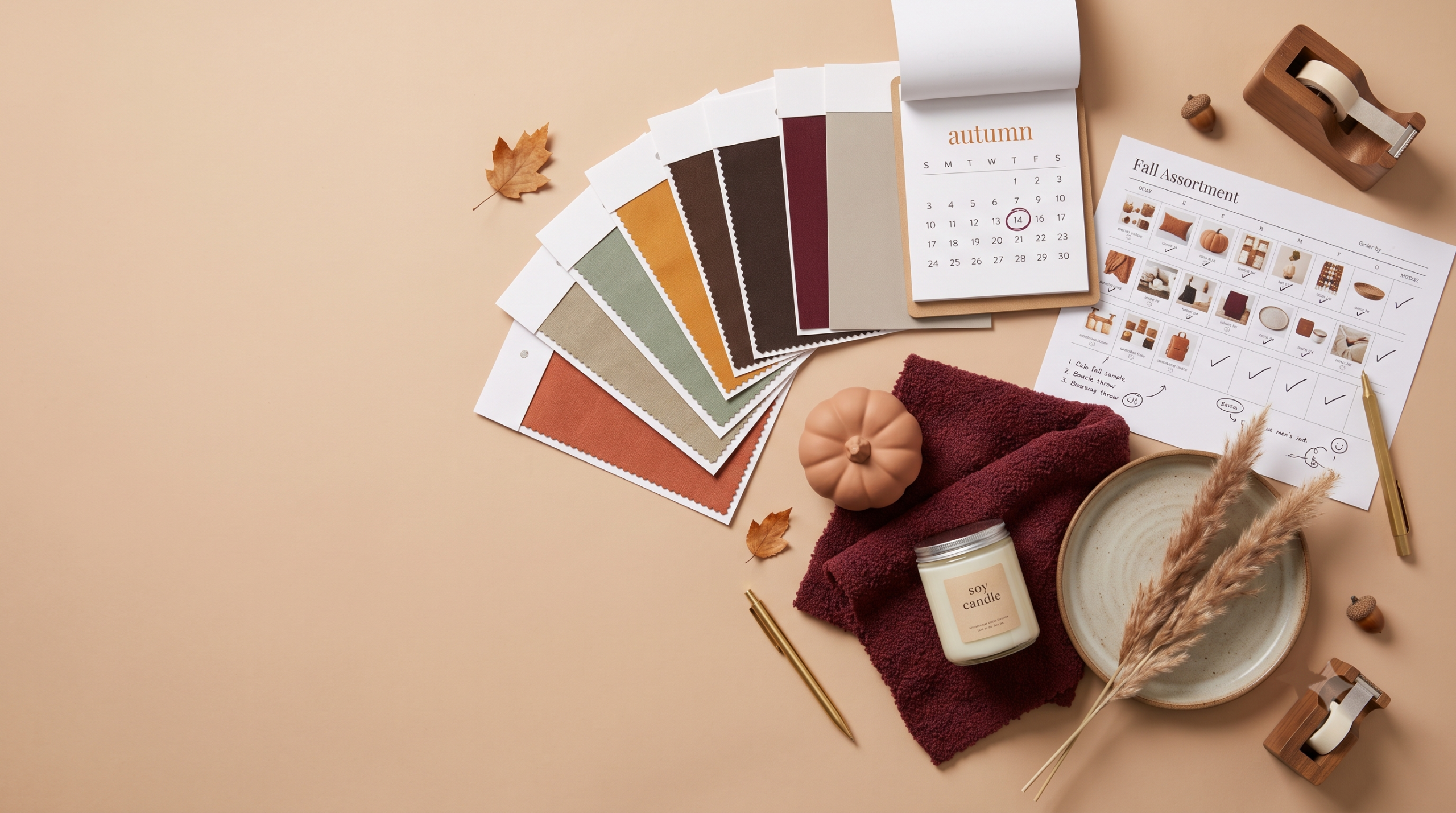
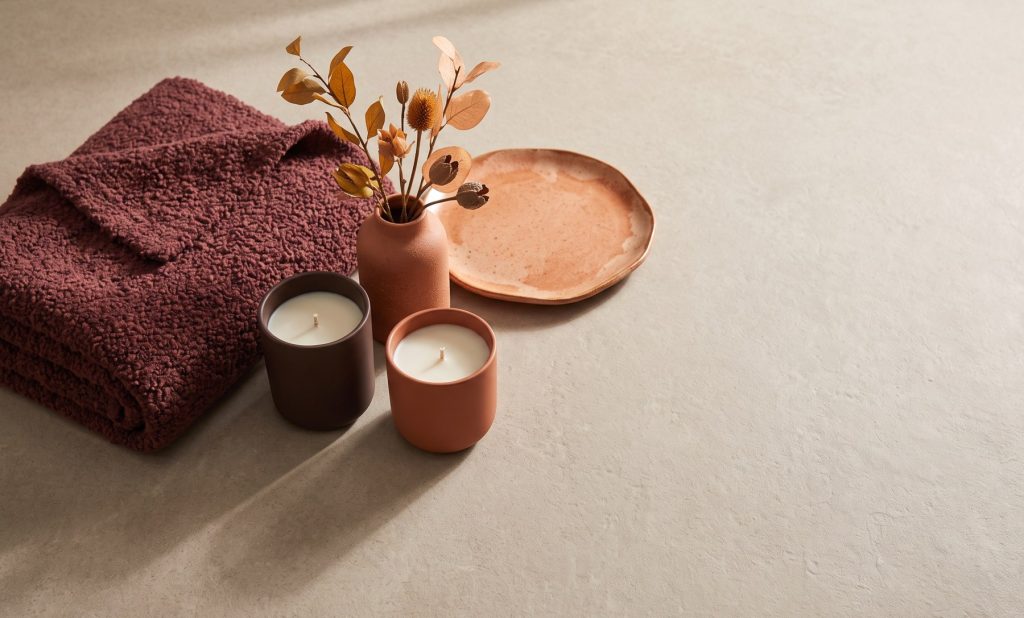
The color story is earth-driven. Terracotta, sage, ochre, espresso, burgundy, and greige run across every category this fall, from ceramics to apparel to packaging. The advantage of a biophilic palette is cohesion: a mixed assortment built in these tones reads as one considered collection on the shelf rather than a set of unrelated buys.
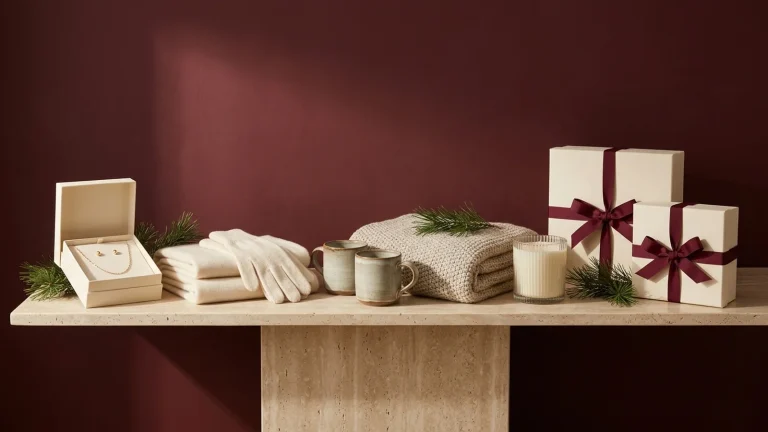
Entertaining is the other engine. Gathering season energy, the pull toward hosting and cozy nights in, drives tabletop, fragrance, and textiles together. A shopper planning a season of hosting converts across several categories in one visit, which is why cross-merchandising these groups pays off more than selling them in isolation.
Halloween has grown up. The move away from plastic novelty continues toward what the trade is calling Gothic Luxury: matte-black ceramics, moody stoneware, brass accents, and velvet. The buyer who once reached for mass-produced spookiness now wants pieces that hold up as décor well past October 31.
And the outdoor season stretches longer. Consumers keep porch and garden spaces alive into the cooler months, which keeps lanterns, fire bowls, string lights, and outdoor textiles moving later than they used to.
The categories worth stocking, and when demand lifts
Six categories carry fall 2026, each with its own trending mix and its own ordering window. The table below is the working version; the sections under it explain what’s driving each one.
Cozy home décor and textiles (Hygge). This category sets the pace. High-GSM throw blankets, boucle pillows, waffle-weave kitchen towels, stoneware plates, wood serving boards, dried florals and pampas, terracotta vases, ceramic and resin pumpkins, velvet gourds, and woodland animals. Demand lifts here first, often before Labor Day, so order late July through August and watch for a reorder in late September. Get this category right and on time, and it carries the front half of your season.
Seasonal home fragrance and wellness. The reliable early mover. Soy candles, wax melts, pumpkin-shaped burners, and the season’s scent profiles (spiced apple, pumpkin chai, cedarwood, amber), alongside wellness pieces like weighted blankets, herbal eye pillows, and bath salts. Home fragrance saw a 6.4% year-over-year increase in Q3 2025, led by candles and diffusers, according to Circana’s Home & Scent Report. Order in August, reorder in October. It anchors a phased release because it reliably sells through and re-sells.
Transition apparel and accessories. The bridge from late summer into full fall: 450+ GSM hoodies, French Terry sweatshirts, micro-fleece joggers, merino blends, shackets, corduroy totes, chunky beanies, and flannel scarves, all in the terracotta, sage, ochre, espresso, burgundy, and greige palette. The category grew 5.7% year over year in September 2025, according to Mastercard SpendingPulse. Order July through August, reorder September into October. Because it sells through the in-between weeks, it earns an early slot rather than a Halloween-adjacent one.
Holiday-specific: Halloween and harvest. This is where timing is least forgiving. Matte-black ceramic skulls, brass cauldrons, velvet bats, moody LED lanterns, harvest wreaths, leaf garlands, “Thankful” signage, and porch mats. The category sits inside a large, growing spend: U.S. consumers put $12.2B toward fall and Halloween décor in 2025, up 8% year over year, according to the NRF Seasonal Spending Report. Order early September so product reaches shelves by mid-month, with an early-October reorder. Halloween sells through its full window only when it arrives ahead of the rush, not during it.
Kitchen, dining, and specialty gourmet. The gathering-season category. Cast-iron Dutch ovens, pumpkin molds, cookie cutters, pie dishes, oversized mugs, matte tumblers, and tea and coffee accessories. Order in August, reorder in October. This is the cross-merchandising partner to fragrance and cozy home: the shopper setting a hosting table buys across all three.
Outdoor and garden living. The category that extends the season. Outdoor throws, tabletop fire bowls, patio heaters, string lights, ornamental gourds, planters, and rustic metal wind chimes. Order in August, reorder September into October, as consumers keep outdoor spaces alive into the cooler months.
Why timing beats trend-spotting
Two figures explain most of the gap between selling through and marking down in November. Stores that launched their fall assortments before Labor Day saw 18 to 22% higher sell-through on cozy home and fragrance, according to Faire Retail Benchmarking. And retailers who staggered their releases, moving from early fall to Halloween to Thanksgiving, outperformed single-drop assortments by up to 30% in total seasonal revenue, according to Retail Dive.
Read those two figures together and the point lands. Getting the trend right is necessary and not sufficient. The retailers who win fall are the ones who put product on the shelf ahead of each demand wave, then keep the assortment fresh with a second and third phase rather than betting everything on one arrival.
The good news is that the calendar is predictable. Most boutiques place their first fall orders in late July through August, with Halloween orders peaking in early September, according to the Etsy Seller Handbook. If your buying tracks that curve, you’re on time. If you wait past it, you’re competing for the same product later in the cycle, with less of the selling window left to recover the investment.
How to build the staggered release
Five stages, one season
Each stage has its own ordering move. Step through to see what to launch, layer, and reorder as the season turns.
A staggered release keeps your assortment current without forcing one large bet in July. Lead with the categories that lift earliest, layer Halloween in as demand turns, and close the season with Thanksgiving and late-season refreshes. The calendar runs in five stages:
- Late July / August: launch cozy home and transitional apparel, the foundation that sets the pace.
- Early September: introduce Halloween and early harvest décor, ordered in time to hit shelves by mid-month.
- Late September – October: reorder bestsellers and expand fragrance and gourmet.
- October – early November: add Thanksgiving décor, porch and garden items, and a late-season apparel refresh.
- November: place final reorders for giftable home items and cold-weather accessories.
Phasing buys you control as much as revenue. You don't have to commit your full seasonal budget in summer for demand you won't see until fall. You test new styles small in the early stages, watch what moves, and reorder the winners into the later ones.
Stocking without over-committing
The hardest part of seasonal buying has always been the early commitment. You're placing orders in July for demand that won't show up until September, and trends move quickly enough that a confident summer bet can look wrong by the time fall arrives.
This is where minimum order quantities matter. A minimum order quantity is the smallest amount a supplier will let you buy of a given item, and high ones force you to over-commit on an unproven style before you have any sell-through to go on. With no minimums, you can test a new colorway or an untried Halloween SKU in small quantities, let early sell-through tell you what's working, and reorder what sells rather than guessing at volume up front. Reorder windows open through late September and October, when candles, blankets, shackets, and Halloween décor often need a second order once the early sellers clear.
Building the full seasonal assortment in one place keeps that flexibility intact. With 30,000+ factories and a catalog spanning cozy home, fragrance, apparel, gourmet, and décor, the whole staggered release comes together without splitting orders across sources. Every order is hand-inspected before it ships, so quality holds even when volume spikes through the season's peak. And because it's factory-direct rather than a marketplace, you have one accountable source from order through post-sale, which is what matters most when you're moving fast under peak-season pressure.
Bringing it together
A fall assortment that converts leads with proven early-season categories, layers Halloween in during early September, adds Thanksgiving décor in October, and balances trend-driven pieces against evergreen basics. Get the timing right and the trend calls have room to be wrong.
Your fall ordering checklist
- By late July: lock cozy home décor, candles, and transitional apparel, the earliest demand lift.
- Before Labor Day: have core early-fall product on the shelf, since demand spikes in August.
- Early September: order and merchandise Halloween (matte-black ceramics, velvet, brass, LED lanterns).
- Late September and October: reorder proven sellers, then layer in Thanksgiving décor and porch-and-garden.
- Throughout: test new styles in small quantities with no minimums, then reorder the winners.
Sources and figures
Plan your season with the full catalog behind you
Cozy home, fragrance, apparel, gourmet, and décor in one factory-direct source. No minimums, so you can test small and reorder what sells.
Get Inside Access